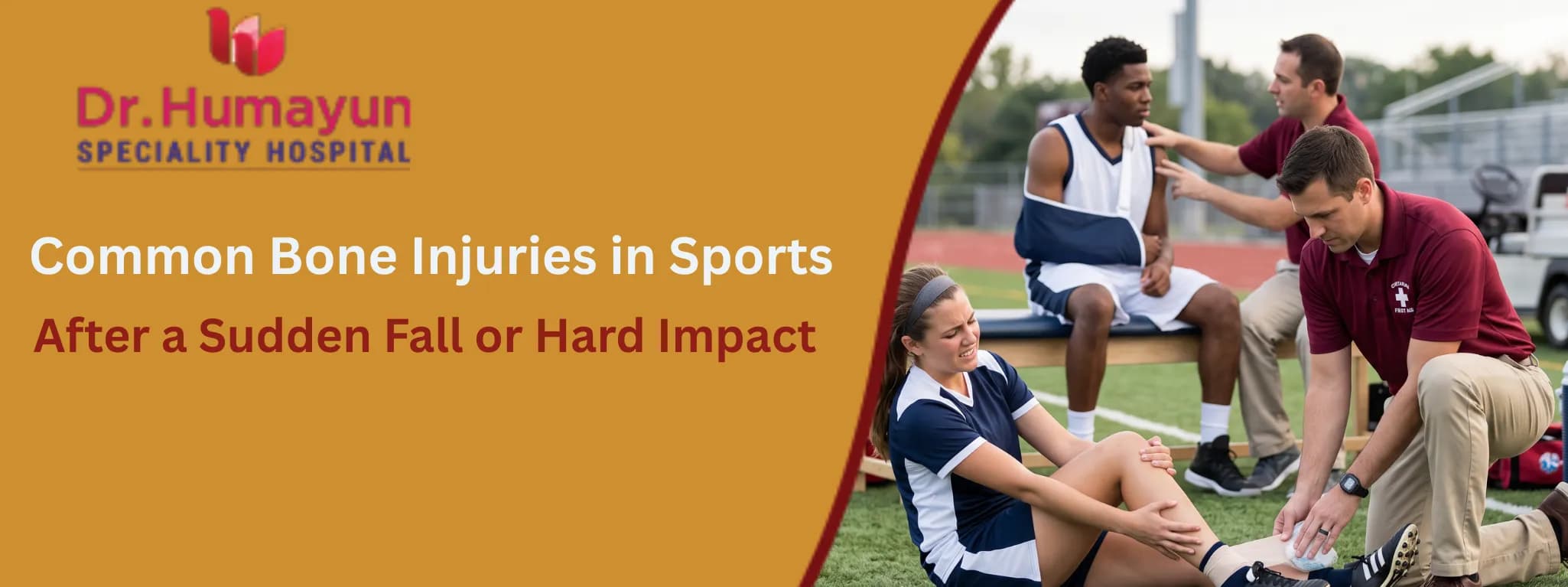

The tackle goes wrong. The landing from a jump is off-balance. A direct blow catches the wrist on the way down. A collision sends a player shoulder-first into the ground. In the seconds after the impact, before the adrenaline clears, the question is already forming: is this broken?
Bone injuries are among the most common reasons athletes at every level, from school sports to professional competition, are removed from play and brought to emergency or orthopaedic care. Some of the most common bone injuries in sports look deceptively similar to soft tissue injuries in the first minutes after they occur. Others are immediately obvious from the pain, the deformity, and the complete inability to continue.
Understanding what the most common bone injuries in sports look like, which specific activities produce which injuries, and what treatment is required to return to sport safely is knowledge that benefits every athlete and every sports coach, parent, and caregiver.
Acute vs Stress Fractures: The Two Categories of Sports Bone Injury
Before examining individual injury types, the most important foundational distinction is between the two categories of sports-related bone injury.
Acute fractures result from a single sudden traumatic event: a fall, a collision, a direct blow, or a forceful twist. The fracture happens in an instant. Pain is immediate and severe. The athlete typically cannot continue playing.
Stress fractures result from repetitive loading of bone over time, without a single traumatic event. A tiny crack develops from the cumulative effect of training loads exceeding the bone's ability to remodel and adapt. Pain develops gradually, worsens with activity, and improves with rest in the early stages. Many athletes train through early stress fracture pain, attributing it to normal muscle soreness.
This blog focuses primarily on acute fractures from sudden falls and hard impacts, but stress fractures are briefly covered because they are among the most common bone injuries in sports overall, accounting for approximately 10% of all orthopaedic sports injuries.
The Most Common Bone Injuries in Sports from Sudden Falls and Impact
Wrist Fractures
Wrist fractures are the most common acute bone injury from falling in sport. The mechanism is almost universal: a player falls and instinctively extends the hand to break the fall. The entire force of the fall is transmitted through the wrist, producing a fracture of the distal radius, the lower end of the forearm bone on the thumb side.
Wrist fractures are frequent in sports like football, basketball, and gymnastics due to their reliance on hands for balance, protection, or impact absorption.
Sports with the highest wrist fracture incidence:
-
Skateboarding and snowboarding (falls on outstretched hands)
-
Gymnastics (landing and vaulting)
-
Football and rugby (tackling and falling)
-
Basketball and volleyball (diving for balls)
-
Cricket (fielding dives)
What it feels like: Immediate pain in the wrist after a fall. Swelling developing rapidly. Tenderness directly over the radius bone just above the wrist joint. Possible visible deformity in displaced fractures. Difficulty moving the wrist or bearing load through the hand.
Treatment: Non-displaced or minimally displaced fractures are managed with a splint or cast for four to six weeks. Displaced fractures or those involving the wrist joint surface require surgical fixation with plates and screws to restore correct alignment. A scaphoid fracture, a specific wrist bone that fractures on the thumb side and is notorious for being missed on initial X-ray, requires CT or MRI for confirmation and often surgical fixation even when appearing small, due to its poor blood supply and high non-union risk.
Collarbone (Clavicle) Fractures
The collarbone is one of the most commonly fractured bones in contact sports and in any sport involving falls onto the shoulder or an outstretched arm.
Clavicle fractures typically occur from a direct hit to the shoulder or a fall onto an outstretched arm. They are common in contact sports like football and hockey or sports with a high risk of falling, such as cycling or skiing.
Sports with highest clavicle fracture incidence:
-
Road cycling (handlebar falls)
-
Rugby (shoulder-first tackles and collisions)
-
Football
-
Cricket (fielding collisions)
-
Martial arts and combat sports
What it feels like: Immediate pain across the top of the shoulder after a fall or direct impact. A visible bump or deformity along the collarbone in displaced fractures. The athlete holds the affected arm close to the body to reduce movement. Crackling sensation (crepitus) may be felt with any shoulder movement.
Treatment: The majority of clavicle fractures are managed non-surgically with a sling for four to six weeks, followed by physiotherapy to restore shoulder range of motion and strength. Surgical fixation with a plate is recommended for fractures with significant shortening, severe displacement, or those involving the acromioclavicular joint. Return to contact sport typically takes ten to twelve weeks.
Ankle Fractures
Ankle fractures are extremely common in sports that involve jumping, landing, cutting, and pivoting. The ankle is subjected to sudden rotational forces when the foot is planted and the body continues to move in a different direction.
Sports with highest ankle fracture incidence:
-
Basketball (jumping and landing)
-
Football and soccer (pivoting and cutting)
-
Badminton and tennis (lateral movements)
-
Volleyball (landing from jumps)
-
Gymnastics (landings)
Ankle fractures in sport most commonly involve the lateral malleolus (outer ankle bone). Bimalleolar and trimalleolar fractures involving both sides of the ankle or the posterior tibia occur with more severe mechanisms and carry greater instability.
What it feels like: Immediate pain around one or both sides of the ankle following a twisting mechanism. Rapid swelling. Bruising appearing within hours. Difficulty or inability to bear weight. Bony tenderness directly over the malleolus rather than over the ligaments alone. A pop or crack heard or felt at the moment of injury.
Treatment: Stable, non-displaced ankle fractures are managed with a boot or cast. Displaced or unstable fractures require surgical fixation with plates and screws to restore the ankle mortise alignment, which is essential for long-term ankle joint health. Rehabilitation after immobilisation focuses on restoring ankle range of motion, strength, and proprioception.
Finger and Hand Fractures
Finger and hand fractures occur across virtually every sport, from catching and fielding in cricket to blocking in volleyball, and from punching in boxing to falling in any contact sport.
The most common sports finger fractures:
-
Phalangeal fractures: Breaks in the small bones of the fingers, typically from direct impact, a ball striking the fingertip, or a fall onto the hand. Even small finger fractures can cause significant long-term problems if they are rotated (twisted) or involve the joint surface.
-
Metacarpal fractures: Breaks in the longer hand bones connecting the fingers to the wrist. The "boxer's fracture" at the base of the small finger metacarpal, typically from punching with a clenched fist, is one of the most recognised sports hand injuries.
-
What it feels like: Pain, swelling, and bruising over the affected finger or hand bone. A rotation deformity may be visible when making a fist, with one finger crossing over another. Difficulty gripping.
-
Treatment: Non-displaced, stable finger fractures are managed with buddy taping or splinting. Displaced or rotated fractures require reduction, and if reduction cannot be maintained, surgical fixation with wires or small screws. The goal of treatment is always to restore full finger function, as even minor residual rotation or joint step-off can significantly affect grip, catching, and throwing performance.


Rib Fractures
Rib fractures in sport most commonly result from direct impacts: a tackle in rugby, a collision in cricket, a hard ball striking the chest, or a fall from a bicycle.
-
What it feels like: Sharp, localised pain at the fracture site, significantly worsened by breathing, coughing, sneezing, and trunk movement. The athlete can often point to the exact spot where the pain is worst. Taking a deep breath is particularly painful.
-
Treatment: Most rib fractures are managed with pain relief and monitoring. Adequate analgesia is critical because inadequate pain control leads to shallow breathing and increases the risk of pneumonia. High-flow oxygen and hospitalisation are required for multiple rib fractures (three or more on one side) or when complications including pneumothorax (collapsed lung) or haemothorax (blood around the lung) are present. These are identified on chest X-ray and treated urgently.
Growth Plate Fractures in Young Athletes
Growth plate fractures are unique to children and adolescents whose skeletons have not yet reached maturity. The growth plates, located at the ends of the long bones, are the weakest points in a developing skeleton and are more vulnerable to fracture than the surrounding mature bone.
Growth plate fractures in sport occur in the wrist, ankle, finger, and elbow, often from the same mechanisms that produce fractures in adults from falls and impacts. They require specific paediatric orthopaedic assessment because inappropriate management can result in growth disturbance and angular or length deformity of the affected limb.
Any significant bone injury in a child or adolescent should be assessed by an orthopaedic specialist familiar with paediatric fracture management, because the X-ray appearance and management principles differ from adult fractures.
Stress Fractures
Stress fractures develop gradually from repetitive bone loading rather than a single traumatic event, but they are included here because they are one of the most common bone injuries in sports overall.
Common stress fracture sites in sport:
-
Tibia (shin) in runners and cricketers
-
Metatarsal bones in the foot (march fracture) in runners and dancers
-
Navicular bone in the foot in sprinters and court sport athletes
-
Lumbar spine (pars interarticularis) in gymnasts, bowlers, and fast bowlers
What it feels like: Gradual onset of pain that is initially present only during activity and relieved by rest. Over weeks, pain begins to occur with less activity and eventually persists at rest. The area is tender to direct palpation over the stress fracture site.
Treatment: The cornerstone of treatment is relative rest: removing the repetitive loading that caused the fracture while maintaining fitness through cross-training. Many stress fractures require immobilisation in a boot. High-risk stress fractures, including navicular and anterior tibial cortex stress fractures, may require surgery to ensure healing and prevent complete fracture. Return to full training requires gradual, progressive reloading over weeks to months.
Signs That a Sports Bone Injury Needs Immediate Assessment
The following features after a sports impact or fall indicate that imaging and orthopaedic assessment is needed rather than home management with ice and rest.
Go to orthopaedic assessment on the same day for:
-
Any visible deformity or misalignment at a joint or along a bone after impact
-
Inability to bear weight on the foot or ankle following an injury
-
A popping or cracking sound at the moment of injury
-
Inability to move a joint or limb through its normal range after a collision or fall
-
Bone tenderness directly over the bony prominences rather than over the soft tissues around them
-
A wrist, hand, or finger injury that produces significant pain and swelling after a fall on an outstretched hand
-
An injury that seems more painful than expected for the apparent mechanism
Go to emergency care immediately for:
-
Bone visibly protruding through or tenting the skin (open fracture)
-
Numbness or loss of feeling in the limb beyond the injury site
-
Absent or diminished pulse below the injury site
-
Complete inability to move the limb
-
A direct chest impact with subsequent difficulty breathing, which may indicate rib fracture with pneumothorax
RICE and First Aid at the Field
When a significant bone injury is suspected at a sports venue, the immediate priority is immobilisation and preparation for transport to orthopaedic assessment.
Field-side first response:
-
Stop play and remove the athlete from further risk
-
Do not attempt to straighten or manipulate a suspected fracture
-
Immobilise the injured area using available materials: a rigid splint (padded board, folded blanket) for long bone injuries, a sling for shoulder and collarbone injuries
-
Apply ice wrapped in a cloth to reduce swelling while arranging transport. Never ice directly onto skin.
-
Do not allow the athlete to return to play even if pain settles with ice
-
Transport for imaging and orthopaedic assessment
For suspected open fractures, cover the wound loosely with a clean cloth. Do not apply pressure directly over protruding bone. Transport to emergency care immediately.
Treatment Approach for Sports Bone Injuries
Treatment is guided by the fracture type, location, degree of displacement, and the athlete's age, overall health, and sporting demands.
Non-surgical treatment (majority of sports fractures):
-
Splinting, casting, or walking boot for immobilisation
-
Duration typically four to eight weeks depending on bone and fracture type
-
Pain management with NSAIDs or paracetamol
-
Physiotherapy after immobilisation to restore range of motion, strength, and sport-specific function
Surgical treatment (minority, but important subset):
-
Indicated for displaced fractures, fractures involving joint surfaces, inherently unstable fractures, and fractures where closed reduction cannot be maintained
-
Surgical options include intramedullary nailing for long bone fractures, plate and screw fixation for wrist, ankle, and collarbone fractures, and wire fixation for finger fractures
-
Post-surgical rehabilitation follows the same principles as non-surgical, but timelines may be longer
Return to sport is guided by:
-
Confirmed fracture healing on imaging
-
Full restoration of pain-free range of motion
-
Restoration of strength and power to the pre-injury level
-
Completion of sport-specific functional criteria
Premature return before these criteria are met increases the risk of re-fracture, malunion (healing in a suboptimal position), and chronic pain that affects sporting performance long-term.
Common Bone Injury Assessment at Humayun Hospital, T Nagar
At Humayun Hospital, T Nagar, Chennai, Dr. Omer Sheriff, Consultant Orthopaedic and Joint Replacement Surgeon, provides comprehensive assessment and management of all common bone injuries in sports, from the initial clinical assessment and imaging through to surgical fixation, physiotherapy coordination, and return-to-sport clearance.
Dr. Omer Sheriff holds an MBBS, Diploma in Orthopaedics (Sri Ramachandra University), MS in Orthopaedics, and a Fellowship in Joint Replacement. He trained at CMC Vellore and brings international experience from Hamad Medical Corporation, Doha, Qatar, to his clinical practice. With over 25 years of experience and more than 3,500 successful orthopaedic procedures, he is a life member of the Indian Orthopaedic Association (IOA), the Indian Society of Hip and Knee Surgeons (ISHKS), and the Tamil Nadu Orthopaedic Association (TNOA).
We offer:
-
X-ray and CT imaging for fracture diagnosis and displacement assessment
-
MRI for growth plate injuries, scaphoid fractures, and stress fractures not visible on X-ray
-
Conservative management with casting, splinting, and walking boots
-
Surgical fixation for displaced, unstable, or articular fractures
-
Paediatric fracture management with specific growth plate consideration
-
Physiotherapy referral for structured rehabilitation and return-to-sport programming
-
Clear guidance on safe return-to-sport timelines based on healing progress
Whether the injury happened on a cricket pitch, a basketball court, a gymnasium floor, or a playground, accurate assessment is the starting point for the fastest and safest return to sport.
Chat with our medical care assistant for quick guidance and support.