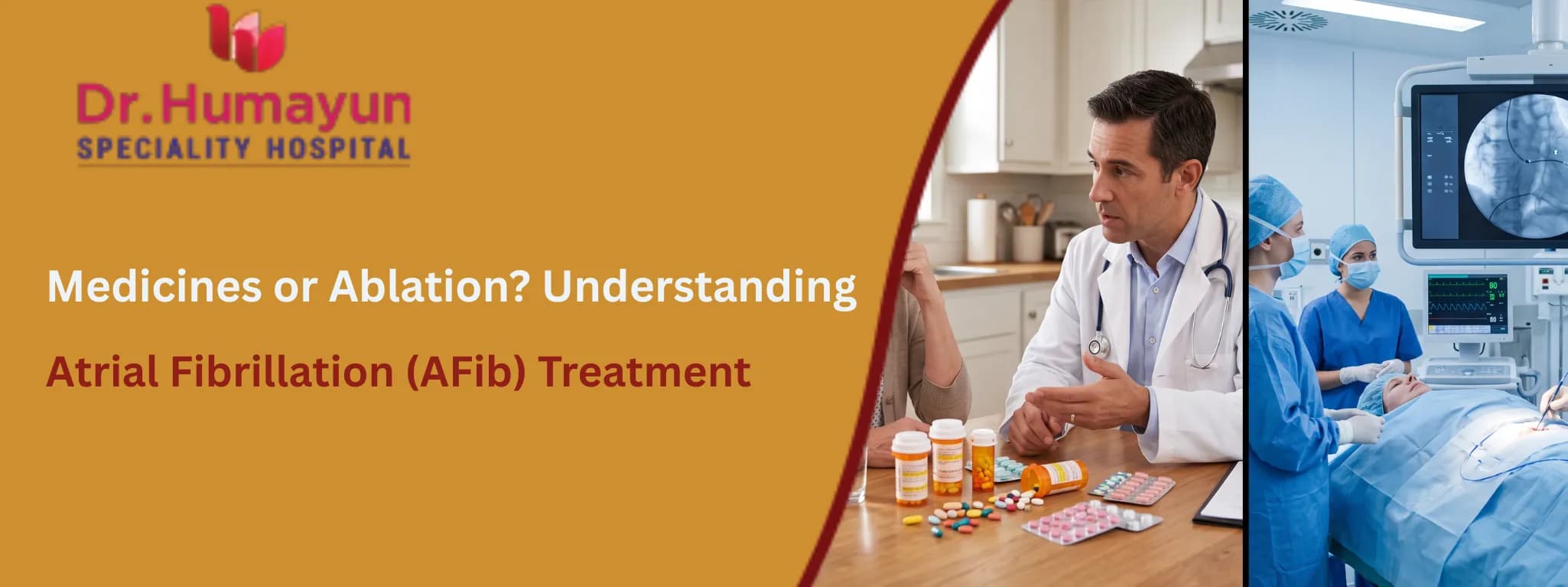

The diagnosis of atrial fibrillation comes with an immediate wave of new information. A different kind of heartbeat. A higher stroke risk. A new medication or several. And often, relatively quickly, a question from the treating doctor: do you want to try to get the heart back into a normal rhythm, and if so, how?
Atrial fibrillation treatment has advanced significantly. What was once a condition managed primarily with rate-slowing medications has become an area of sophisticated rhythm management with an expanding toolkit that now includes catheter ablation techniques so precise that they spare adjacent structures entirely.
For patients and families trying to understand this condition and the choices it brings, a clear explanation of what AFib is, what the treatment options mean in practical terms, and how the landmark 2024 advancement in ablation technology changes the conversation is the starting point.
What Is Atrial Fibrillation?
Atrial fibrillation is an irregular and often rapid heart rhythm that originates in the upper chambers of the heart, the atria. Instead of beating with the coordinated electrical signal that produces a normal heartbeat, the atria fire chaotically, causing them to quiver rather than contract effectively. The consequences are significant:
-
The heart beats irregularly and often faster than normal, which many patients experience as palpitations, breathlessness, fatigue, or dizziness
-
Because the atria are not contracting effectively, blood can pool and form clots, particularly in a small pouch called the left atrial appendage. If a clot breaks free and travels to the brain, it causes a stroke. AFib increases stroke risk by approximately fivefold compared to the general population.
-
Over time, poorly controlled AFib strains the heart muscle and can contribute to the development of heart failure
AFib affects approximately 37 million people worldwide and is the most common sustained heart rhythm disorder seen in clinical practice. Left untreated, it can lead to stroke, heart failure, and a significantly reduced quality of life.
AFib comes in several forms:
-
Paroxysmal AFib: Episodes that start and stop spontaneously, usually lasting less than 48 hours. The heart returns to normal rhythm on its own.
-
Persistent AFib: Episodes lasting longer than seven days that do not resolve without treatment
-
Long-standing persistent AFib: Continuous AFib lasting more than 12 months
-
Permanent AFib: Where the decision has been made to accept the irregular rhythm rather than pursue rhythm restoration
The Two Goals of AFib Treatment
Understanding AFib treatment begins with understanding that it has two distinct goals, which are addressed separately and by different strategies.
- Goal 1: Rate Control Rate control focuses on keeping the heart rate from becoming too fast, even if the rhythm itself remains irregular. An uncontrolled fast heart rate in AFib causes symptoms, strains the heart muscle, and can contribute to a dilated cardiomyopathy over time.
Rate control uses medications that slow electrical conduction through the AV node (the gateway between the atria and the ventricles):
-
Beta-blockers: metoprolol, bisoprolol, atenolol
-
Calcium channel blockers: diltiazem, verapamil
-
Digoxin: used in selected patients, particularly those with heart failure
Rate control manages symptoms without restoring normal rhythm. It is appropriate for older patients, those with permanent AFib, those with minimal symptoms at controlled rates, and those in whom rhythm control is not feasible or preferred.
- Goal 2: Rhythm Control Rhythm control aims to restore and maintain normal sinus rhythm. This is where the central treatment decision between medication and ablation is made. Both approaches try to get the heart back into a normal rhythm, but they do it in fundamentally different ways.
A third and non-negotiable component of all AFib treatment is:
Stroke Prevention Anticoagulation (blood-thinning medication) to prevent clot formation and stroke is recommended for most patients with AFib based on their individual stroke risk score (CHA2DS2-VASc). This applies regardless of whether rate or rhythm control is chosen. Direct oral anticoagulants (DOACs) including apixaban, rivaroxaban, dabigatran, and edoxaban have largely replaced warfarin as first-line anticoagulation in eligible patients because of their more predictable effect and more convenient monitoring profile.
Atrial Fibrillation Medication: Rate and Rhythm Control Drugs
Rate Control Medications
As described above, beta-blockers and calcium channel blockers are the primary agents for rate control. The target is a resting heart rate below 110 beats per minute in most patients, with a more stringent target of below 80 in those with symptoms at higher rates.
Rate control medication is generally well tolerated but does not restore or maintain normal sinus rhythm. Patients remain in AFib with a controlled ventricular rate. Symptoms may improve significantly but the underlying rhythm disorder persists.
Antiarrhythmic Drug Therapy for Rhythm Control
Antiarrhythmic drugs (AADs) attempt to restore and maintain normal sinus rhythm by chemically stabilising the heart's electrical system. Common agents used in AFib rhythm control include:
-
Flecainide and propafenone: Used for paroxysmal AFib in patients without structural heart disease. Flecainide is often used as a "pill in the pocket" approach, taken at the onset of an AFib episode to restore rhythm.
-
Sotalol: A beta-blocker with antiarrhythmic properties, used in AFib with or without structural heart disease with appropriate monitoring.
-
Amiodarone: One of the most effective antiarrhythmic drugs for maintaining sinus rhythm across a wide range of patients including those with structural heart disease. However, it carries a significant long-term side effect profile including thyroid dysfunction, pulmonary toxicity, liver enzyme elevation, and photosensitivity, which limits its long-term use particularly in younger patients.
-
Dronedarone: A non-iodinated amiodarone derivative with fewer long-term side effects, used in non-permanent AFib without advanced heart failure.
Antiarrhythmic drugs and ablation in patients with atrial fibrillation are complementary strategies rather than strictly competing ones. Medication may be used as a bridge to ablation, as an adjunct after ablation, or as the primary long-term strategy when ablation is not preferred or not available.
The significant limitation of antiarrhythmic drug therapy is its efficacy profile: success rates for maintaining sinus rhythm at one year are 50 to 60% for most agents, and the drugs carry their own risk profiles that limit which patients can safely use them.


Catheter Ablation for AFib: How It Works
Catheter ablation is a procedure in which catheters (thin, flexible tubes) are passed through the veins from the groin into the heart. Energy is delivered through the catheter tip to create scar tissue in areas of heart muscle that generate the abnormal electrical signals driving AFib.
The most common ablation strategy targets the pulmonary veins. The pulmonary veins (the four veins that bring oxygenated blood from the lungs to the left atrium) are the source of the rapid electrical triggers that initiate most AFib episodes. Pulmonary vein isolation (PVI) electrically disconnects the pulmonary veins from the left atrium, eliminating the trigger.
Beyond pulmonary vein isolation, additional ablation targets are used in persistent and long-standing persistent AFib, including the posterior left atrial wall, additional trigger sites identified during the procedure, and in some patients, extra-pulmonary vein sites.
Three Ablation Technologies
-
Radiofrequency ablation (RFA): The traditional approach, using radiofrequency energy to deliver heat that creates scar tissue. Highly effective and extensively validated over two decades of clinical use. Point-by-point lesion creation allows flexibility in targeting.
-
Cryoballoon ablation: A balloon is inflated at the opening of each pulmonary vein and cooled with liquid nitrogen to freeze and scar the tissue. Well-suited to pulmonary vein isolation, with a more standardised delivery mechanism and a favourable safety and efficacy profile.
-
Pulsed field ablation (PFA): The most significant technological advancement in AFib ablation in recent years. Two PFA systems received FDA approval in early 2024.
Instead of using heat or cold, pulsed field ablation uses short bursts of high energy electrical pulses, called irreversible electroporation, to create programmed cell death in heart tissue causing AFib. The critical advantage is cardiac selectivity: the electrical pulses preferentially destroy cardiac muscle cells while sparing adjacent structures including the oesophagus, phrenic nerve, and pulmonary veins, which are vulnerable to thermal injury during radiofrequency or cryoballoon ablation. PFA is more precise than thermal ablation, making it a faster, safer, and more effective treatment for AFib.
The 2024 Atrial Fibrillation Year in Review, published in January 2025, identified pulsed field ablation as having dominated the electrophysiology landscape in 2024, with two FDA-approved systems entering widespread clinical use and the MANIFEST-17K multinational survey of over 17,000 PFA procedures confirming the procedure's safety profile at scale.
How Effective Is Ablation Compared to Medication?
The comparative efficacy of catheter ablation versus antiarrhythmic drug therapy for AFib rhythm control has been studied in multiple randomised controlled trials and systematic reviews.
A 2024 meta-analysis published in Cureus conducted a systematic review of AF recurrence rates in patients treated with ablation compared to pharmacological treatment. Across the included trials, catheter ablation produced significantly lower rates of AFib recurrence compared to antiarrhythmic drug therapy, with the benefit most pronounced in paroxysmal AFib.
The key findings across this evidence base:
-
Catheter ablation achieves freedom from AFib recurrence in approximately 65 to 85% of paroxysmal AFib patients at 12 months
-
Antiarrhythmic drug therapy achieves 50 to 60% rhythm maintenance at 12 months in the same population
-
For persistent and long-standing persistent AFib, ablation success rates are lower than for paroxysmal AFib, and often require repeat procedures
-
Ablation reduces symptomatic burden, hospitalisations, and cardiovascular complications more significantly than drug therapy in most comparative studies
A growing body of evidence supports more aggressive rhythm control with ablation, whether earlier in a patient's AFib diagnosis to achieve better long-term outcomes or in the setting of other comorbidities such as heart failure, in which ablation produces measurable improvement in ejection fraction.
The landmark EAST-AFNET 4 trial, whose results continue to influence clinical practice, demonstrated that early rhythm control, initiated within one year of AFib diagnosis, significantly reduced the composite endpoint of cardiovascular death, stroke, and hospitalisation for heart failure compared to usual care. This finding accelerated the shift toward earlier consideration of rhythm control including ablation.
Who Should Consider Catheter Ablation?
Catheter ablation is not the right choice for every patient with AFib. The decision is made in collaboration between the patient and a cardiologist or electrophysiologist after considering multiple factors.
Ablation Is Particularly Favoured For:
-
Patients with symptomatic paroxysmal or persistent AFib who have failed or are intolerant of at least one antiarrhythmic drug
-
Younger patients who want to minimise long-term antiarrhythmic drug exposure and its side effect burden
-
Patients who have experienced significant quality-of-life impact from AFib symptoms
-
Patients with AFib and heart failure with reduced ejection fraction, where ablation has demonstrated improvement in cardiac function
-
Patients who prefer a potentially curative intervention over lifelong medication
-
As earlier therapy in recently diagnosed symptomatic AFib, in line with emerging evidence supporting early rhythm control
Medication Remains Appropriate For:
-
Patients who are asymptomatic or minimally symptomatic at well-controlled heart rates with rate control medication
-
Elderly patients with significant comorbidities where ablation procedural risk outweighs benefit
-
Patients with permanent AFib where a rhythm control strategy has been abandoned
-
Patients who prefer to start with medication and reserve ablation for a later decision
-
As a bridge to ablation or adjunct after ablation to suppress early recurrences
The decision is not a permanent binary choice. Many patients begin with medication and proceed to ablation when medication proves insufficient. Others may choose ablation earlier based on their age, symptom burden, and preference for avoiding long-term drug therapy. There is no single right answer that applies to everyone.
Risks of AFib Ablation: What Patients Should Know
Catheter ablation is a well-established and generally safe procedure, but it carries specific procedural risks that must be understood before consent.
Well-recognised procedural risks:
-
Pulmonary vein stenosis (narrowing of the pulmonary veins from scar tissue): the rate with modern techniques is below 1%
-
Cardiac tamponade (blood around the heart from perforation): approximately 1% with experienced operators
-
Oesophageal injury: a specific concern with thermal ablation where the oesophagus lies immediately behind the posterior left atrium. PFA significantly reduces this risk through its cardiac selectivity.
-
Phrenic nerve injury: can cause temporary diaphragm weakness. More common with cryoablation, typically resolves.
-
Stroke or transient ischaemic attack: approximately 0.5% with anticoagulation protocol
-
Vascular access complications at the femoral vein entry site
PFA-specific risks identified in the MANIFEST-17K survey: Coronary arterial spasm was identified in 0.14% of patients, and haemolysis-related acute renal failure requiring haemodialysis in 0.03%, rare but worth noting when counselling patients considering PFA.
Across all ablation types, the procedural risk is significantly lower at high-volume centres with experienced electrophysiologists. The risk-benefit calculation for any individual patient must be made in full discussion with the treating cardiologist.
Life After Ablation: What to Expect
Ablation is not always a one-time cure. Patients and families need realistic expectations.
A blanking period of three months follows ablation during which early recurrences of AFib are common and do not necessarily indicate ablation failure. The healing process takes time, and antiarrhythmic drugs are often continued during this period.
At 12 months, approximately 65 to 85% of paroxysmal AFib patients who had a single ablation remain in normal sinus rhythm. Some patients require a second ablation for optimal long-term results.
Even after successful ablation, anticoagulation continuation is discussed with the electrophysiologist. Many guidelines recommend continuing anticoagulation in high-risk patients regardless of apparent rhythm normalisation, because asymptomatic AFib episodes may not be detected.
Lifestyle modification including weight management, blood pressure control, alcohol reduction, and treatment of sleep apnoea significantly improve ablation outcomes and reduce AFib recurrence.
AFib Treatment at Humayun Hospital, T Nagar
At Humayun Hospital, T Nagar, Chennai, our cardiology and internal medicine team provides structured assessment and management for patients with atrial fibrillation at every stage of their diagnosis.
We offer:
-
Clinical assessment and ECG confirmation of AFib type (paroxysmal, persistent, or long-standing)
-
Echocardiography to assess cardiac structure, function, and left atrial size
-
Holter monitoring for patients with paroxysmal symptoms where ECG capture is needed
-
Stroke risk assessment using CHA2DS2-VASc and appropriate anticoagulation initiation with DOACs
-
Rate control medication management targeting appropriate heart rate goals
-
Antiarrhythmic drug initiation for patients pursuing rhythm control with medication
-
Structured assessment and referral to electrophysiology for catheter ablation candidacy evaluation
-
Clear counselling on the relative merits of medication versus ablation for the individual patient's age, symptom burden, comorbidities, and preferences
-
Long-term follow-up after ablation including monitoring for recurrence and anticoagulation review
Atrial fibrillation is a manageable condition. The treatment landscape in 2024 to 2025, with PFA joining the ablation toolkit alongside more nuanced guidance on early rhythm control, offers more options and better outcomes than were available even five years ago. Every patient deserves a treatment decision made with full information, in a conversation that considers their specific circumstances.
Chat with our medical assistant for quick guidance and support.