
Most parents understand that children need calcium for strong bones. But the nutritional story of bone development in childhood and adolescence is significantly richer than calcium alone, and the window during which diet makes the greatest difference is far shorter than most people appreciate.
Think of your child's bones as a calcium bank. The deposits made during their childhood and teenage years create a vital reserve that determines their skeletal health for decades to come. Up to 90% of peak bone mass is created by age 20. After that, the window for building bone largely closes, and the goal shifts to maintaining what was built.
The choices a child eats today genuinely shape the strength of their skeleton for the rest of their life. And for children in India, where vitamin D deficiency is widespread, dietary calcium intake is often insufficient, and high-sugar beverage consumption is rising, understanding the best foods for bone strength is practically urgent.
Why Childhood and Adolescence Are the Critical Windows
Bone is not a static structure. It is living tissue that is constantly being broken down and rebuilt by cells called osteoclasts (which resorb bone) and osteoblasts (which build new bone). In children and adolescents, the building phase dominates dramatically. Bone is being deposited faster than it is being resorbed, and both the size and density of bones increase throughout the growing years.
Approximately half of lifetime peak bone mass is accumulated during adolescence, with a quarter actually built during the two-year period of fastest growth. The dietary choices made during this period directly determine whether a child reaches their genetic potential for peak bone mass, or falls short of it.
Peak bone mass is largely hereditary, but the two most important external factors determining whether a child reaches their optimum are nutrition and physical activity.
A child who reaches higher peak bone mass at age 20 has a significantly lower risk of osteoporosis, fractures, and bone density loss in middle age and beyond. Conversely, a teenager who develops poor dietary habits, stops exercising, and consumes bone-depleting foods during this critical window may enter adulthood with a skeletal deficit that can never be fully recovered.
The best investment in a child's bone health is not a supplement. It is the pattern of food they eat every day during the years they are still building bone.
The Six Core Nutrients for Bone Strength in Growing Children
Calcium
Calcium is the primary structural mineral of bone. Approximately 99% of the body's calcium is stored in the bones and teeth. Without adequate daily calcium intake, the body withdraws calcium from the skeletal reservoir to maintain blood calcium levels, progressively depleting bone density.
Daily calcium requirements by age:
-
Children aged 4 to 8: 1,000 mg per day
-
Children and adolescents aged 9 to 18: 1,300 mg per day (the highest requirement of any life stage)
-
Adults aged 19 to 50: 1,000 mg per day
The teenage years carry the highest calcium requirement because of the accelerated pace of bone deposition during puberty. A glass of milk delivers 300 to 377 mg of calcium. A cup of yoghurt provides 415 mg. Meeting the 1,300 mg daily target consistently requires deliberate food choices across multiple meals.
Vitamin D
Vitamin D is the critical enabling nutrient for bone health. Without adequate vitamin D, the body cannot absorb calcium effectively from the intestine, regardless of how much calcium is consumed. Vitamin D also stimulates bone mineralisation directly through its action on osteoblasts.
The body produces vitamin D when skin is exposed to sunlight. Ten to fifteen minutes of sun exposure on the arms and legs several times a week is sufficient for vitamin D synthesis in many circumstances. However, in urban environments, with high indoor time, regular sunscreen use, and darker skin tones (which require longer sun exposure for equivalent vitamin D synthesis), dietary and supplemental sources become important.
Dietary vitamin D sources are limited:
-
Oily fish (salmon, mackerel, sardines): the richest food sources
-
Egg yolks: contain small amounts
-
Fortified milk, fortified cereals, and fortified orange juice: significant sources where fortification is practiced
-
Mushrooms exposed to sunlight: a plant-based source
Vitamin D deficiency is very common in India across all age groups, including children. Children who spend most of their time indoors, attend school with minimal outdoor time, and consume little oily fish or fortified foods are at particular risk. Routine supplementation may be appropriate in children with known or suspected deficiency, discussed with a paediatrician.
Protein
Bones are approximately 50% protein by volume. Protein provides the collagen framework onto which calcium and other minerals are deposited during bone formation. Inadequate protein intake directly impairs bone building, even when calcium intake is adequate.
Growing children need higher protein intake relative to body weight than adults. Good protein sources for children include:
-
Dairy products (milk, yoghurt, paneer, cheese)
-
Eggs
-
Lean meat, chicken, and fish
-
Legumes: lentils, chickpeas, rajma, moong dal, all excellent plant-based protein sources
-
Soy products: tofu, soy milk, edamame
For vegetarian families in India, ensuring adequate protein from legume combinations, dairy, and eggs is the most important dietary consideration alongside calcium.
Magnesium
Magnesium is involved in two critical bone functions: it activates vitamin D into its biologically active form, and it directly participates in the incorporation of calcium into bone crystal structure. Approximately 60% of the body's magnesium is stored in bone.
Best magnesium sources for children:
-
Dark leafy greens: spinach, methi (fenugreek leaves), drumstick leaves
-
Nuts and seeds: almonds, pumpkin seeds, sesame seeds
-
Legumes: black beans, lentils, chickpeas
-
Whole grains: oats, brown rice, whole wheat products
-
Bananas and avocado
Vitamin K
Vitamin K plays a specific role in bone matrix protein activation. It is required for the activation of osteocalcin, a protein produced by osteoblasts that helps bind calcium into the bone matrix. Studies in teenage girls have found that higher vitamin K intake from fruits and vegetables is associated with improved bone mineral density.
Best vitamin K sources for children:
-
Dark leafy greens: kale, spinach, broccoli, and curry leaves are excellent sources
-
Green vegetables broadly: peas, edamame, green beans
-
Fermented foods
-
Liver and eggs provide smaller amounts
Vitamin C
Vitamin C is essential for collagen synthesis. Collagen is the protein scaffold on which bone minerals are deposited. Without adequate vitamin C, collagen is weakened and the bone matrix cannot form properly. Vitamin C is also an antioxidant that reduces oxidative damage to bone cells.
Best vitamin C sources available in India:
-
Guava: one of the highest vitamin C foods available
-
Amla (Indian gooseberry): exceptionally rich in vitamin C
-
Citrus fruits: oranges, limes, and lemons
-
Tomatoes and bell peppers
-
Papaya and mango


The Best Foods for Bone Strength in Children and Teenagers
Childhood and adolescence represent the most critical window for building peak bone mass, setting the foundation for skeletal strength that lasts a lifetime. Consistently offering a balanced mix of calcium, vitamin D, protein, and essential micronutrients ensures growing bones develop optimal density and resilience against fractures.
Dairy Products
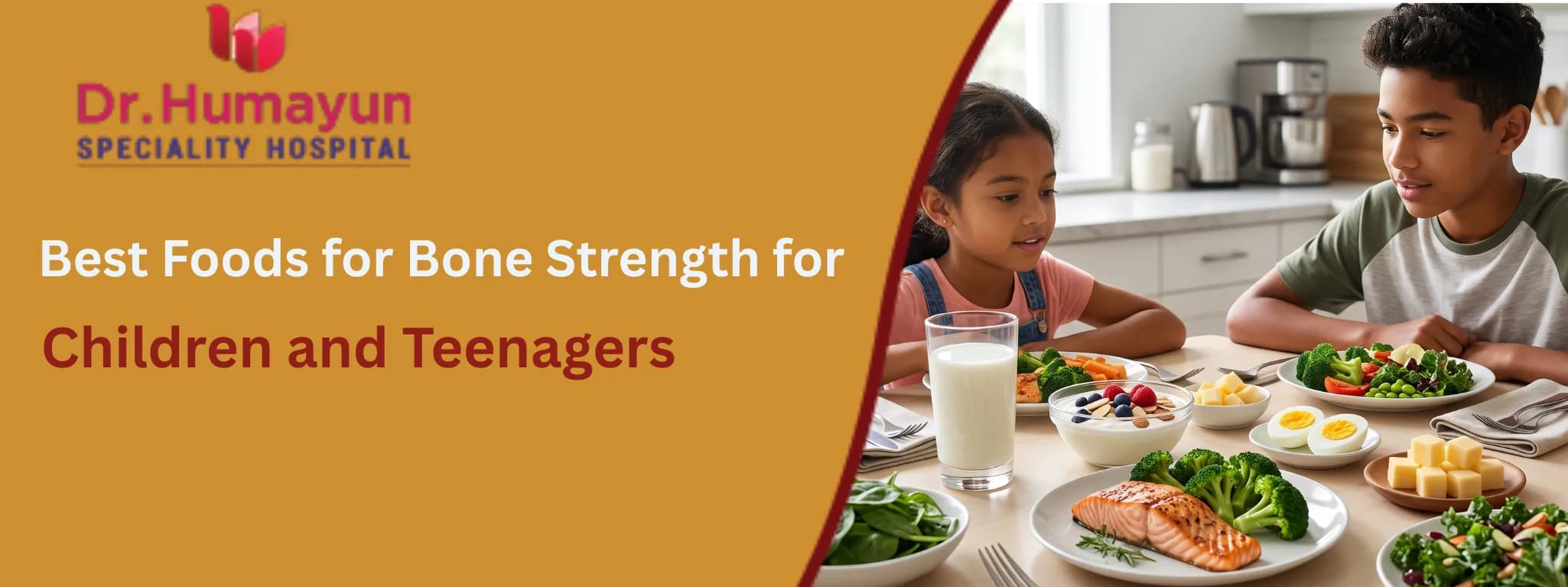
Dairy is the most concentrated and bioavailable source of calcium available in the diet. Milk, yoghurt, and paneer are the cornerstone of bone nutrition for children in Indian households.
-
Milk: One glass (200 to 250 ml) delivers 240 to 300 mg of calcium alongside protein and vitamin D (when fortified)
-
Yoghurt (curd or dahi): One cup provides approximately 300 to 415 mg of calcium. Yoghurt is also a probiotic food that supports the gut microbiome, which has emerging associations with calcium absorption
-
Paneer: A rich source of calcium and protein, particularly practical in vegetarian Indian households. 100 grams of paneer provides approximately 200 mg of calcium
-
Cheese: A concentrated calcium source. Small amounts of hard cheese added to meals significantly boost calcium intake without large volumes
Oily Fish
Salmon, mackerel, sardines, tuna, and pomfret provide the two nutrients most commonly deficient in Indian children: vitamin D and omega-3 fatty acids. Omega-3 fatty acids have anti-inflammatory effects that directly support bone cell health. Sardines and small fish eaten with their bones provide calcium as well.
Including oily fish two to three times a week in a child's diet provides both vitamin D and omega-3 intake that is very difficult to achieve from other food sources.
Leafy Green Vegetables
Leafy greens are the most nutrient-dense foods for bone health beyond dairy. A half cup of cooked kale provides 103 mg of calcium. Spinach provides 84 mg. Beyond calcium, leafy greens deliver magnesium, vitamin K, vitamin C, and carotenoids, making them multifunctional bone-supporting foods.
In South Indian cooking, keerai (various leafy greens), methi, moringa (drumstick) leaves, and curry leaves are traditional ingredients that are exceptionally nutrient-dense for bone health. Regular inclusion of these in dals, chutneys, kootu, and rice-based dishes provides bone nutrients in culturally integrated, practical ways.
Legumes and Pulses
Lentils, chickpeas, rajma, moong, and all varieties of Indian dal provide calcium, magnesium, protein, and zinc in a single dish. The Indian tradition of dal at most meals is genuinely bone-supportive when prepared without excessive refinement or over-boiling that reduces nutrient content.
Sesame seeds (til) deserve specific mention: one tablespoon of sesame seeds provides approximately 88 mg of calcium alongside magnesium and zinc. Incorporated into chutneys, ladoos, or sprinkled on dishes, sesame is one of the most calcium-dense plant foods available in the Indian pantry.
Eggs
Eggs provide protein for the bone matrix, vitamin D in the yolk, and vitamin K2 in small amounts. They are one of the few non-fish foods that contribute meaningfully to vitamin D intake from diet. Including eggs in a child's diet several times a week contributes to the bone nutrient package alongside dairy and vegetables.
Nuts and Seeds
Almonds are the most calcium-rich nut: one ounce provides 66 mg of calcium alongside magnesium, vitamin E, and protein. Chia seeds provide approximately 180 mg of calcium per 30 gram serving, making them one of the most calcium-dense plant foods available. Pumpkin seeds are rich in magnesium and zinc, both of which support bone mineralisation.
A small daily portion of mixed nuts and seeds, incorporated into morning porridge, smoothies, or after-school snacks, provides a meaningful contribution to bone nutrient intake.
Fortified Foods
Where natural food sources are insufficient, fortified foods fill the gap. Calcium-fortified orange juice provides approximately 300 mg of calcium per serving. Fortified cereals, fortified plant milks (soy, oat, almond), and vitamin D-fortified dairy products help meet daily targets in children with limited appetite or dietary restrictions.
Foods and Drinks That Harm Bone Development
The best foods for bone strength are only part of the picture. What children regularly consume that actively depletes or impairs bone development is equally important.
Carbonated soft drinks and sodas: Carbonated soft drinks are among the most bone-damaging foods for children and teenagers. They exert a triple negative effect on bone: phosphoric acid in cola drinks displaces calcium from the bone matrix, caffeine in caffeinated sodas reduces calcium absorption, and the high sugar content crowds out nutritious food choices. Children who habitually consume sodas have measurably lower bone density than those who drink milk or water instead.
Excessive sugar and processed snacks: High sugar intake drives inflammation and interferes with calcium metabolism. Ultra-processed snack foods provide minimal bone-building nutrients while contributing to the excessive caloric intake that displaces more nutritious foods.
Excessive caffeine: Even in its beverage forms beyond soda, excessive caffeine reduces calcium absorption. While moderate tea or coffee is not a significant concern, teenage-oriented energy drinks consumed daily represent a meaningful source of excessive caffeine with zero bone-building nutrient value.
Very low-fat or restrictive diets: Fat-soluble vitamins D and K require dietary fat for absorption. Children or teenagers who restrict fat excessively, whether for weight management or dietary preferences, may impair their own bone vitamin status even when calcium intake appears adequate.
Exercise Alongside Diet: The Other Half of the Equation
Food builds the raw material of bone. Exercise tells the body how much bone to deposit.
Weight-bearing and impact activities stimulate osteoblasts to increase bone deposition specifically in the bones being loaded. Running, jumping, skipping, dancing, gymnastics, football, basketball, and general outdoor play all apply the mechanical stress that signals bone formation. Swimming and cycling, while excellent cardiovascular exercise, do not provide weight-bearing stimulus and should not be the only forms of physical activity for a child whose bone health is a concern.
Teenagers who are physically inactive have measurably lower bone density by age 18 than those who engage in regular physical activity. Diet and exercise must work together.
Practical Meal Ideas That Maximise Bone Nutrients for Indian Children
The best bone nutrition does not require expensive or unusual foods. The Indian diet, when thoughtfully composed, contains most of what a growing child needs.
Breakfast ideas:
-
Ragi (finger millet) porridge with milk and banana: ragi is one of the highest-calcium plant foods available, providing approximately 344 mg per 100 grams
-
Egg fried in a small amount of oil with whole wheat toast and a glass of milk
-
Smoothie with milk, yoghurt, banana, and a handful of spinach blended in
-
Oat porridge with sesame seeds, almonds, and fresh fruit
Lunch and dinner ideas:
-
Dal with keerai (leafy greens) alongside brown rice or ragi mudde
-
Fish curry with a side of drumstick (moringa) vegetables: combines vitamin D from fish with calcium-rich moringa leaves
-
Paneer curry with peas and tomatoes: calcium from paneer, vitamin C from tomatoes and peas
-
Rajma or chickpea curry with yoghurt on the side: legume calcium and protein with yoghurt calcium and probiotics
Snack ideas:
-
Roasted almonds and pumpkin seeds
-
Yoghurt with fresh fruit
-
A glass of milk with a banana
-
Sesame chikki (til ladoo): traditional snack with excellent calcium density
When to Seek Medical Assessment
Most healthy children who eat a varied diet with regular dairy, leafy greens, legumes, and adequate sunlight exposure will meet their bone nutrition needs. However, specific situations warrant paediatric or orthopaedic assessment.
Seek assessment if:
-
A child sustains fractures from low-impact injuries that should not normally break a bone
-
A child has been avoiding dairy due to intolerance or preference for an extended period without dietary guidance on alternatives
-
The child has limited sun exposure, a darker complexion, and is known to avoid oily fish, with no vitamin D supplementation
-
There is a family history of early-onset osteoporosis or bone fragility
-
The child has a chronic illness, takes regular corticosteroid medication, or has a condition affecting nutrient absorption
-
A teenage girl has significantly restricted her food intake due to concerns about weight, which may include bone-building nutrients
Bone Nutrition Assessment at Humayun Hospital, T Nagar
At Humayun Hospital, T Nagar, Chennai, our paediatric and orthopaedic team provides assessment for children and adolescents with bone health concerns, nutritional deficiencies affecting skeletal development, and parents who want structured guidance on optimising their child's bone nutrition.
We offer:
-
Vitamin D and calcium status assessment through blood testing
-
Paediatric assessment of bone health in children with fracture history, dietary restrictions, or chronic illness
-
Dietary counselling for families managing dairy intolerance while maintaining adequate calcium intake
-
Orthopaedic assessment for children with suspected bone density concerns
-
Guidance on physical activity alongside nutritional optimisation for peak bone mass
-
Dr. Omer Sheriff, Consultant Orthopaedic and Joint Replacement Surgeon with over 25 years of experience, provides specialist orthopaedic consultation for paediatric bone health concerns
The food your child eats today is the bone they will rely on for the next 60 or 70 years. The investment is straightforward, practical, and genuinely lifelong.
Chat with our medical assistant for quick guidance and support.