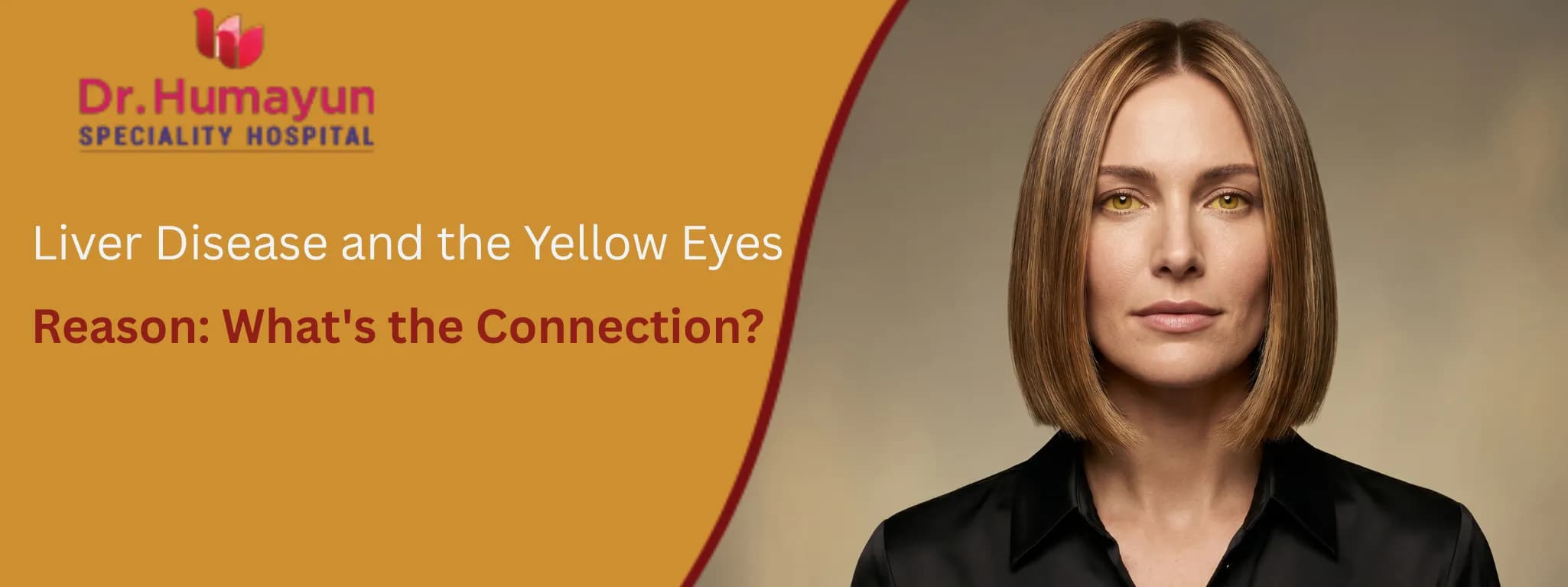

Yellowing of the whites of the eyes is a clinical warning sign that is impossible to ignore. While many people associate jaundice exclusively with changes in skin tone, the eyes often serve as the body's earliest and most sensitive indicator of internal dysfunction, altering their appearance long before other symptoms surface.
This distinct color change directly reflects a breakdown in how your body processes bilirubin, a yellow pigment generated during the natural recycling of old red blood cells. When your liver is inflamed, damaged, or physically obstructed, this pigment backs up into the bloodstream and rapidly bonds to the elastic tissues of the eyes.
In India, where families face a high regional burden of viral hepatitis, fatty liver disease, and metabolic conditions, recognizing this symptom early can be lifesaving. This comprehensive guide breaks down the biological connection between your liver and your eyes, details the primary medical causes of jaundice, and outlines when you must seek immediate clinical care.
Why the Eyes?
When people think of jaundice, they often picture yellowing of the skin. But in many cases, the whites of the eyes change colour before the skin does, and the reason is specific and worth understanding.
The white portion of the eye, called the sclera, is rich in a structural protein called elastin. Elastin has a particularly high affinity for bilirubin, the yellow pigment responsible for jaundice. This means that even before bilirubin levels rise enough to visibly stain the skin, the sclera begins to absorb and display the excess pigment. As Healthline explains, healthy eye tissue looks white, and yellowing of the sclera almost always signals that an underlying health condition needs attention.
This makes the eyes a remarkably sensitive early indicator of liver dysfunction. Noticing yellowing in the whites of your eyes or a family member's, even before any other symptom appears, is a signal that warrants prompt medical evaluation.
The Bilirubin Journey: What the Liver Does and What Happens When It Fails
To understand the yellow eyes reason, you need to understand bilirubin and the liver's role in managing it.
Every day, the body breaks down old red blood cells that have completed their lifespan. This breakdown produces bilirubin, a yellow-orange pigment. As WebMD explains, the liver filters bilirubin from the bloodstream and uses it to make bile, which then moves through the bile ducts to the digestive tract and leaves the body in stool. This is why healthy stool has its characteristic brown colour: it contains processed bilirubin.
When the liver is damaged or overwhelmed, or when something physically blocks the bile ducts, bilirubin cannot complete this journey. It builds up in the blood, reaches abnormally high levels, a condition called hyperbilirubinemia, and begins depositing into body tissues including the skin and, most visibly, the sclera of the eyes.
The medical term for yellowing of the eyes specifically is scleral icterus. When it appears alongside yellowing of the skin, the condition is called jaundice. According to UT MD Anderson Cancer Center, in adults, jaundice is often a sign that something is wrong, and its source needs to be identified promptly.
The Three Types of Jaundice: Where the Problem Is Coming From
Not all jaundice originates in the liver itself. Clinically, jaundice is categorised by where in the bilirubin pathway the problem is occurring. This distinction directly determines the treatment approach.
Pre-Hepatic Jaundice (Before the Liver)
Here, the problem is not with the liver but with an excessive rate of red blood cell breakdown. When red blood cells are destroyed faster than the liver can process the resulting bilirubin, levels rise. Causes include haemolytic anaemia, malaria, sickle cell disease, and certain medications. The liver itself may be functioning normally but is simply overwhelmed by the volume of bilirubin it receives.
Hepatic Jaundice (Within the Liver)
This is the most common type and directly reflects liver disease or damage. When liver cells (hepatocytes) are inflamed, infected, scarred, or failing, their ability to take up, process, and excrete bilirubin is impaired. Bilirubin accumulates in the bloodstream and deposits into tissues. The causes include hepatitis A, B, and C, alcoholic liver disease, non-alcoholic fatty liver disease (NAFLD), cirrhosis, autoimmune hepatitis, and drug-induced liver injury.
Post-Hepatic Jaundice (After the Liver)
Also called obstructive jaundice, this occurs when bile flow is physically blocked after it leaves the liver, preventing bilirubin from reaching the intestine. The most common causes are gallstones blocking the common bile duct, tumours of the pancreas or bile duct, and bile duct strictures. As WebMD confirms, gallstones are the most common cause of blocked bile ducts, and this blockage raises bilirubin levels directly.
The Liver Diseases Most Commonly Behind Yellow Eyes in India
India carries a significant and diverse burden of liver disease, with different causes dominant in different regions and populations. Understanding which conditions are most prevalent helps contextualise why the yellow eyes reason so often traces back to the liver specifically.
-
Viral Hepatitis (B and C): India has approximately 40 to 50 million chronic Hepatitis B carriers, representing 3 to 4 percent of the population. Hepatitis B and C both cause chronic liver inflammation that progressively damages liver cells, impairing bilirubin processing and producing jaundice as a key symptom of hepatic decompensation.
-
Alcoholic Liver Disease: A systematic review published in ScienceDirect found that alcohol accounts for 43.2 percent of cirrhosis cases in India, making it the single most common cause. Chronic heavy alcohol use causes a spectrum of liver damage from fatty change and alcoholic hepatitis through to cirrhosis. Yellow eyes, along with abdominal swelling and weakness, is among the most recognisable signs of alcoholic hepatic decompensation.
-
Non-Alcoholic Fatty Liver Disease (NAFLD/MAFLD): Fatty liver disease is rising sharply across India's urban population. Its prevalence is approximately 15 to 30 percent in the general population and rises to 60 to 70 percent in people with Type 2 diabetes. When untreated, fatty liver progresses through inflammation to fibrosis, cirrhosis, and liver failure, at which point jaundice may appear.
-
Cirrhosis: End-stage liver disease from any cause results in widespread scarring of the liver, destroying its architecture and function. A retrospective study of patients with chronic liver disease in India found jaundice in 54.67 percent of cases, making it one of the most consistent signs of advanced liver disease across all aetiologies.
-
Drug-Induced Liver Injury: A growing cause of hepatic jaundice in India, triggered by overuse of paracetamol, anti-tuberculosis medications, herbal and Ayurvedic preparations containing heavy metals, and prolonged use of other hepatotoxic substances.


Other Causes of Yellow Eyes That Are Not Directly Liver Disease
While the liver is the most common underlying cause of the yellow eyes reason, it is not the only one. A complete evaluation accounts for the following:
-
Gallstones and bile duct obstruction: Gallstones blocking the common bile duct produce a characteristic picture of obstructive jaundice: yellow eyes, dark urine, pale stools, and right upper abdominal pain. This requires urgent investigation and often surgical or endoscopic intervention.
-
Pancreatic cancer: A tumour at the head of the pancreas compresses the common bile duct, causing painless progressive jaundice. This is a presentation that requires urgent imaging and evaluation, as UT MD Anderson highlights among the cancerous causes of jaundice in adults.
-
Haemolytic anaemia and blood disorders: Conditions where red blood cells are destroyed at an abnormally high rate flood the liver with more bilirubin than it can process, producing a predominantly unconjugated hyperbilirubinemia and jaundice despite a structurally normal liver.
-
Gilbert's Syndrome: A benign, inherited condition in which a mild enzyme deficiency causes mild, intermittent episodes of elevated unconjugated bilirubin, often triggered by fasting, illness, or stress. It produces mild yellowing of the eyes, is not associated with liver disease progression, and requires no treatment beyond reassurance once correctly diagnosed.
Warning Signs That Make Yellow Eyes an Emergency
Yellow eyes with any of the following require same-day emergency evaluation without delay:
-
Sudden onset of severe abdominal pain alongside yellowing
-
High fever with chills and yellow eyes (possible ascending cholangitis, a bile duct infection)
-
Vomiting blood or passing dark, tarry stools
-
Confusion, disorientation, or unusual sleepiness alongside yellow eyes (possible hepatic encephalopathy)
-
Rapid worsening of yellowing over hours to days
-
Yellow eyes in a newborn or infant, which carries its own urgent diagnostic protocol as discussed in our earlier guide on neonatal liver disease
In the absence of these emergency features, yellow eyes that are persistent or worsening still require urgent but non-emergency medical evaluation within 24 to 48 hours.
How Yellow Eyes Are Diagnosed and What the Tests Are Looking For
A structured evaluation of yellow eyes typically follows this sequence:
-
Clinical examination: The examining doctor assesses the depth of scleral icterus, checks for abdominal tenderness, liver and spleen enlargement, signs of chronic liver disease (spider angiomas, palmar erythema, clubbing, ascites), and lymph node enlargement.
-
Bilirubin fractionation: A blood test measuring total, conjugated (direct), and unconjugated (indirect) bilirubin. The pattern of results immediately suggests whether the jaundice is pre-hepatic, hepatic, or post-hepatic in origin.
-
Liver function tests: ALT, AST, GGT, alkaline phosphatase, albumin, and total protein, providing a detailed picture of both liver cell damage and bile duct dysfunction.
-
Full blood count and haemolysis screen: To exclude haemolytic causes of jaundice.
-
Viral hepatitis serology: Hepatitis B surface antigen, anti-HCV antibody, Hepatitis A IgM, and Hepatitis E IgM, depending on the clinical context.
-
Abdominal ultrasound: The primary imaging investigation for jaundice, assessing liver size, texture, and architecture, identifying gallstones, biliary duct dilation, liver masses, and ascites.
-
CT scan or MRI (MRCP): When obstructive jaundice is suspected or when ultrasound findings are inconclusive, cross-sectional imaging provides detailed visualisation of the bile ducts, pancreas, and hepatic parenchyma.
-
Liver biopsy: When the cause remains unclear despite non-invasive workup, a liver biopsy provides histological information about the nature and extent of liver damage.
Treatment: Follows the Cause, Not the Symptom
Yellow eyes are a symptom, not a diagnosis. Effective treatment addresses the underlying cause, and the yellow colour resolves as the cause is treated.
For viral hepatitis, antiviral therapy for Hepatitis B and C has transformed outcomes dramatically. Hepatitis C is now curable with 8 to 12 weeks of direct-acting antiviral therapy. Hepatitis B can be effectively suppressed with long-term antiviral medication, halting progression to cirrhosis and liver cancer.
For alcoholic liver disease, complete cessation of alcohol is the single most important intervention. Nutritional support, corticosteroids in acute alcoholic hepatitis, and management of complications including ascites, encephalopathy, and variceal bleeding form the medical management framework.
For non-alcoholic fatty liver disease, lifestyle modification including weight loss, dietary change, and exercise is the most effective current intervention, with emerging pharmaceutical agents showing promise in clinical trials.
For gallstone obstruction, endoscopic retrograde cholangiopancreatography (ERCP) removes the obstructing stone, followed by laparoscopic cholecystectomy to remove the gallbladder and prevent recurrence.
For drug-induced liver injury, identifying and stopping the offending medication is the primary step, followed by supportive care while the liver recovers.
For advanced cases progressing to liver failure from any cause, transplantation evaluation becomes appropriate when medical management is insufficient.
Liver Disease Care at Dr. Humayun Speciality Hospital, T. Nagar, Chennai
At Dr. Humayun Speciality Hospital, the gastroenterology and hepatology team provides comprehensive evaluation and management of liver disease at every stage, from the first appearance of yellow eyes through to the management of established cirrhosis and its complications.
Services include in-house liver function testing and viral serology, abdominal ultrasound and advanced imaging, structured management of hepatitis B and C, fatty liver disease assessment and lifestyle management programmes, and coordination with surgical teams for biliary and gastrointestinal causes of obstructive jaundice.
The most important message is simple: yellow eyes are never normal in an adult, and they are never something to wait out. The earlier the cause is identified, the wider the treatment options available and the better the outcome.
Noticed yellow in your eyes or a family member's? Chat with our care assistant for quick guidance and support and book a liver assessment at Dr. Humayun Speciality Hospital, T. Nagar, Chennai.
When You See Yellow, Act the Same Day
The whites of the eyes are one of the most honest indicators the body offers about what is happening inside the liver. They do not discriminate, do not wait for a convenient time, and do not lie about severity.
If you or someone you care for has developed yellow eyes, the most important thing you can do is act promptly. At Dr. Humayun Speciality Hospital, the diagnostic and specialist care needed to find and treat the cause is available under one roof.
Dr. Humayun Speciality Hospital New No. 10, Chevalier Sivaji Ganesan Road, S W Boag Road, T. Nagar, Chennai, 600017