
Bone is living tissue that is continuously broken down and rebuilt throughout life. The balance between bone breakdown (resorption) and bone formation determines whether bone mass increases, stays stable, or declines over time. What you eat at every stage of life from childhood through to old age has a direct influence on how strong your bones are and how well they recover when damaged.
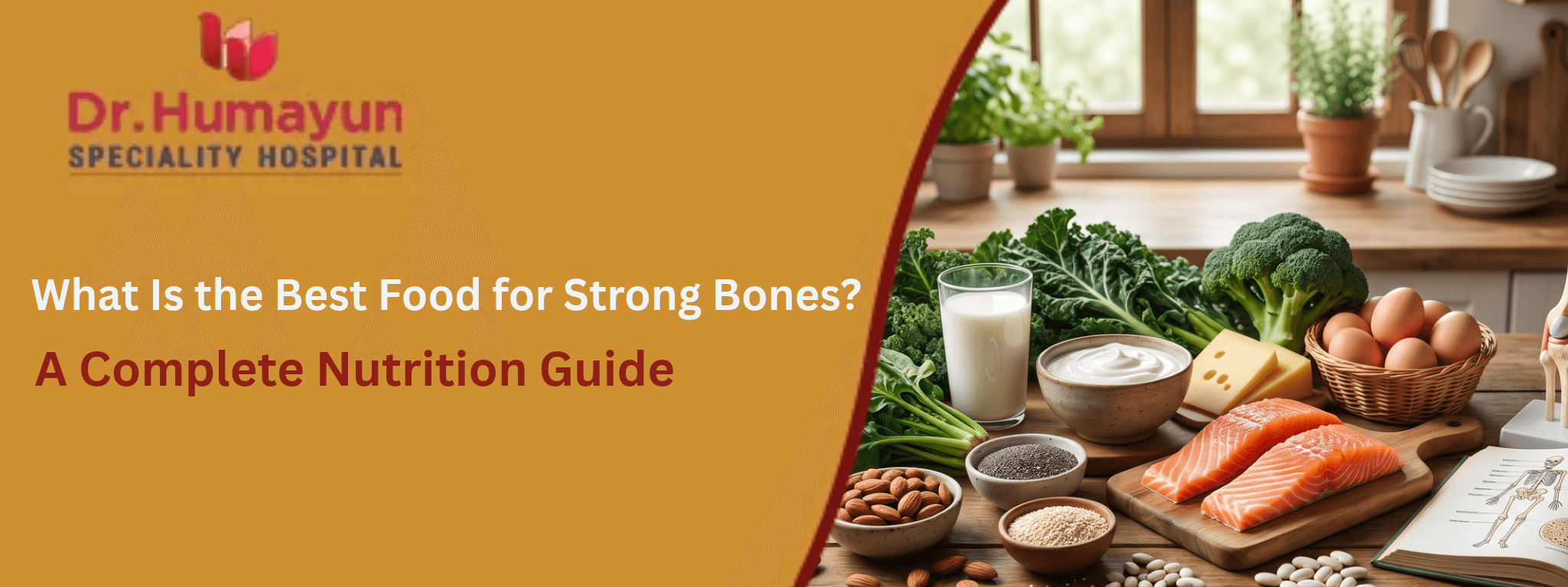
The question of what is the best food for strong bones does not have a single answer. Several nutrients work together, each contributing to a different part of the bone-building process. Understanding what each nutrient does and where to find it in foods that are actually eaten in India makes it practical to build a genuinely bone-strengthening diet.
Key Nutrients for Strong Bones and What They Do
Bone is made primarily of collagen (a protein framework) and calcium phosphate crystals deposited within that framework. Supporting the formation, maintenance, and repair of this structure requires multiple nutrients working in coordination.
Calcium The Primary Building Block
Calcium is the most abundant mineral in bone. Approximately 99% of the body's calcium is stored in the skeleton. When dietary calcium intake is insufficient, the body draws calcium from bone to maintain blood calcium levels, progressively weakening bone over time.
Daily requirement for adults: 1,000 mg per day (Endocrine Society of India consensus). Lactating mothers require 1,200 mg. Teenagers aged 16 to 18 require 1,050 mg. Postmenopausal women should aim for 1,200 mg daily.
Best food sources of calcium in India:
| Food | Calcium per 100 g or per serving | Notes |
|---|---|---|
| Ragi (finger millet) | 344 mg per 100 g | One of the highest plant-based calcium sources in India |
| Sesame seeds (til) | 975 mg per 100 g | Use in chutneys, laddoos, and til rice |
| Paneer | 480 to 500 mg per 100 g | Widely available and well-absorbed source |
| Cow's milk (200 ml) | ~250 mg per glass | Standard daily contribution |
| Curd / yogurt (200 g) | ~240 mg | Also contributes probiotics for gut health |
| Amaranth seeds (rajgira) | ~215 mg per 100 g | Used in laddu and rotis |
| Green leafy vegetables | Variable (50 to 200 mg per 100 g) | Moringa, drumstick leaves, and amaranth leaves are higher; spinach has calcium but also oxalates that reduce absorption |
| Sardines with bones | ~350 mg per 100 g | Edible small bones are an excellent calcium source |
| Tofu (calcium-set) | 200 to 400 mg per 100 g | Check that it is calcium-set, not nigari-set |
| Almonds | ~270 mg per 100 g | A good snack-based source |
Calcium intake above 2,000 mg per day should be avoided, as the Endocrine Society of India notes a potential association with vascular calcification at very high intakes.
Vitamin D Calcium's Essential Partner
Vitamin D is required for calcium to be absorbed from food in the small intestine. Without adequate vitamin D, a large proportion of dietary calcium passes through the gut unabsorbed. Vitamin D also plays a direct role in bone cell function and in preventing secondary hyperparathyroidism, which accelerates bone loss.
Despite India's sunlight levels, vitamin D deficiency is highly prevalent across the country. Factors including sun avoidance, sunscreen use, indoor lifestyles, darker skin requiring longer UV exposure, and air pollution all reduce cutaneous vitamin D synthesis.
Best food sources of vitamin D:
-
Fatty fish: salmon, sardines, mackerel, and tuna (good sources where consumed)
-
Egg yolks (modest amounts)
-
Fortified foods: certain packaged milks, soya beverages, and breakfast cereals that are fortified with vitamin D (check labels)
-
Sunlight: 15 to 30 minutes of midday sun exposure on the arms and legs (without sunscreen) several times a week contributes meaningfully to vitamin D status, particularly between 10 am and 3 pm when UV-B rays are sufficient
The Endocrine Society of India recommends 1,000 to 2,000 IU of vitamin D daily as a supplement for adults who cannot meet needs through sunlight and food. A blood 25(OH)D test confirms status before supplementation.
Protein The Structural Framework of Bone
Collagen makes up approximately one-third of bone by weight. It provides the flexible protein scaffold in which calcium and phosphate crystals are deposited. Without adequate protein, bone collagen formation is impaired, even when calcium intake is sufficient.
Protein is also critical for muscle mass, which reduces fall risk. Falls are the most common precipitant of fragility fractures in older adults.
Best food sources of protein for bone health:
-
Dairy: milk, curd, paneer, and cheese (also provide calcium simultaneously)
-
Eggs: a complete protein and also a source of vitamin D and phosphorus
-
Lentils and dals (masoor, moong, toor, chana): good plant-based protein; combine with grains for a complete amino acid profile
-
Chickpeas and rajma: versatile legume-based protein
-
Lean meat and poultry
-
Fish: also provides phosphorus, omega-3 fatty acids, and in small fish, calcium
-
Soya products: tofu and edamame (also contain calcium and isoflavones)
Adults generally need 0.8 to 1.0 g of protein per kilogram of body weight per day. After a fracture, requirements increase to approximately 1.2 to 1.5 g per kilogram to support bone healing.
Vitamin K2 Directing Calcium Into Bone
Vitamin K2 activates osteocalcin, a protein produced by bone-building cells (osteoblasts) that binds calcium and helps anchor it within the bone matrix. Without sufficient vitamin K2, calcium may be deposited in soft tissues and blood vessels rather than in bone. This is why vitamin K2 is increasingly discussed in the context of both bone health and cardiovascular health.
Best food sources of vitamin K2:
-
Fermented foods: nato (a fermented soya product widely consumed in Japan; the richest known food source of MK-7, the most bioavailable form of K2)
-
Hard and soft cheeses
-
Egg yolks
-
Chicken and organ meats
-
Curd and fermented dairy products contain modest amounts
Vitamin K1 (found in dark leafy greens such as methi, palak, moringa, and curry leaves) is also important for bone health and is converted partly to K2 in the body.
Magnesium and Phosphorus
Magnesium is involved in activating vitamin D and plays a structural role in bone mineral crystals. Approximately 60% of the body's magnesium is stored in bone. Low magnesium intake is associated with lower bone mineral density.
Phosphorus works alongside calcium as a major component of bone mineral (hydroxyapatite). Most Indians get adequate phosphorus through their regular diet (dals, dairy, grains, and animal foods), so deficiency is uncommon.
Best food sources of magnesium:
-
Nuts and seeds: almonds, cashews, pumpkin seeds (kaddu ke beej), sunflower seeds
-
Whole grains: ragi, jowar, bajra, oats, and brown rice
-
Legumes: black beans, rajma, lentils
-
Dark leafy greens: methi, drumstick leaves, moringa
-
Bananas and avocados


Vitamin C and Zinc Collagen Synthesis and Bone Repair
Vitamin C is essential for collagen synthesis. Without it, the collagen framework that holds bone mineral cannot be formed or maintained. Vitamin C also acts as an antioxidant, reducing oxidative stress that can damage bone cells.
Zinc supports bone-building cells (osteoblasts) and helps inhibit excessive bone resorption. Zinc deficiency is associated with reduced bone density and impaired fracture healing.
Best food sources of vitamin C:
-
Amla (Indian gooseberry): one of the richest known sources of vitamin C, with approximately 600 mg per 100 g
-
Guava, papaya, and citrus fruits (oranges, lemon, sweet lime)
-
Bell peppers (capsicum)
-
Tomatoes, drumstick pods, and raw mango
-
One amla or one medium guava daily covers the vitamin C requirement well
Best food sources of zinc:
-
Pumpkin seeds, sesame seeds, and hemp seeds
-
Nuts: cashews and almonds
-
Legumes: chickpeas, lentils, and rajma
-
Dairy: curd and paneer
-
Lean meat, poultry, and shellfish (oysters are the richest known food source)
-
Whole grains: ragi and jowar
Best Food for Bone Fracture Recovery
A bone fracture creates a localised repair process that begins within hours of the injury. The body forms a blood clot, then a soft callus of collagen and cartilage, then a hard callus as calcium is deposited, and finally remodels the bone over months. Each phase of this process has specific nutritional requirements. The best food for bone fracture recovery supports all phases.
Increased Protein for Callus Formation
Protein provides the amino acids needed to produce the collagen scaffold of the callus. After a fracture, protein intake should increase to approximately 1.2 to 1.5 g per kilogram of body weight per day. Practical ways to achieve this on an Indian diet include:
-
Adding an extra serving of dal or rajma to daily meals
-
Including eggs or paneer at two meals
-
Adding a glass of milk or lassi daily
-
Using til, pumpkin seeds, or mixed nuts as snacks
Vitamin C to Support Collagen Production
Vitamin C intake is particularly important in the first weeks after a fracture when the collagen scaffold of the callus is being laid down. Including amla, guava, or citrus fruit daily during fracture recovery is practical and effective.
Calcium and Vitamin D for Mineralisation
Calcium and vitamin D work together to mineralise the callus and convert it to hard bone. Daily calcium intake at or above 1,000 mg and adequate vitamin D status (which may require a supplement if levels are known to be low) support the mineralisation phase of fracture healing.
Foods to Limit After a Fracture
| Item | Why to Limit |
|---|---|
| Excess salt and high-sodium processed foods | Increases calcium loss in urine |
| Sugary soft drinks (especially cola-type drinks) | Phosphoric acid may interfere with calcium balance |
| Alcohol | Reduces calcium absorption and impairs vitamin D metabolism |
| Excessive caffeine (more than 2 cups daily) | Modestly increases urinary calcium loss |
| Smoking | Reduces blood flow to healing bone and impairs osteoblast function |
A Practical Daily Bone-Health Diet for Indian Adults
Translating individual nutrients into daily eating patterns makes the guidance usable. A bone-healthy Indian diet does not require expensive or unfamiliar foods.
Practical daily framework:
-
Breakfast: Ragi porridge or ragi dosa, or oats with milk and a small handful of mixed nuts and seeds. A glass of milk alongside breakfast contributes 250 mg calcium immediately.
-
Mid-morning: Amla juice, a guava, or an orange for vitamin C.
-
Lunch: Rice or jowar/bajra roti with a dal or sambar (drumstick sambar adds calcium and vitamin C together), a vegetable subzi with green leafy vegetables (methi, moringa), curd on the side.
-
Snack: A small portion of sesame laddoo (til laddoo), almonds, or a boiled egg.
-
Dinner: Roti or rice with rajma, chana, or a paneer preparation, a leafy vegetable dish.
-
Sun exposure: 15 to 20 minutes of midday sunlight on the arms several days a week, where practical.
This framework can meet calcium requirements of 1,000 mg daily through food for most adults without supplementation, consistent with the Endocrine Society of India's food-first guidance.
When Supplements May Be Needed
A food-first approach is the recommended starting point for bone nutrition in India. Supplements are recommended when:
-
Blood vitamin D levels are confirmed low (below 20 ng/mL) on a 25(OH)D test
-
Dietary calcium intake is reliably below 600 to 700 mg daily and cannot be increased through food
-
Pregnancy and lactation increase requirements beyond what diet can easily provide
-
Postmenopausal women with osteoporosis are prescribed calcium and vitamin D as adjuncts to bone-active medication
-
Malabsorption conditions (coeliac disease, inflammatory bowel disease) impair nutrient uptake
-
Strict vegan diets exclude dairy without sufficient calcium-rich plant food substitutes
Calcium supplements should be taken at times separated from iron tablets, thyroid medication (levothyroxine), and certain antibiotics, as they can interfere with absorption of these drugs.
Orthopaedic and Bone Health Care at Humayun Hospital, Chennai
At Dr. Humayun Speciality Hospital, T Nagar, Chennai, specialist orthopaedic care is led by Dr. Mani Ramesh and Dr. Dinesh Raju, providing expert evaluation and treatment for fractures, bone density concerns, osteoporosis, chronic joint conditions, and sports injuries.
-
Dr. Mani Ramesh (MBBS, MS Orthopaedics, FAOI) serves as Senior Consultant Orthopaedic Surgeon with over 43 years of surgical experience. Specialising in joint replacement (arthroplasty), computer-assisted and robotic techniques, and complex trauma reconstruction, his approach emphasises careful surgical timing and preserving natural joint function whenever possible.
-
Dr. Dinesh Raju (MBBS, MS Orthopaedics) is a Consultant Orthopaedic Surgeon with over 14 years of expertise in trauma and complex fracture management, arthroscopy, sports injuries, and conservative joint care. His clinical focus prioritises thorough diagnostic evaluation and non-surgical therapies before considering surgical intervention.
Both specialists collaborate with the broader clinical and diagnostic team at Humayun Hospital to provide integrated musculoskeletal care. For individuals managing osteoporosis, recovering from bone trauma, or addressing age-related joint stiffness, consultations cover bone mineral density (BMD) testing, vitamin D and calcium status evaluations, and personalised medical, nutritional, and rehabilitative plans.
Chat with our medical assistant for guidance on bone health, fracture recovery, or booking a consultation.