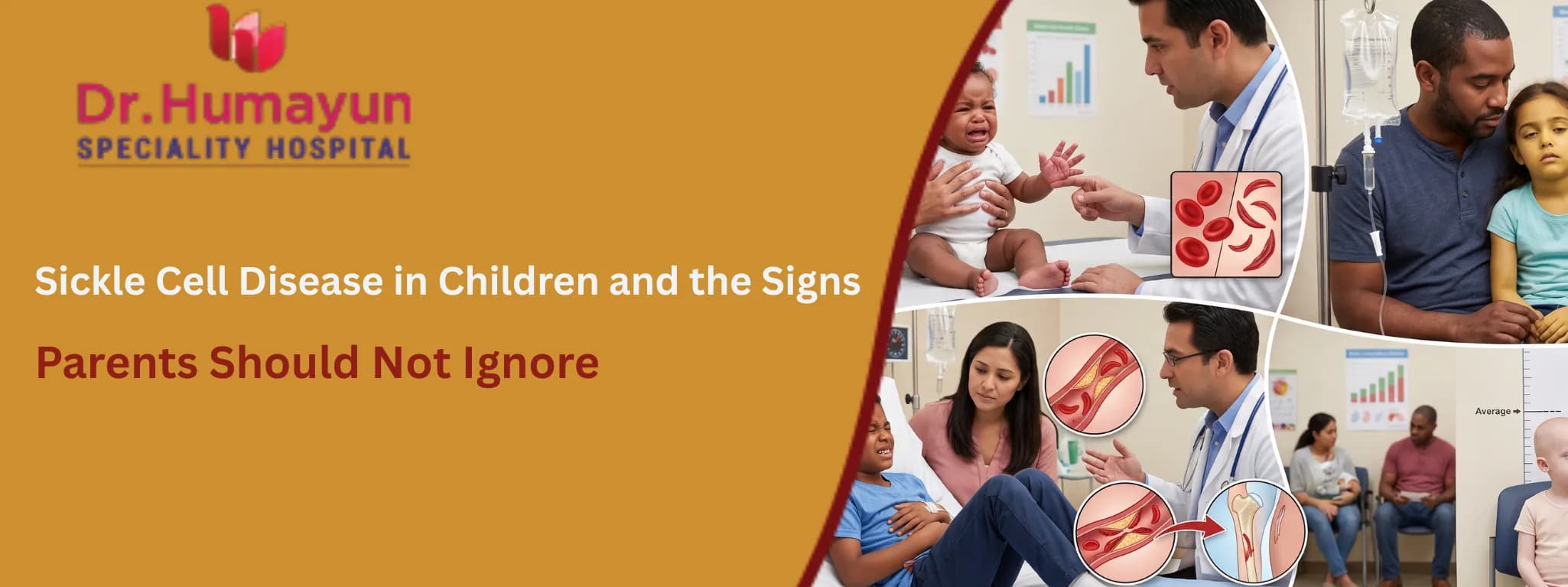

For most parents, a diagnosis of sickle cell disease in their newborn comes as a significant shock, particularly when the pregnancy seemed entirely healthy and uncomplicated. For others, the diagnosis comes later when a child develops unexplained episodes of pain, severe infections, or a swollen abdomen that sends the family to emergency care for the first time.
Sickle cell disease in children is a serious, lifelong inherited blood disorder. But it is also a condition that, with appropriate care, structured monitoring, and parent awareness of the specific warning signs that require immediate action, allows children to grow, develop, and live meaningful, active lives.
Understanding what sickle cell disease does to a child's body, what signs should never be dismissed or treated at home, and what modern treatment now makes possible is the most important knowledge a parent of a child with SCD can have.
What Sickle Cell Disease Is and How It Affects a Child's Body
Sickle cell disease is a group of inherited blood disorders caused by a mutation in the gene for haemoglobin, the protein in red blood cells that carries oxygen. In SCD, the abnormal haemoglobin causes red blood cells to become stiff, sticky, and crescent-shaped (like a sickle) rather than the flexible, round discs they should be.
These abnormal sickle cells:
-
Cannot move smoothly through narrow blood vessels
-
Clump together and block blood flow
-
Deprive organs and tissues downstream of oxygen
-
Break down far faster than normal red blood cells (lasting only 10 to 20 days rather than the normal 90 to 120 days), causing chronic anaemia
SCD is not a single condition. It encompasses several genetic types, the most common and most severe of which is haemoglobin SS disease (HbSS), followed by haemoglobin SC disease (HbSC) and sickle beta-thalassaemia variants. The severity of symptoms differs between types, with HbSS generally producing the most significant disease burden.
SCD is inherited when a child receives the sickle cell gene from both parents. Both parents can be carriers (sickle cell trait) with no symptoms themselves but a 25% chance of having a child with SCD in each pregnancy.
Sickle Cell Disease in India: What Parents Need to Know
SCD is not a rare condition in India. It is a significant national public health problem, particularly concentrated in tribal communities and specific non-tribal populations across several states including Chhattisgarh, Odisha, Maharashtra, Gujarat, and Tamil Nadu. An estimated 30,000 to 50,000 babies are born with SCD in India annually.
Despite this burden, SCD is underdiagnosed and undertreated in many parts of India because of limited neonatal screening programmes, poor community awareness, and diagnostic delays that allow preventable complications to develop. Many Indian families reach specialist haematology or paediatric care only after a serious complication has already occurred.
The consequences of undiagnosed or inadequately managed SCD in childhood are severe:
-
Repeated episodes of vaso-occlusive pain that impair education, development, and quality of life
-
Recurrent serious bacterial infections that can be fatal
-
Silent brain infarcts (brain damage without obvious stroke symptoms) affecting neurodevelopment and school performance
-
Organ damage accumulating silently from repeated ischaemic episodes
Awareness of SCD in children and early engagement with specialist paediatric care are the two changes that most dramatically improve long-term outcomes for affected Indian children.
Signs and Symptoms of Sickle Cell Disease in Children
Pain Crises (Vaso-Occlusive Episodes)
Acute pain is the hallmark symptom of SCD in children. It occurs when sickle-shaped red blood cells block blood vessels, depriving the bones, muscles, and organs of oxygen.
In young children and infants, the earliest and most characteristic sign is dactylitis, painful swelling of the hands and feet caused by sickle cell blockage of small blood vessels in the fingers and toes. This typically appears between six months and two years of age and is often the first clinical manifestation that prompts an SCD diagnosis.
In older children, pain crises most commonly affect:
-
The long bones of the arms and legs
-
The back and spine
-
The chest
-
The abdomen
Pain crises vary enormously in severity from mild episodes manageable at home to agonising, hospitalisation-requiring episodes. The pain begins suddenly, is severe, and may last hours to days.
Triggers for pain crises include:
-
Cold temperatures or sudden temperature changes
-
Dehydration
-
Physical overexertion
-
Infections and fever
-
High altitude
-
Stress and emotional upset
Parents learn over time what triggers their child's crises and what early pain signals look like. This pattern recognition is clinically valuable but does not replace prompt medical assessment when pain is severe.
Anaemia and Fatigue
Because sickle cells break down far faster than normal red blood cells, children with SCD have chronic haemolytic anaemia. Their haemoglobin levels are persistently lower than age-appropriate norms.
Signs of chronic anaemia in a child with SCD:
-
Persistent pallor of the skin, lips, and inner eyelids
-
Unusual fatigue and reduced activity tolerance
-
Jaundice (yellow discolouration of the eyes and skin) from the breakdown products of destroyed red cells
-
Rapid heart rate
-
Shortness of breath on moderate activity
Children with SCD adapt to their chronically low haemoglobin over time. A sudden drop below their individual baseline (aplastic crisis, often triggered by parvovirus B19 infection) produces acute symptomatic anaemia that may require emergency blood transfusion.
Swollen Spleen (Splenic Sequestration)
Splenic sequestration is one of the most dangerous acute complications of SCD in young children and one that parents must be specifically taught to recognise.
In splenic sequestration, large amounts of blood become suddenly trapped in the spleen. The spleen enlarges rapidly, and the child's haemoglobin drops precipitously, producing acute severe anaemia and circulatory shock.
Signs of splenic sequestration:
-
Sudden rapid enlargement of the abdomen (a hard, enlarged lump on the left side of the abdomen)
-
Sudden extreme pallor
-
Rapid, weak pulse
-
Unusual drowsiness or limpness
-
Inability to be roused normally
Splenic sequestration is a medical emergency. If not recognised and treated immediately with blood transfusion, it can be fatal within hours. Parents of children with SCD are taught to palpate their child's spleen regularly and to recognise rapid enlargement as a sign requiring same-day emergency care.
Acute Chest Syndrome
Acute chest syndrome is the leading cause of death in children with SCD and the most common reason for hospitalisation.
It develops when sickle cells block the small blood vessels in the lungs, causing inflammation, oxygen deprivation, and in some cases pneumonia or pulmonary infarction. It can develop during a painful crisis or appear without prior pain. Signs of acute chest syndrome:
-
Chest pain, typically pleuritic (worsened by deep breathing)
-
Fever
-
Cough
-
Rapid breathing or difficulty breathing
-
Falling oxygen saturation (can be measured with a pulse oximeter)
-
New infiltrate visible on chest X-ray
Acute chest syndrome requires immediate hospital assessment. It is treated with supplemental oxygen, antibiotics (because infection is frequently involved), incentive spirometry, pain control, and often blood transfusion or exchange transfusion.


Stroke
Children with SCD have an 11% risk of overt stroke before the age of 20, compared to an approximately 0.01% risk in the general child population. Stroke occurs because sickle cells damage the walls of cerebral blood vessels, causing them to narrow over time.
The August 2024 AAP Clinical Report specifically states that any acute neurological symptom other than a transient mild headache requires urgent evaluation in a child with SCD.
Warning signs of stroke in a child with SCD:
-
Sudden weakness or paralysis of the face, arm, or leg on one side
-
Sudden difficulty speaking or understanding speech
-
Sudden vision change or loss
-
Sudden severe headache unlike previous headaches
-
Sudden difficulty walking or loss of balance
-
Seizure
Any of these symptoms in a child with SCD is a neurological emergency. Call for emergency services and transport immediately. Do not wait for symptoms to pass.
Transcranial Doppler ultrasound (TCD) is a non-invasive brain blood flow assessment recommended annually from age two to 16 in children with HbSS. Children with elevated TCD velocity measurements are at highest stroke risk and should receive regular blood transfusions to reduce stroke risk.
Infections and Fever
Children with SCD have a functionally absent or damaged spleen from repeated sickling episodes. The spleen is a critical immune organ that filters bacteria from the bloodstream. Without it, children are extremely vulnerable to life-threatening bacterial infections, particularly from encapsulated organisms including Streptococcus pneumoniae and Haemophilus influenzae.
Fever in a child with SCD must never be assumed to be a simple viral illness. Any fever above 38.5 degrees Celsius in a child with SCD is a potential medical emergency until proven otherwise.
Signs requiring emergency assessment:
-
Any fever above 38.5 degrees Celsius
-
Signs of infection anywhere in the body alongside fever
-
A child who appears severely unwell or unusual
Management in the emergency setting includes immediate blood cultures, empirical broad-spectrum intravenous antibiotics, and admission for monitoring. Delay in antibiotic administration in a febrile child with SCD can be fatal within hours.
Preventive measures that significantly reduce infectious risk:
-
Daily penicillin prophylaxis from two months of age until at least five years (often lifelong in HbSS)
-
Full vaccination schedule with specific emphasis on pneumococcal vaccines (PCV13 and PPSV23), Hib vaccine, and influenza vaccine annually
-
Meningococcal vaccination
Other Signs Parents Should Know
-
Yellow eyes and skin (jaundice): Mild chronic jaundice from ongoing red cell breakdown is expected in SCD. Sudden worsening of jaundice, particularly alongside abdominal pain, may indicate a hepatic sequestration crisis or acute liver involvement.
-
Delayed growth and puberty: Children with SCD may be smaller and develop later than peers. This reflects the metabolic demands of chronic anaemia and frequent illness. Monitoring growth and pubertal development at every paediatric visit identifies children who need additional nutritional or specialist support.
-
Eye problems: SCD damages blood vessels in the retina, causing sickle cell retinopathy. Annual ophthalmological screening from approximately age 10 identifies retinal changes before they cause permanent vision loss.
-
Priapism in boys: Painful prolonged erection in boys with SCD, caused by blood becoming trapped in penile tissue, is a urological emergency. It should be reported to a doctor if lasting more than two hours, as untreated priapism causes permanent erectile dysfunction.
-
School and cognitive difficulties: Silent brain infarcts, small areas of brain damage from blocked blood vessels that occur without obvious stroke symptoms, are present in over 20% of children with SCD and affect concentration, memory, and academic performance. Educational support and neurodevelopmental assessment are a legitimate clinical need for many affected children.
Treatment of Sickle Cell Disease in Children: What Is Available Now
Hydroxyurea
Hydroxyurea is the most established and most widely available disease-modifying treatment for SCD in children. It works primarily by stimulating the production of fetal haemoglobin, which does not sickle, thereby reducing the proportion of sickle cells in the bloodstream.
Benefits of hydroxyurea in children:
-
Reduces the frequency of painful crises
-
Reduces hospitalisations
-
Reduces the incidence of acute chest syndrome
-
Reduces the need for blood transfusions
-
May reduce stroke risk
An oral hydroxyurea solution (Xromi) was approved in 2024 for paediatric patients from six months of age onward, significantly extending the age at which disease-modifying therapy can be offered. Hydroxyurea is prescribed by a specialist with regular blood count monitoring to guide safe dosing.
Blood Transfusion Therapy
Regular blood transfusions, typically given every three to four weeks, are used for children at high risk of stroke (identified by TCD) and for managing recurrent severe complications. Transfusions reduce the proportion of sickle cells in circulation and reduce viscosity. The main challenges with long-term transfusion are iron overload (managed with iron chelation therapy) and alloimmunisation.
Curative Options: Stem Cell Transplant and Gene Therapy
Haematopoietic stem cell transplantation (bone marrow transplant) from a matched sibling donor offers a potential cure for SCD and is currently the most established curative pathway. It is most successful in young children before significant organ damage has accumulated.
Gene therapy for SCD has reached a landmark moment. In 2023, the FDA approved the first gene therapy treatments for SCD. In 2024, a 12-year-old boy received the world's first gene therapy treatment for SCD at Children's National Hospital in the United States. These treatments, which edit or replace the defective haemoglobin gene in the patient's own stem cells, represent a genuine therapeutic revolution, though access remains limited and cost is currently prohibitive in most settings including India.
Preventive and Supportive Care
-
Folic acid supplementation daily to support red blood cell production
-
Penicillin prophylaxis from infancy
-
Complete vaccination including pneumococcal, meningococcal, Hib, and annual influenza vaccines
-
Regular TCD screening from age two
-
Annual retinal examination from approximately age ten
-
Adequate hydration as a daily preventive measure against vaso-occlusion
-
Avoiding extreme cold, dehydration, and overexertion as individual triggers
-
Psychological and educational support for the child and family
Warning Signs That Always Need Emergency Care
Parents of children with SCD should keep this list accessible and act on it without hesitation.
Go to the emergency department immediately for:
-
Fever above 38.5 degrees Celsius
-
Any neurological symptom: weakness, speech difficulty, vision change, sudden severe headache, seizure
-
Sudden rapid enlargement of the abdomen (splenic sequestration)
-
Chest pain with fever and breathing difficulty (acute chest syndrome)
-
Severe pain that is not controlled by home pain management within two hours
-
A child who is unusually pale, limp, or difficult to rouse
-
Priapism lasting more than two hours in a male child
Assessment and Care at Humayun Hospital, T Nagar
At Humayun Hospital, T Nagar, Chennai, our paediatric and internal medicine team provides structured assessment and management support for children with sickle cell disease and their families. We offer:
-
Haematological assessment and diagnosis confirmation including haemoglobin electrophoresis
-
Coordination of preventive care including vaccination and penicillin prophylaxis
-
Hydroxyurea initiation and monitoring in eligible children
-
Urgent assessment and management of acute SCD complications including fever, pain crises, and suspected acute chest syndrome
-
Blood transfusion coordination and monitoring
-
Ophthalmological referral for annual retinal screening
-
Family education on splenic palpation, fever management, and trigger avoidance
-
Genetic counselling referral for families regarding carrier status and future pregnancies
SCD management is a long partnership between the family and the clinical team. The more informed parents are about their child's condition, the better positioned they are to identify early warning signs, act promptly, and advocate effectively for the care their child needs.
Chat with our medical care assistant for quick guidance and support.