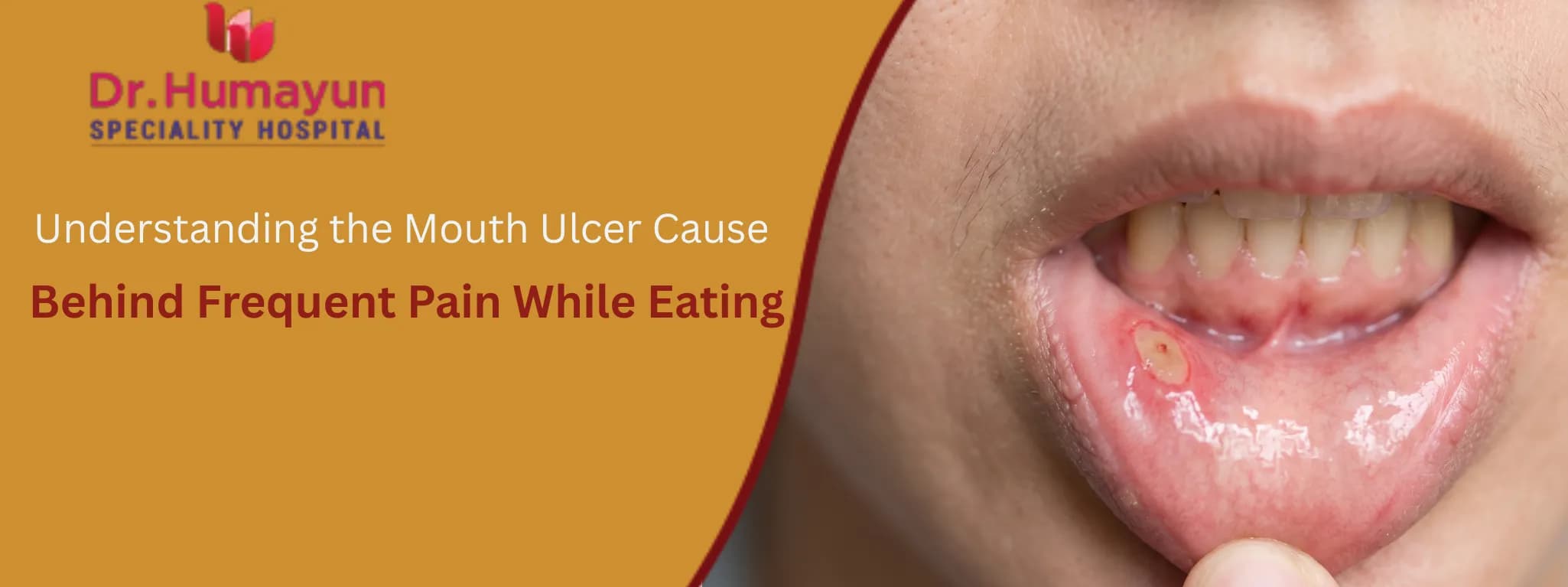

That familiar sharp sting the moment food touches a raw spot inside the cheek. The difficulty of eating spicy food, biting into something hard, or even drinking hot tea when a mouth ulcer is active. For most people, this experience is occasional and brief. For many others, it is a recurring disruption to daily life that has never been properly explained or treated.
Mouth ulcers are extraordinarily common. Yet despite how frequently they occur, the actual mouth ulcer cause is poorly understood by most of the people experiencing them. Without understanding the cause, the treatment is limited to symptomatic relief, and the ulcers keep coming back.
This guide explains every significant cause of mouth ulcers, from the most common everyday triggers to the systemic conditions that are responsible for frequent, severe, or unusual presentations, and identifies the specific warning signs that mean a mouth ulcer needs specialist assessment rather than home management.
What Exactly Is a Mouth Ulcer?
A mouth ulcer is an open sore that forms on the lining of the mouth, including the inner surface of the cheeks, the tongue, the gums, the lips, and the floor or roof of the mouth. The ulcer forms when the mucosal lining of the mouth breaks down, exposing the sensitive tissue beneath.
The most common type, recurrent aphthous stomatitis (RAS), affects at least 20% of the population and consists of round or oval-shaped ulcers with an area of surrounding redness. The ulcer itself has a yellowish-white or grey floor with an erythematous halo, and causes a burning, stinging, or pricking pain in the oral mucosa that intensifies when eating, drinking, or speaking.
The Three Types of Aphthous Ulcers and How They Differ
Understanding the clinical classification of recurrent aphthous ulcers helps explain why some patients have a mild, manageable experience and others have a significantly more disruptive condition.
Minor aphthous ulcers are the most common form, accounting for around 80% of all aphthous ulcers. They are less than 5 mm in diameter, appear on the moveable lining of the mouth rather than the gums or palate, and typically heal within 7 to 14 days without leaving a scar. Most people who experience occasional mouth ulcers fall into this category.
Major aphthous ulcers are less common, affecting 10 to 15% of patients with recurrent aphthous stomatitis. They are larger, typically greater than 10 mm in diameter, and can appear anywhere in the mouth including the soft palate, making swallowing painful. Major ulcers may last up to three months and can leave a scar when they finally heal. Their size and duration make them significantly more disruptive to eating and daily function.
Herpetiform ulcers are the least common type, affecting 5 to 10% of cases. They are small, pinpoint-sized (1 to 2 mm) and appear in clusters of more than 20 at a time, which can merge to form larger ulcers. Despite the name, they are not caused by the herpes virus.
The Most Common Mouth Ulcer Cause in Everyday Life
For the majority of people, recurrent mouth ulcers do not reflect a single underlying disease. They reflect a multifactorial vulnerability that is triggered by a combination of everyday factors. Understanding each trigger allows for meaningful lifestyle changes that reduce both frequency and severity.
The etiology of recurrent aphthous stomatitis is multifactorial and involves immune dysregulation and increased levels of inflammatory cytokines, alongside a range of identifiable local and systemic triggers.
Oral Trauma and Physical Injury
One of the most immediate and straightforward mouth ulcer causes is physical trauma to the oral mucosa. Injuries to the oral mucosa can occur due to various factors, including accidental trauma such as chewing the lip, tongue, or cheek, as well as mechanical irritation from dental appliances, sharp or broken teeth, or ill-fitting dentures.
When the mucosal lining is disrupted by a sharp tooth edge, a hard food item, or an accidental bite during eating, the resulting wound can develop into a fully formed ulcer within 24 to 48 hours in susceptible individuals. This is why people often notice that they tend to get ulcers repeatedly in the same location, typically the spot most vulnerable to their specific dental alignment or chewing pattern.
Chronic traumatic ulcers of the oral cavity are frequently brought on by repeated mechanical stress, such as biting or friction from dental appliances or sharp or broken carious teeth. If a dental cause is identified and corrected, this specific ulcer pattern often resolves without further treatment.
Stress and Psychological Factors
Chronic psychological stress is one of the most consistently reported mouth ulcer causes across clinical literature. When stressed, the hormones produced by the body increase the risk of developing mouth ulcers, operating through multiple mechanisms simultaneously.
Elevated cortisol and other stress hormones suppress local immune defences in the oral mucosa, reduce saliva production (which has natural antimicrobial and protective properties), and disrupt the hormonal environment that the mucosal lining depends on for healthy cell renewal. Additionally, stress behaviours, including jaw clenching, cheek or lip biting as nervous habits, and poor nutritional intake during stressful periods, all compound the biological vulnerability.
For Chennai's working population navigating demanding professional environments, long commutes, and high-performance expectations, stress-driven mouth ulcers represent a recognisable and preventable pattern. Stress reduction through adequate sleep, regular breaks, and where needed psychological support is a legitimate and clinically justified component of managing recurrent mouth ulcers in this population.
Dietary Triggers and Food Sensitivities
Certain foods act as direct triggers for mouth ulcers through either mucosal irritation or immune-mediated responses. Common dietary mouth ulcer causes include spicy foods, acidic fruits such as tomatoes, pineapple, and citrus, hard-textured foods that abrade the mucosa, and in some individuals, specific foods including chocolate, nuts, and certain cheeses that appear to trigger an immune response in the mucosal tissue.
The relationship between diet and mouth ulcers in Chennai is particularly relevant given the city's dietary culture. South Indian food relies heavily on spices, tamarind, tomatoes, and other acidic ingredients. For individuals who are already prone to aphthous ulcers, this dietary pattern can serve as a consistent trigger that keeps ulcers recurring regardless of other management strategies.
Identifying personal dietary triggers through a brief elimination approach, temporarily removing suspected trigger foods and assessing whether ulcer frequency decreases, is a practical and effective first step for patients with recurrent dietary-related mouth ulcers.
Toothpaste Containing Sodium Lauryl Sulfate
This is one of the most consistently underrecognised mouth ulcer causes, and one that is entirely correctable. Sodium lauryl sulfate (SLS) is a foaming agent present in the vast majority of commercial toothpastes. In individuals who are sensitive to it, SLS has been shown to irritate and damage the thin mucosal lining of the mouth, increasing susceptibility to ulceration.
Several clinical studies have demonstrated that switching to an SLS-free toothpaste reduces the frequency and severity of recurrent aphthous ulcers in sensitive individuals. For patients who experience frequent mouth ulcers without an obvious systemic or dietary explanation, trialling an SLS-free toothpaste for two to three months is a simple, low-risk intervention that may produce a significant reduction in ulcer frequency.
Hormonal Changes
Hormonal fluctuations, particularly in women during menstruation, pregnancy, or menopause, represent a recognised mouth ulcer cause. Many women notice a clear pattern of ulcers appearing in the week before their menstrual period, tracking closely with the fall in oestrogen and progesterone that precedes menstruation. This hormonally driven pattern tends to improve during pregnancy (when oestrogen levels are sustained and high) and to worsen or change at menopause. For women who identify a clear hormonal pattern to their mouth ulcers, this information guides the clinical approach, distinguishing their mouth ulcer cause from dietary, traumatic, or nutritional origins.
Nutritional Deficiencies as a Mouth Ulcer Cause
This is one of the most clinically significant and frequently overlooked categories of mouth ulcer cause in India. Deficiencies in essential nutrients, particularly vitamin B12, iron, folate, and zinc, are linked to the development and recurrence of mouth ulcers. These nutrients play a key role in maintaining a healthy immune system and in tissue repair within the oral mucosa.
In India, where vegetarian diets are common and where absorption disorders are prevalent, nutritional deficiencies represent a disproportionately important mouth ulcer cause compared to many Western populations.
Vitamin B12 Deficiency
Vitamin B12 is essential for the production of red blood cells and plays a significant role in cell division and DNA synthesis throughout the body's tissues, including the mucosal lining of the mouth. A deficiency in this vitamin can cause recurrent mouth ulcers alongside fatigue and pale skin.
The mechanism through which B12 deficiency causes mouth ulcers is direct: insufficient B12 impairs DNA production in the mucous membrane, leading to cell death and ulcer formation. Individuals at particular risk of B12 deficiency include strict vegetarians and vegans (since B12 is found primarily in animal products), those with conditions like pernicious anaemia or Crohn's disease that impair B12 absorption, and those who have had gastrointestinal surgery affecting the terminal ileum where B12 is absorbed.
For patients who report frequent mouth ulcers alongside fatigue, tingling in the hands or feet, or a smooth, sore tongue, B12 deficiency should be tested for and treated before other management approaches are pursued.
Iron and Folate Deficiency
Iron deficiency reduces the oxygen delivery to oral tissues, causing the mucosal lining to become pale, thin, and more susceptible to ulceration and slow healing. Folate (vitamin B9) deficiency impairs the regeneration of cells in the mouth in a similar manner to B12 deficiency, compromising the mucosa's ability to repair itself after minor injury or irritation.
Research has specifically found reduced dietary intake of vitamin B12 and folate in patients with recurrent aphthous stomatitis compared to unaffected controls, directly linking these nutritional deficiencies to ulcer recurrence. Iron deficiency is particularly common among menstruating women in India, where anaemia rates are high and dietary iron intake from predominantly vegetarian diets may be insufficient.
Blood tests confirming iron, B12, and folate levels are among the first investigations recommended when a patient presents with frequent or persistent mouth ulcers without an obvious local cause. Supplementation of identified deficiencies produces a meaningful and often dramatic reduction in ulcer frequency.
Zinc Deficiency
Zinc plays a key role in immune function, wound healing, and the maintenance of mucosal integrity. Deficiency in zinc leads to impaired immune surveillance within the oral mucosa, slowed healing of established ulcers, and increased susceptibility to new ulcer formation. Zinc deficiency is common in India, particularly among individuals with poor dietary variety, high consumption of phytate-rich foods such as whole grains and legumes that inhibit zinc absorption, or gastrointestinal conditions affecting absorption.
Systemic Conditions as a Mouth Ulcer Cause
When mouth ulcers are frequent, severe, unusually large, slow to heal, or accompanied by symptoms involving other parts of the body, a systemic cause must be considered. Several important medical conditions can manifest through recurrent mouth ulcers as a primary or significant feature.
Recurrent aphthous stomatitis is a possible clinical manifestation of more severe conditions including Behcet's disease and HIV infection, and is also associated with gastrointestinal conditions including Crohn's disease, ulcerative colitis, and malabsorption diseases including coeliac disease.
Crohn's Disease and Ulcerative Colitis
Gastrointestinal inflammatory conditions, particularly Crohn's disease and ulcerative colitis, are well-established causes of recurrent mouth ulcers. In Crohn's disease, aphthous ulcers in the mouth may precede the development of bowel symptoms by months or years, and their presence can be the first clinical indication of the underlying condition.
The mouth ulcers seen in association with Crohn's disease tend to be more severe and persistent than typical minor aphthous ulcers, and may affect the gingiva (gums) and other areas not usually affected by simple recurrent aphthous stomatitis. Any patient with recurrent mouth ulcers alongside abdominal pain, diarrhoea, weight loss, or perianal discomfort should be specifically investigated for inflammatory bowel disease.
Coeliac Disease
Coeliac disease, an immune reaction to gluten that causes damage to the small intestinal lining, is directly linked to recurrent mouth ulcers through the nutritional deficiencies it produces. When the intestine is damaged by coeliac disease, the absorption of iron, B12, folate, and zinc is all impaired, creating the nutritional deficiency environment in which mouth ulcers thrive.
In some patients, recurrent mouth ulcers are the presenting complaint of coeliac disease, appearing before the gastrointestinal symptoms become apparent. A simple blood test for coeliac antibodies (anti-tissue transglutaminase IgA) can identify this cause, and adherence to a gluten-free diet often produces a dramatic reduction in ulcer frequency.
Behcet's Disease
Behcet's disease is a rare systemic inflammatory condition characterised by recurrent oral ulcers as its most consistent feature, typically occurring three or more times per year and often in combination with genital ulcers, eye inflammation, and skin lesions. The oral ulcers in Behcet's disease are often more severe, more painful, and more frequent than standard recurrent aphthous stomatitis, and do not respond well to standard topical management alone.
Behcet's disease is managed by a rheumatologist with systemic immunosuppressive therapy. It is more prevalent in populations along the ancient Silk Road trading routes, and India has a meaningful disease burden, making it a relevant diagnostic consideration in patients with severe, recurrent oral and genital ulceration.
Medications as a Mouth Ulcer Cause
Certain medications cause mouth ulcers as a direct side effect or as part of an allergic or immune-mediated reaction. Common culprits include nonsteroidal anti-inflammatory drugs (NSAIDs) such as ibuprofen and aspirin when taken over extended periods, beta-blockers, certain antibiotics, nicorandil (a cardiac medication), methotrexate and other chemotherapy agents, and some anticonvulsant medications.
Any patient who notices that their mouth ulcers began or worsened after starting a new medication should discuss this with their prescribing doctor, as a medication switch or dose adjustment may resolve the problem without any additional treatment.


The Warning Signs That Mean a Mouth Ulcer Needs Specialist Assessment
The vast majority of mouth ulcers are benign and self-limiting. But there is a small and important category of oral ulcers that are not benign, and distinguishing between a benign aphthous ulcer and a more serious pathology including oral cancer is one of the most important reasons to seek specialist assessment for any ulcer that does not behave as expected.
In many cases, the underlying cause behind mouth ulcers is benign. But on rare occasions, it can even be a sign of oral cancer, making it essential to know which warning signs warrant further investigation.
Red Flags That Should Never Be Ignored
An ulcer that does not heal within three weeks is the single most important warning sign. The vast majority of benign mouth ulcers, regardless of cause, heal within 7 to 21 days. An ulcer that has been present for more than three weeks without improvement must be assessed by a specialist to exclude malignancy.
-
An ulcer that is growing progressively larger rather than remaining stable or gradually reducing in size warrants investigation regardless of how long it has been present.
-
A painless ulcer. This is counterintuitive, because benign mouth ulcers are almost always painful. A painless oral ulcer is more suspicious for malignancy than a painful one, and should prompt prompt specialist assessment.
-
An ulcer with hard, raised, or irregular borders. Benign aphthous ulcers have soft, well-defined edges. An ulcer with a firm, indurated (hardened) border, irregular margins, or a cauliflower-like surface is a red flag for oral squamous cell carcinoma.
-
An ulcer in an unusual location. Benign aphthous ulcers typically occur on moveable mucosal surfaces. An ulcer on the hard palate, on the floor of the mouth, or on one specific lateral border of the tongue that persists warrants specialist evaluation.
-
A single persistent ulcer on one side only. Benign ulcers may appear anywhere in the mouth, but a persistent unilateral ulcer in the same location, particularly on the tongue or floor of mouth, requires assessment.
-
An ulcer accompanied by a lump in the neck. A swollen, firm lymph node in the neck alongside a persistent oral ulcer is a significant warning sign requiring urgent specialist referral.
-
Unexplained weight loss or difficulty swallowing alongside mouth ulcers. These systemic features alongside an oral ulcer expand the clinical concern beyond a benign mucosal condition.
How Mouth Ulcers Are Investigated and Diagnosed
For a patient with occasional, clearly minor aphthous ulcers that resolve within the expected timeframe and follow recognisable triggers, investigation is not always necessary. But for patients with frequent, severe, or persistent ulcers, a structured investigation clarifies whether a systemic, nutritional, or serious cause is responsible.
The Clinical Assessment and Investigation Pathway
-
Clinical history: A detailed history explores the pattern of ulcers, their frequency, size, duration, location, and any relationship to stress, menstruation, specific foods, medications, or known systemic conditions. Nearly half of people who suffer from mouth ulcers have a close relative with the same problem, making family history relevant.
-
Blood tests: The standard initial blood investigation for recurrent mouth ulcers includes a full blood count, serum B12, serum folate, serum ferritin (iron stores), zinc levels, and blood glucose. Depending on the clinical picture, additional tests including coeliac antibody screen, inflammatory markers, and HIV testing may be appropriate. Blood tests are often arranged to check for any underlying cause.
-
Biopsy: A biopsy is occasionally required when a mouth ulcer does not follow the expected pattern of a benign aphthous ulcer, when an ulcer has been present for more than three weeks, when the ulcer has suspicious features, or when an unusual mucosal condition is suspected. A biopsy involves taking a small tissue sample under local anaesthetic for histopathological examination, and is the only definitive way to exclude malignancy.
-
Specialist referral: When systemic conditions including Behcet's disease, inflammatory bowel disease, or coeliac disease are suspected, referral to the appropriate specialist (rheumatologist, gastroenterologist) runs concurrently with dental or ENT management of the oral manifestation.
Effective Treatments for Recurrent Mouth Ulcers
Treatment for mouth ulcers is guided by the identified cause. Where a specific underlying mouth ulcer cause is found and corrected, treatment of that cause often resolves the ulcers without further specific intervention.
Treating the Underlying Cause
Correcting nutritional deficiencies through targeted supplementation of B12, folate, iron, or zinc, often produces a significant and relatively rapid reduction in ulcer frequency. Vitamin B complex is recommended for patients with mouth ulcers due to vitamin deficiencies, particularly B12 and folic acid, as it helps promote healing and prevent recurrence.
Addressing coeliac disease through a strict gluten-free diet, treating inflammatory bowel disease with appropriate medical therapy, switching a causative medication with the prescribing doctor's guidance, or replacing ill-fitting dental appliances all represent cause-directed treatments that resolve the mouth ulcer problem at its root.
Symptomatic Management for Pain and Healing
Where the mouth ulcer cause is not fully correctable or where symptomatic relief is needed while the underlying cause is being addressed, the following approaches are effective.
-
Topical corticosteroids are the main treatment for recurrent aphthous stomatitis and are effective for most patients. They are applied locally in the form of mouthwashes, sprays, or lozenges and reduce the local inflammatory response that drives pain and prolongs ulcer duration.
-
Antiseptic mouthwash containing chlorhexidine (alcohol-free formulations are preferred to avoid further mucosal irritation) reduces the bacterial load around ulcers and supports healing. Use of an antiseptic alcohol-free mouthwash is a recommended component of aphthous ulcer management.
-
Local anaesthetic gels and preparations containing lignocaine or benzocaine provide immediate, temporary pain relief, particularly before meals in patients who find eating significantly impaired. These are suitable for use before meals to allow more comfortable eating during active ulcer episodes.
-
Saltwater rinses provide a simple, accessible, and genuinely effective home measure. One teaspoon of salt dissolved in a glass of warm water, used as a gentle rinse, helps keep the ulcer environment clean and may mildly accelerate healing.
-
Dietary modification during active ulcer episodes, temporarily avoiding identified triggers including spicy food, citrus, and hard-textured foods, reduces unnecessary provocation of existing ulcers and allows them to heal more rapidly.
Preventing Recurrent Mouth Ulcers
For patients whose mouth ulcer cause has been identified, prevention is largely a matter of sustaining the corrective measures that addressed that cause. For those with multifactorial recurrent aphthous stomatitis without a single identifiable cause, a structured prevention approach can meaningfully reduce frequency and severity.
Practical Prevention Measures
-
Nutritional adequacy: Ensuring a diet that meets the requirements for B12, folate, iron, and zinc is the most consistently supported preventive measure for nutritionally driven ulcers. In Indian vegetarian diets, B12 is particularly at risk of deficiency and may require supplementation rather than dietary correction alone.
-
Stress management: Engaging in stress-reducing activities, adequate sleep, and deliberate recovery time reduces the hormonal and immune disruption that makes the oral mucosa more vulnerable. This is a genuine, not a generic, preventive measure for stress-triggered ulcers.
-
SLS-free oral hygiene products: For patients with a sensitivity to sodium lauryl sulfate, using SLS-free toothpaste removes a recurring trigger from their daily routine.
-
Dental care and appliance review: Regular dental assessments ensure that sharp teeth, broken restorations, or ill-fitting dentures and braces are identified and corrected before they cause chronic trauma-induced ulcers.
-
Trigger food avoidance: Incorporating a balanced diet rich in vitamins and minerals while avoiding identified personal triggers, whether spicy foods, acidic fruits, or specific food sensitivities, reduces the frequency of dietary-provoked episodes.
When to See a Specialist at Humayun Hospital, T Nagar
At Humayun Hospital, T Nagar, Chennai, we see patients with mouth ulcers at every point along the spectrum, from frequent minor aphthous episodes that have never been properly investigated to persistent ulcers that require biopsy and specialist evaluation.
Our team understands that recurrent mouth ulcers are not simply a nuisance. For many patients, they represent a significant disruption to eating, speaking, and quality of life that persists because the underlying mouth ulcer cause has never been identified. We take a thorough approach to assessment, beginning with a complete clinical history and targeted blood investigations, and proceeding to biopsy or specialist referral where the clinical picture warrants it.
For patients in T Nagar and across Chennai who have been managing mouth ulcers with generic treatments that provide temporary relief but no lasting reduction in frequency, we offer the structured investigation and personalised treatment that actually addresses the cause.
Chat with our medical care assistant for quick guidance and support.