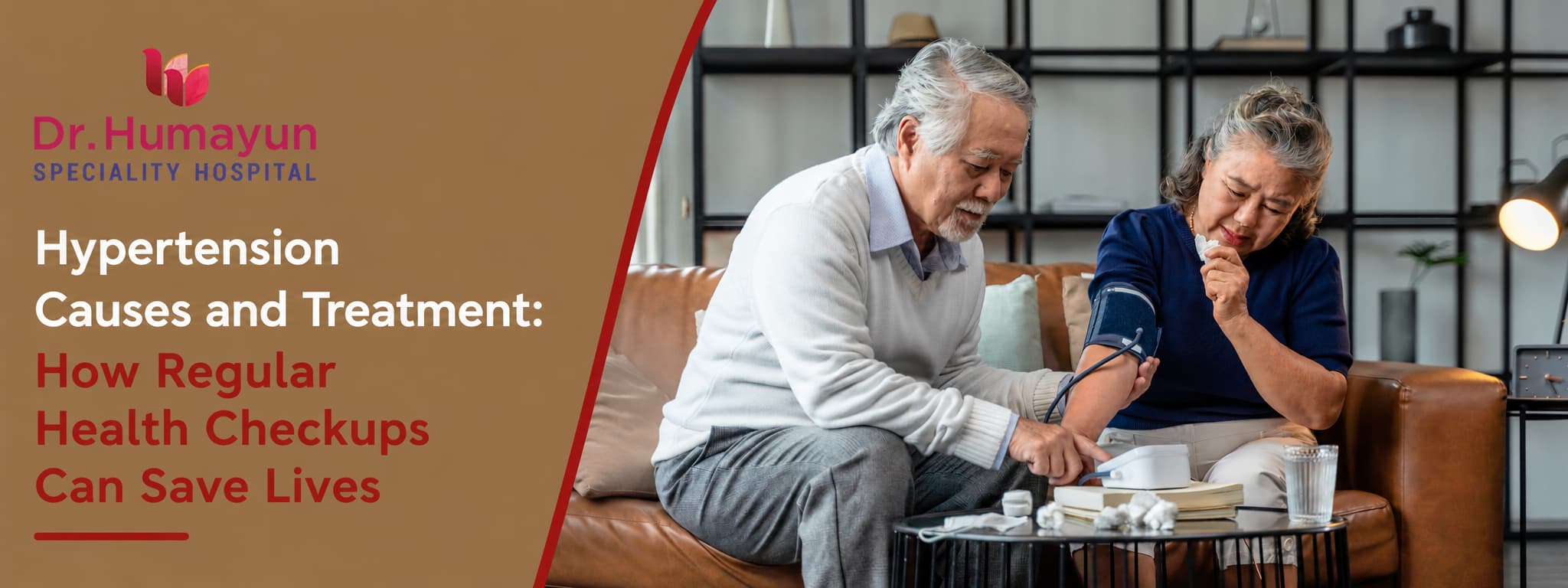

High blood pressure does not announce itself. It does not cause pain, it does not disrupt your sleep, and it does not prevent you from managing your daily work routine. Instead, it operates entirely in the background as a silent clinical force, progressively stiffening your arterial walls and placing severe structural strain on your heart, brain, and kidneys.
In India, hypertension has escalated into a major public health crisis. Due to a profound lack of routine screening, nearly 72% of hypertensive adults remain completely unaware of their condition, accumulating quiet end-organ damage until it triggers a sudden heart attack or stroke.
Fortunately, this vascular decline is entirely preventable. By coupling proactive clinical tracking with evidence-based lifestyle changes and targeted medical therapies, you can seamlessly intercept cardiovascular disease. This comprehensive guide explores the primary causes of hypertension, details standard blood pressure classifications, and explains how routine, three-minute health checkups can effectively safeguard your long-term health.
India's Hypertension Reality: Three Gaps That Cost Lives
The statistics behind hypertension in India are striking not because of how many people have it, but because of how few of them know, and of those who do know, how few are doing anything about it.
A national survey found that of all hypertensive adults in India, only 27.9% were aware of their diagnosis. Of those aware, only 14.5% were under treatment. And of those under treatment, only 12.6% had their blood pressure actually controlled.
This produces what epidemiologists call a treatment cascade with three gaps:
-
Gap 1: The Diagnosis Gap. The majority of people with hypertension in India have never been told they have it, because they have never had their blood pressure measured in a clinical setting.
-
Gap 2: The Treatment Gap. Many people who know they have high blood pressure are not on medication or structured lifestyle treatment, either because they do not take it seriously, cannot access care, or have been told to "watch and wait" without a clear plan.
-
Gap 3: The Control Gap. Even among those who are being treated, blood pressure is not adequately controlled. Poor control is particularly prevalent in urban populations, where the demands of professional life make medication adherence and lifestyle change difficult to sustain.
The Chennai Urban Rural Epidemiology Study (CURES) reported an overall hypertension incidence of 25.8% over 9 years, reflecting the significant and ongoing burden in Chennai specifically. High systolic blood pressure is the single largest contributor to disability-adjusted life years in India, and 28.1% of all Indian deaths are due to cardiovascular disease.
Regular health checkups directly address all three gaps. They create awareness, motivate treatment, and enable monitoring of control. They are not optional extras in a hypertension management plan. They are the plan.
What Is Hypertension and How Is It Defined
Blood pressure is the force that blood exerts against the walls of the arteries as the heart pumps. It is recorded as two numbers: systolic pressure (the pressure when the heart beats) over diastolic pressure (the pressure when the heart rests between beats), expressed in millimetres of mercury (mmHg).
According to current international and Indian hypertension guidelines:
-
Normal blood pressure: below 120/80 mmHg
-
Elevated blood pressure: systolic 120 to 129 and diastolic below 80 mmHg
-
Stage 1 Hypertension: 130 to 139 systolic or 80 to 89 diastolic mmHg
-
Stage 2 Hypertension: 140/90 mmHg or above
-
Hypertensive crisis (emergency): above 180/120 mmHg, particularly with symptoms
A single elevated reading is not sufficient for a hypertension diagnosis. Diagnosis requires elevated readings on at least two separate occasions, under resting conditions, to exclude white-coat hypertension (elevated readings caused by the clinical environment itself). Ambulatory blood pressure monitoring, where readings are taken automatically every 20 to 30 minutes over a 24-hour period, provides the most accurate real-world picture of a person's actual blood pressure profile.
Why Hypertension Is Called the Silent Killer
The defining and most dangerous characteristic of hypertension is the complete absence of symptoms in the vast majority of cases. People do not feel high blood pressure. There is no pain, no obvious physical sign, and no moment of recognition that something is wrong.
As Mayo Clinic confirms, most people with high blood pressure have no signs or symptoms, even if blood pressure readings reach dangerously high levels. Some people with high blood pressure may have headaches, shortness of breath, or nosebleeds, but these signs and symptoms are not specific and usually do not occur until high blood pressure has reached a severe or life-threatening stage.
This is why hypertension earns its description as a silent killer. The damage it causes is not silent at all. Chronically elevated blood pressure stresses the arterial walls, accelerates atherosclerosis, strains the heart muscle, damages the filtering units of the kidneys, and increases the risk of stroke. But none of this damage is felt until it reaches a threshold: a heart attack, a stroke, a kidney failure, or sudden vision loss.
By that point, years of damage have already been done. The only way to intercept this process before the event is to measure blood pressure regularly, even in the absence of any symptom.
Hypertension Causes and Treatment: Understanding What Drives It
Hypertension is classified into two categories based on its cause.
Primary (Essential) Hypertension
Primary hypertension accounts for approximately 90 to 95% of all hypertension cases. It has no single identifiable cause. Instead, it develops through the interaction of multiple factors over years:
-
Age: Blood vessel walls stiffen progressively with age, increasing systolic blood pressure. The rise of hypertension prevalence in younger Indian adults suggests accelerated vascular ageing driven by lifestyle factors.
-
Obesity and excess weight: Excess body mass increases blood volume, raises cardiac output, and activates hormonal pathways (including the renin-angiotensin-aldosterone system) that raise blood pressure. Every additional kilogram of body weight is associated with a measurable increase in blood pressure.
-
High sodium (salt) intake: India has one of the highest dietary sodium intakes globally. Excess sodium causes the kidneys to retain water, increasing blood volume and blood pressure. The salt in packaged snacks, pickles, processed foods, and restaurant meals adds significantly to the daily sodium load beyond home cooking.
-
Physical inactivity: A sedentary lifestyle reduces cardiovascular fitness and contributes to obesity, insulin resistance, and directly impaired endothelial function, all of which raise blood pressure.
-
Chronic psychological stress: Sustained stress activates the sympathetic nervous system and adrenal axis, raising heart rate and vasoconstriction. In Indian urban environments, chronic occupational and financial stress is a well-established contributor to blood pressure elevation.
-
Family history: A first-degree relative with hypertension significantly increases an individual's risk, reflecting both genetic predisposition and shared environmental factors.
-
Tobacco use and alcohol: Both are independent and modifiable risk factors for hypertension. Alcohol in particular raises blood pressure dose-dependently: more than two standard drinks per day is consistently associated with elevated blood pressure.
Secondary Hypertension
Secondary hypertension accounts for 5 to 10% of cases and arises from an identifiable underlying condition. Common causes include chronic kidney disease, renal artery stenosis, primary hyperaldosteronism, obstructive sleep apnoea, and thyroid disorders. Secondary hypertension should be suspected when blood pressure is severely elevated at a young age, when it is resistant to multiple medications, or when clinical features suggest a specific endocrine or renal cause.


How Hypertension Damages the Body Over Time
Understanding the organs that hypertension affects silently motivates the urgency of treatment and control.
-
Heart: Chronically elevated blood pressure forces the heart to pump against higher resistance. The left ventricular wall thickens (left ventricular hypertrophy), initially as a compensatory response, but over time this leads to impaired diastolic function, heart failure, and markedly elevated risk of heart attack and arrhythmia.
-
Brain: Hypertension is the most important modifiable risk factor for stroke, both ischaemic (blood clot blocking a cerebral artery) and haemorrhagic (rupture of a cerebral artery). It also directly damages small cerebral blood vessels, contributing to vascular dementia and cognitive decline over decades.
-
Kidneys: The kidneys contain millions of small blood vessels that filter the blood. Hypertension damages these vessels, reducing filtration capacity progressively. Hypertensive nephrosclerosis is a leading cause of chronic kidney disease and renal failure in India.
-
Eyes: The small blood vessels of the retina are visible on fundoscopy and show characteristic changes with sustained hypertension (hypertensive retinopathy), which can progress to vision impairment and blindness.
-
Arteries: Elevated pressure accelerates atherosclerosis throughout the body, increasing the risk of peripheral artery disease in the legs and abdominal aortic aneurysm.
Hypertension Causes and Treatment: Lifestyle Changes That Work
For Stage 1 hypertension and as an adjunct to medication in Stage 2, lifestyle modification is the most powerful non-pharmacological intervention available. According to Mayo Clinic, lifestyle changes can help control and manage high blood pressure.
-
Sodium reduction: Reducing dietary sodium to below 2,000 mg per day is associated with a meaningful reduction in systolic blood pressure. Practically, this means limiting processed foods, pickles, papads, canned foods, and restaurant meals, and being consciously moderate with salt in home cooking.
-
The DASH dietary pattern: The Dietary Approaches to Stop Hypertension (DASH) diet, rich in fruits, vegetables, whole grains, low-fat dairy, and low in saturated fats and sodium, consistently produces significant blood pressure reductions in clinical trials. Its principles translate well into an Indian dietary context by emphasising dals, leafy vegetables, low-fat curd, and whole grain rotis.
-
Regular physical activity: 150 minutes of moderate-intensity exercise per week reduces systolic blood pressure by approximately 5 to 8 mmHg. Brisk walking after meals is particularly practical for Chennai's urban population.
-
Weight management: Losing 5 to 10% of body weight produces clinically significant blood pressure reductions in overweight hypertensive individuals.
-
Alcohol reduction: Limiting alcohol to no more than one standard drink per day in women and two in men, or avoiding alcohol entirely, directly lowers blood pressure.
-
Smoking cessation: While smoking does not directly cause sustained hypertension, it dramatically amplifies cardiovascular risk and causes acute blood pressure spikes. Cessation is mandatory in hypertensive patients.
-
Stress management: Structured stress reduction through regular sleep, physical activity, and where needed, psychological support, reduces the sympathetic nervous system activation that sustains blood pressure elevation.
Antihypertensive Medications: When Lifestyle Is Not Enough
For Stage 2 hypertension (140/90 mmHg or above), medication is required alongside lifestyle change from the outset. For Stage 1 hypertension, medication is added when 3 to 6 months of optimised lifestyle change does not achieve target blood pressure.
The major antihypertensive drug classes, each with a distinct mechanism of action, include:
-
ACE inhibitors and ARBs (angiotensin receptor blockers): Reduce blood pressure by blocking the renin-angiotensin-aldosterone system. First-line choices for hypertension with diabetes or chronic kidney disease. Examples include ramipril, telmisartan, and olmesartan.
-
Calcium channel blockers: Relax arterial smooth muscle and reduce peripheral vascular resistance. Amlodipine is widely used in India and is particularly effective in older adults and people of South Asian ethnicity.
-
Thiazide and thiazide-like diuretics: Reduce blood volume by promoting sodium excretion from the kidneys. Commonly used in combination therapy.
-
Beta-blockers: Reduce heart rate and cardiac output. Used when hypertension coexists with heart failure, previous heart attack, or certain arrhythmias.
For most patients, a combination of two medications from different classes achieves better blood pressure control than maximum doses of a single agent. Regular medication review is essential as blood pressure targets may change with age and comorbidities.
How Regular Health Checkups Directly Save Lives
The case for regular blood pressure checkups is not abstract. It is grounded in a straightforward mathematical reality.
If 27.9% of hypertensive people are aware of their condition, 72.1% are not. Every unaware hypertensive person is accumulating silent end-organ damage. Regular checkups move people from unaware to aware, from aware to treated, and from treated to controlled.
A comprehensive health checkup for hypertension at Dr. Humayun Speciality Hospital includes:
-
Blood pressure measurement on both arms in a standardised resting position, with repeat measurement to confirm any elevated reading.
-
Full cardiovascular risk assessment, including lipid profile, fasting blood glucose, kidney function tests, and urine protein measurement, establishing whether hypertension is already causing renal damage.
-
ECG to detect left ventricular hypertrophy or arrhythmias associated with sustained hypertension.
-
Fundoscopy when hypertensive retinopathy is clinically suspected.
-
Lifestyle assessment covering diet, activity, weight, sleep, stress, alcohol, and tobacco use, informing a personalised management plan.
-
Personalised blood pressure target setting based on age, comorbidities (particularly diabetes and chronic kidney disease), and cardiovascular risk, because the target for a 35-year-old without comorbidities differs from that for a 65-year-old with diabetes.
The entire process takes a single appointment. Its value, however, is measured in prevented heart attacks, avoided strokes, and kidneys that continue to function.
Hypertension Management at Dr. Humayun Speciality Hospital, T. Nagar, Chennai
At Dr. Humayun Speciality Hospital, the general medicine and cardiology teams provide structured hypertension evaluation, management, and long-term follow-up for patients across the full spectrum of blood pressure elevation.
Services include standardised blood pressure assessment with repeat measurement and ambulatory monitoring where indicated; complete cardiovascular risk profiling with in-house blood investigations; personalised lifestyle counselling covering dietary sodium reduction, exercise planning, and weight management in the Indian context; antihypertensive medication initiation and regular review; ECG and echocardiographic assessment for target organ damage evaluation; and coordinated management for patients where hypertension coexists with diabetes, chronic kidney disease, or established cardiovascular disease.
The hospital's approach to hypertension reflects a single clinical truth: the best time to detect and treat high blood pressure is before it causes a stroke or a heart attack, not after.
The Reading That Changes Everything Takes Three Minutes
A blood pressure measurement takes less than three minutes. The information it provides can change the trajectory of your cardiovascular health for the next decade. Haven't checked your blood pressure recently, or know it is elevated but haven't taken action?
Chat with our care assistant for quick guidance and support and book a hypertension assessment at Dr. Humayun Speciality Hospital, T. Nagar, Chennai.