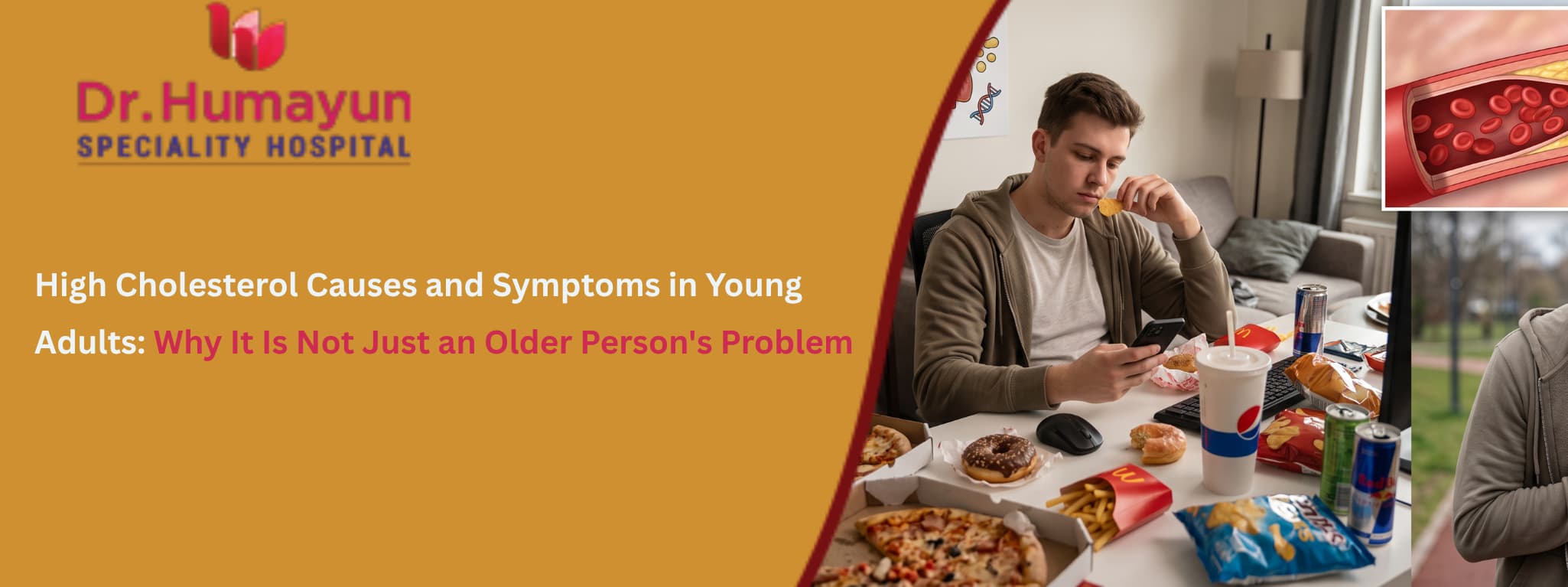
The assumption is almost universal. High cholesterol is something your parents worry about. Something checked at age 50-something alongside blood pressure and blood sugar during a routine midlife health review.
But a 2021 study found that roughly 27% of young adults had elevated LDL cholesterol of 130 mg/dL or above. One in four young adults. And most of them had no idea.
This is the core problem with high cholesterol causes and symptoms in young adults: there are no symptoms. Not at 130 mg/dL. Not at 160 mg/dL. Not until the years of silent arterial damage culminate in a heart attack or stroke, often decades later, but sometimes frighteningly early. Understanding what causes high cholesterol in young people, why early detection changes lifetime cardiovascular risk, and what the specific warning signs of serious inherited cholesterol conditions look like is information every person under 40 deserves.
Understanding Cholesterol: The Numbers That Matter
Cholesterol is not inherently harmful. It is a fat-like substance produced by the liver and obtained through diet that is essential for cell membrane construction, hormone production, and vitamin D synthesis. The problem is excess, specifically excess of the wrong type, in the wrong place.
The lipid panel numbers every young adult should know:
| Measurement | Healthy Target | Borderline | High or Harmful |
|---|---|---|---|
| Total Cholesterol | Below 200 mg/dL | 200 to 239 mg/dL | 240 mg/dL and above |
| LDL (bad) Cholesterol | Below 100 mg/dL | 130 to 159 mg/dL | 160 mg/dL and above |
| HDL (good) Cholesterol | Above 60 mg/dL (optimal) | 40 to 60 mg/dL | Below 40 mg/dL (risk factor) |
| Triglycerides | Below 150 mg/dL | 150 to 199 mg/dL | 200 mg/dL and above |
LDL is the primary concern. It deposits cholesterol into artery walls, forming plaques that narrow the lumen and harden the vessel, a process called atherosclerosis. HDL works in the opposite direction, retrieving cholesterol from vessel walls and transporting it back to the liver.
High Cholesterol Causes and Symptoms: The Silent Disease
Before discussing what causes high cholesterol, the most important clinical fact to establish is this: high cholesterol itself causes no symptoms.
High cholesterol levels cause no signs or symptoms. A young adult with an LDL of 180 mg/dL feels completely normal. Their energy is the same. Their appearance is the same. Nothing prompts them to seek a blood test. The arteries are quietly being narrowed by plaques for which there is no sensation, no pain, no warning.
The damage that LDL does to the arteries appears to be cumulative and irreversible. The longer a young person has had high cholesterol, the greater their risk of developing cardiovascular disease, even if it is brought under control before their late 30s.
This is why screening, not symptom-waiting, is the appropriate strategy. A cholesterol test, not a symptom, is what reveals this condition in young adults.
High Cholesterol Causes in Young Adults
Diet High in Saturated and Trans Fats
Dietary fat is one of the most modifiable high cholesterol causes and symptoms triggers. Saturated fats, found in red and processed meat, full-fat dairy, butter, palm oil, and coconut oil, stimulate the liver to produce more LDL cholesterol. Trans fats, found in partially hydrogenated vegetable oils used in commercial baked goods, fried snacks, and processed foods, simultaneously raise LDL and lower HDL, making them particularly harmful.
For young adults whose diets include regular fast food, packaged snacks, fried street food, and limited vegetables and whole grains, the dietary contribution to elevated LDL is directly and meaningfully addressable.
Physical Inactivity and Sedentary Lifestyle
Regular aerobic exercise raises HDL cholesterol (the beneficial type) and reduces triglycerides. Inactivity does the opposite. A desk-based work life without regular exercise progressively shifts the lipid profile in an unfavourable direction, even in the absence of obvious weight gain.
Young adults who sit for eight or more hours daily, commute by vehicle, and do not engage in any regular structured exercise are at significantly higher cholesterol risk than their active peers, regardless of body weight.
Excess Weight and Abdominal Obesity
Excess body fat, particularly visceral fat accumulating around the abdomen, is strongly associated with elevated LDL, elevated triglycerides, and reduced HDL. The relationship is direct: weight loss reduces LDL and triglycerides while improving HDL in most people.
Having high cholesterol at a young age is associated with certain risk factors including overweight or obesity. Importantly, people at or below their ideal weight can also have high cholesterol. Thinness is not protection, particularly when FH or an underlying medical condition is driving the elevation.


Familial Hypercholesterolaemia (FH)
FH is a genetic condition affecting approximately 1 in 250 people globally. A gene alteration passed down from one or both parents causes FH, meaning people who have this condition are born with it. Their LDL levels are dramatically elevated from birth, not because of diet or lifestyle, but because the genetic machinery that normally clears LDL from the bloodstream is faulty.
Most people with FH do not know they have it. This is a significant public health problem, because untreated FH leads to heart attacks in men in their 40s and 50s and women in their 50s and 60s, far earlier than the general population expects.
Warning signs specific to FH that may appear in young adults:
-
Xanthomas: cholesterol deposits that appear as yellowish lumps or plaques under the skin, typically around the Achilles tendon, the knees, or the elbows
-
Xanthelasmas: soft, yellowish deposits around the eyelids
-
Corneal arcus: a white or grey ring around the outer edge of the iris of the eye, appearing in younger people rather than the elderly
If a young adult has any of these physical signs, FH should be specifically tested for and treated aggressively.
Underlying Medical Conditions
Several medical conditions elevate cholesterol levels independent of diet or lifestyle:
-
Hypothyroidism: An underactive thyroid reduces the liver's ability to clear LDL, elevating blood levels
-
Type 2 diabetes and insulin resistance: Associated with elevated triglycerides and reduced HDL
-
Polycystic ovary syndrome (PCOS): Linked to dyslipidaemia including elevated triglycerides
-
Kidney disease: Nephrotic syndrome produces severe hyperlipidaemia
-
Liver disease: Non-alcoholic fatty liver disease (NAFLD) is increasingly recognised as a contributor to dyslipidaemia
Any young adult with high cholesterol that does not respond adequately to lifestyle measures should have thyroid function, blood glucose, kidney and liver function tested to exclude these contributing conditions.
Medications
Several commonly used medications raise cholesterol as a side effect:
-
Oral contraceptive pills (some formulations raise LDL and triglycerides)
-
Corticosteroids used for inflammatory conditions
-
Certain antipsychotic medications
-
Immunosuppressants used after transplantation
-
Retinoids used for skin conditions
Any young adult on regular medication who is found to have high cholesterol should discuss with their doctor whether their prescription is contributing.
Smoking and Alcohol
Cigarette smoking directly lowers HDL cholesterol and damages the endothelial lining of blood vessels, accelerating the atherosclerotic effect of elevated LDL. Even light or social smoking in young adults meaningfully worsens lipid profiles.
Excess alcohol raises triglycerides significantly. While moderate alcohol has a mild HDL-raising effect, the triglyceride elevation from heavy or binge drinking outweighs this benefit and worsens overall cardiovascular risk.
Why High Cholesterol in Young Adults Is Particularly Dangerous
High cholesterol in early adulthood can increase the risk of heart disease in later life, but the key clinical point is that this risk is not simply deferred to later life. It accumulates continuously from the point the LDL elevation begins.
High cholesterol levels at a young age are a significant risk factor for atherosclerosis. Every year of elevated LDL in a young artery contributes to plaque burden that is present, hardened, and obstructive decades later. A 25-year-old with an untreated LDL of 160 mg/dL has begun that accumulation, even though they have no symptoms and feel entirely well.
In India, a 2023 to 2024 screening study of urban young adults found abnormal cholesterol levels in 5.3% of individuals aged 18 to 30 screened. Combined with data showing 46% of the same cohort had elevated systolic blood pressure, the cardiovascular risk factor burden in Indian young adults is substantial and significantly underrecognised.
The Specific Situations Where High Cholesterol Should Be Tested Earlier in Young Adults
The standard recommendation is a fasting lipid panel from age 20 for all adults, repeated every five years if results are normal.
Test earlier, more frequently, or with urgency if:
-
A parent, sibling, or grandparent had a heart attack or stroke before age 55 in a male or before age 65 in a female
-
A first-degree relative has been diagnosed with familial hypercholesterolaemia
-
Physical signs of FH are present: xanthomas, xanthelasmas, or corneal arcus at a young age
-
The young adult has type 2 diabetes, PCOS, hypothyroidism, or kidney disease
-
BMI is 25 or above (or 23 by South Asian criteria)
-
There is a history of smoking or significant alcohol use
-
Any previous borderline or high result has been found on testing
What Managing High Cholesterol in Young Adults Involves
Lifestyle Modification First
For most young adults without FH and with moderately elevated cholesterol, lifestyle change produces significant LDL reduction and is the appropriate first intervention:
-
Replacing saturated fat with unsaturated fat (olive oil, groundnut oil, nuts, avocado, oily fish)
-
Increasing soluble fibre intake from oats, legumes, fruits, and vegetables
-
Achieving and maintaining a healthy body weight
-
Regular aerobic exercise at least 150 minutes per week
-
Stopping smoking completely
-
Reducing alcohol to within recommended limits
These changes can reduce LDL by 15 to 25% in motivated, adherent patients.
Medication When Lifestyle Is Insufficient or FH Is Diagnosed
High-intensity statin therapy is the first-line medication for young adults who have not responded adequately to lifestyle change, for all patients with FH regardless of lifestyle, and for young adults with very high baseline LDL.
Statins are safe for use in young adults, including women who are not pregnant or planning pregnancy. For women of reproductive age who may become pregnant, careful management is required because statins are not safe in pregnancy.
For patients with FH who do not achieve target LDL on statins alone, additional agents including ezetimibe and PCSK9 inhibitors are now available and should be discussed with a specialist.
Assessment at Humayun Hospital, T Nagar
At Humayun Hospital, T Nagar, our internal medicine and cardiology team provides comprehensive lipid assessment and management for young adults who are concerned about their cholesterol or who have identified risk factors that warrant testing.
We offer:
-
Fasting lipid panel and comprehensive cardiovascular risk factor assessment
-
Testing for secondary causes of high cholesterol including thyroid, kidney, and liver function
-
Screening for familial hypercholesterolaemia in young adults with high LDL or relevant family history
-
Dietary and lifestyle counselling tailored to individual risk profiles
-
Statin and non-statin pharmacological management where indicated
-
Long-term monitoring and lipid target review
Cholesterol does not wait until you are older to start damaging arteries. Neither should screening wait until symptoms appear, because by then the damage is already done.
Chat with our medical care assistant for quick guidance and support.