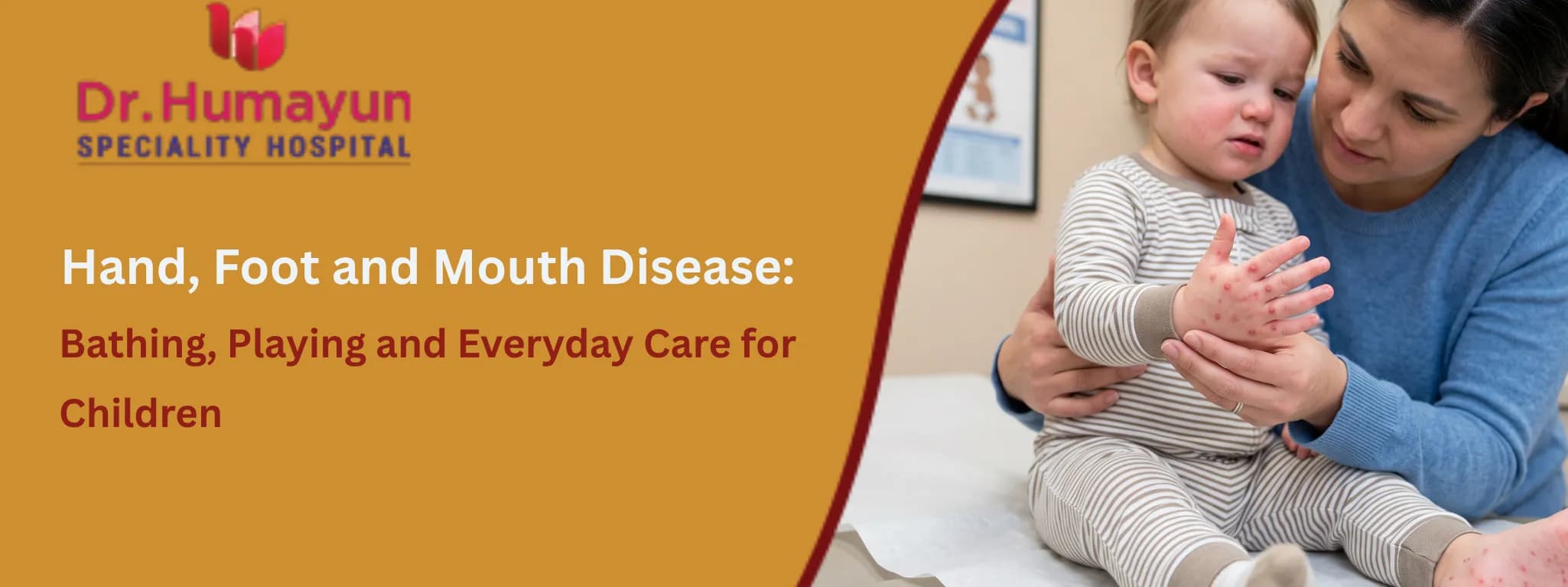

Your child has a fever. Then you notice blisters on the palms of their hands. Spots between their toes. Sores inside their mouth that are making every sip of water a battle. And you realise, or the doctor confirms, that your child has hand, foot and mouth disease.
Now what?
The illness itself is usually mild. Most children recover completely within seven to ten days. But for parents managing a sick, uncomfortable child at home, the practical questions come quickly. Can I give them a bath? Should they rest in bed or can they play? Is it safe to go to the park? When can they go back to school? What can they eat when their mouth is full of ulcers?
This guide answers every one of those questions clearly and specifically.
What Is Hand, Foot and Mouth Disease?
Hand, foot and mouth disease (HFMD) is a common viral illness caused primarily by coxsackievirus A16, enterovirus A71, and other enteroviruses. It affects children predominantly under five years of age, though older children and adults can also be infected.
The illness follows a predictable pattern:
-
Incubation period: Three to five days after exposure before symptoms appear
-
Early phase: Fever, reduced appetite, sore throat, and general unwellness for one to two days
-
Rash and blister phase: Painful sores inside the mouth (herpangina), a rash or blisters on the palms of the hands, soles of the feet, and sometimes the buttocks and knees
-
Recovery: Most children are significantly better within seven to ten days
HFMD is highly contagious. The virus spreads through direct contact with nasal and oral secretions, blister fluid, and the faeces of infected persons, as well as contaminated surfaces such as toys and door handles. It is most contagious during the first week of illness, but the virus can continue to shed in the stool for weeks to months after symptoms have resolved.
Can I Bathe My Child With HFMD?
Yes. Bathing is not only safe but actively beneficial for a child with hand, foot and mouth disease.
A cool or lukewarm bath does several things simultaneously:
-
Reduces discomfort from fever by gently lowering body temperature
-
Soothes the skin rash and blisters, which may be mildly uncomfortable or itchy
-
Keeps the blister sites clean, reducing the risk of secondary bacterial infection
-
Provides a brief period of distraction and comfort for a miserable child
A cool bath, perhaps with some colloidal oatmeal, can be very soothing for a child with HFMD blisters.
Practical bathing guidance:
-
Use lukewarm or cool water, not hot. Hot water increases skin irritation around blister sites.
-
Use a mild, fragrance-free soap or plain water. Avoid antibacterial soaps, harsh cleansers, or heavily fragranced bath products that irritate already sensitive skin.
-
Pat the skin dry gently with a soft towel rather than rubbing. Rubbing can rupture blisters and cause unnecessary pain.
-
After drying, dress the child in loose, soft cotton clothing. Avoid synthetic fabrics or tight-fitting clothing that rubs against blistered areas.
-
Keep fingernails trimmed short to reduce the temptation to scratch and the risk of breaking blisters or introducing bacteria.
What not to do during bathing:
-
Do not apply medicated creams, antibiotic ointments, or calamine lotion to blisters unless specifically recommended by your child's doctor
-
Do not burst blisters deliberately. They protect the underlying skin and burst naturally as healing progresses
-
Do not share towels, flannels, or bath toys between siblings during the illness
What Should My Child Eat and Drink?
This is where hand, foot and mouth disease becomes most challenging for parents. The mouth sores, which appear on the tongue, gums, inner cheeks, and throat, make swallowing painful. Many children refuse to eat or drink because it hurts.
Maintaining hydration is the most critical priority throughout the illness. Dehydration is the most common reason children with HFMD require hospital assessment.
Foods That Are Easier to Eat With Mouth Sores
Best options:
-
Cold or room-temperature foods are much better tolerated than warm or hot ones. Cold numbs the ulcers slightly and reduces pain.
-
Cold yoghurt, chilled custard, and cold mashed banana are soothing and nutritionally adequate
-
Cold milk, milkshakes, and room-temperature formula or breast milk for infants
-
Ice lollies and ice cream provide both hydration and pain relief through cold
-
Soft, smooth foods that do not require significant chewing: porridge, rice congee, mashed potato, soft-cooked rice
-
Smoothies made with fruit, yoghurt, and milk provide calories, hydration, and nutrition in a form the child can sip
Foods and drinks to avoid:
-
Citrus fruits and their juices: the acidity burns ulcerated mouth tissue significantly
-
Salty or spicy foods that irritate sores
-
Hard, crunchy foods including biscuits, toast, and crackers that scrape against ulcers
-
Hot food and hot drinks that worsen pain and inflammation
-
Carbonated drinks that cause stinging on open sores
Managing Fluid Intake When Drinking Is Painful
When a child is refusing fluids because of pain, the following strategies help:
-
Offer fluids in very small, frequent amounts rather than larger volumes less often
-
A syringe or spoon can be used for infants who will not take a bottle or breast because of mouth pain
-
Allow the child to sip through a straw to reduce contact between liquid and sores on the inner cheeks
-
Give paracetamol or ibuprofen (age-appropriate dose) thirty minutes before offering drinks, so the pain-relieving effect is active at the time of drinking
-
Ice chips or crushed ice for children old enough to have them safely provide hydration with a numbing effect
Signs of dehydration that require same-day medical assessment:
-
No urine output for eight or more hours
-
Dry mouth and lips with no tears when crying
-
Unusual drowsiness or limpness
-
Sunken eyes or sunken fontanelle in infants


Can My Child Play? Activity During HFMD
The short answer is: yes, at home, at the level the child feels able.
Most children with hand, foot and mouth disease are sick for the first two to three days, during which they are feverish, uncomfortable, and genuinely want to rest. Forcing activity during this phase is not appropriate or necessary.
From around day three to four, as the fever settles and the blisters begin to dry, many children become more energetic and want to play. This is a good sign of recovery, and there is no clinical reason to restrict a child who is feeling well enough to play from doing so at home.
Appropriate play during HFMD:
-
Quiet, calm activity at home: drawing, reading, puzzles, building games
-
Gentle movement around the house as the child wishes
-
Screen time in moderation to keep a sick child calm and entertained
-
Playing with siblings is acceptable within the household where exposure has already occurred, but avoid bringing other children into the home
Activities to avoid:
-
Swimming pools, communal water play areas, or any shared water activity. The virus spreads easily in water and through poolside surfaces.
-
Outdoor play in hot weather that causes excessive sweating, which can worsen blister discomfort and increase dehydration risk
-
Vigorous physical play that could cause blisters to rupture on the hands or feet
-
Any activity outside the home where the child will be in contact with other children
When Can My Child Return to School or Nursery?
This is one of the most frequently asked questions parents have, and the answer is specific. Children with confirmed hand, foot and mouth disease may return to school once they are:
-
Fever-free without fever-reducing medication for at least 24 hours
-
No longer drooling as a result of mouth sores
-
Have no open, oozing blisters (blisters that have dried and crusted over are acceptable)
-
Feel well enough to participate in routine activities
The presence of a fading rash or visible but dried, crusted blisters is not itself a reason to keep the child out of school. The infectious risk from dried blisters is significantly lower than from open, fluid-filled blisters or active fever.
However, some nurseries and schools have specific policies that require medical clearance or a set number of days at home. Check with your child's school if uncertain about their specific requirements.
Household Management: Stopping the Spread
Hand, foot and mouth disease spreads very easily within households. The following measures do not guarantee that other family members will not be infected, but they meaningfully reduce transmission.
The Most Important Hygiene Steps
Handwashing is the single most effective prevention measure. The virus spreads from the stool of infected children, even after visible symptoms have resolved. Every nappy change, every trip to the toilet, and every instance of wiping a child's nose or mouth requires thorough handwashing with soap and water for at least 20 seconds before touching anything else.
Frequent handwashing is critical to keeping HFMD from spreading, especially after nappy changes, using the bathroom, and before preparing or eating food.
Surface disinfection:
-
Disinfect frequently touched surfaces including toys, door handles, light switches, and tabletops daily
-
Wash toys in warm soapy water and allow to dry completely
-
Wash the child's clothes, bedding, and towels separately from household laundry and on a warm wash cycle
-
Do not share cups, plates, cutlery, or drinking straws between the sick child and siblings or adults
Managing the infected child's belongings:
-
Dispose of used tissues immediately after use
-
Change nappies in a dedicated area that is cleaned and disinfected after each change
-
Avoid kissing the child on the hands, feet, or mouth during the acute illness
Protecting adults:
Adults can be infected with HFMD and may have mild symptoms or none at all. Asymptomatic adults represent an important source of infection and can spread the virus to other children without knowing they are infected. Maintaining rigorous handwashing for all household members throughout the illness and the two weeks following recovery is the most important protective step.
Warning Signs That Require Medical Assessment
The large majority of HFMD cases resolve without complication. But specific features indicate that a doctor should assess the child.
Seek same-day assessment for:
-
Signs of dehydration (no urine for eight or more hours, very dry mouth, no tears, unusual drowsiness)
-
Fever that persists beyond five days or rises above 39.5 degrees Celsius despite paracetamol
-
The child appears extremely unwell, unusually lethargic, or is not responding normally
-
A severe or spreading rash that does not fit the typical HFMD pattern
Seek emergency assessment immediately for:
-
Neck stiffness, severe headache, or unusual sensitivity to light (possible meningitis, a rare complication)
-
Rapid breathing, difficulty breathing, or chest pain
-
Seizure or convulsion
-
Loss of consciousness or inability to be roused
-
Paralysis or sudden weakness in a limb (associated with enterovirus A71, a more serious HFMD pathogen)
HFMD caused by enterovirus A71 is associated with a small risk of serious neurological complications including viral meningitis and encephalitis. While these are uncommon, parents should be aware that a child who develops neurological symptoms alongside HFMD must be assessed urgently regardless of how mild the skin rash appears.
When to See Our Paediatric Team at Humayun Hospital
At Humayun Hospital, T Nagar, our paediatric team supports families through every stage of HFMD management, from initial assessment and diagnosis to management of complications and hospital care when dehydration requires intravenous fluids.
We provide:
-
Clinical assessment and diagnosis confirmation when parents are uncertain whether the rash is HFMD or another condition
-
Guidance on pain management and age-appropriate dosing for paracetamol and ibuprofen
-
Dehydration assessment and intravenous fluid management when oral intake is not adequate
-
Monitoring for neurological complications in children whose presentation raises concern
-
Clear information for parents on when the child can return to school and how to manage household transmission
Most children with HFMD need only home management and parental support. But for families who are uncertain, worried, or facing a child who will not drink anything, the paediatric team is here to help.
Chat with our medical care assistant for quick guidance and support.