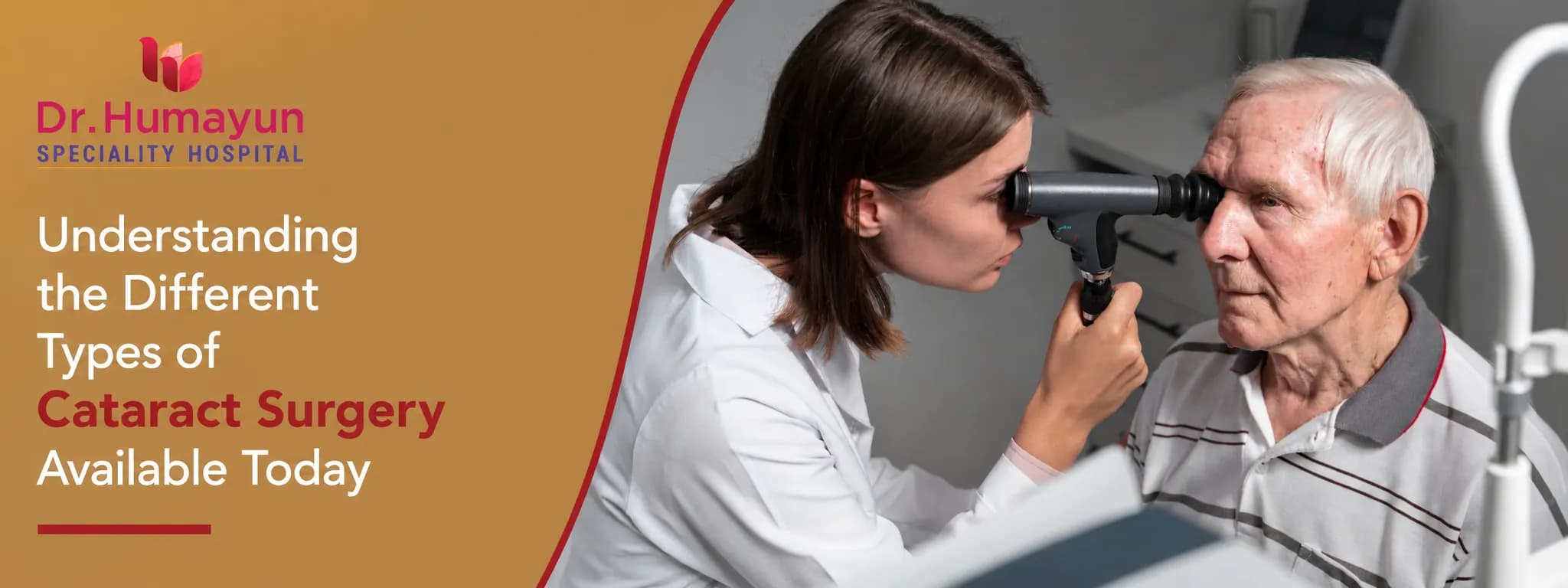

As we go through our senior years, it is totally natural to observe minor alterations in how we see the world around us.. You might find that the streetlights look hazy during your evening commute, reading the morning newspaper requires much more effort, or the vibrant colors of your household gardens look strangely dull and faded. Many times, these changes are not simple signs of exhaustion; they are the classic, slow-moving indicators of a cataract.
Discovering that you or an aging family member needs eye surgery can bring a sudden wave of hesitation. It is incredibly common to feel anxious about the thought of a procedure involving your eyes. You might worry about the pain, the recovery timeline, or find yourself confused by the complex medical terminology your friends use.
According to global blindness prevention tracking by the World Health Organization (WHO), cataracts remain the leading cause of reversible vision loss worldwide. Fortunately, eye care infrastructure has evolved remarkably. Today, restoring your vision is one of the safest, most precise, and stress-free medical processes available.
The Two Primary Surgical Techniques Used Today
Regardless of the type of artificial lens you select, the core objective of modern cataract surgery is to safely remove the cloudy natural lens and replace it with a clear, permanent implant. Eye specialists achieve this through two main technical pathways:
Phacoemulsification (Standard Ultra-Sonic Micro-Incision)
This is the most widely performed, highly trusted cataract technique in modern medicine. The surgeon creates a tiny micro-incision—often less than 2.5 millimeters wide—on the side of the clear surface of your eye (the cornea). A specialized, miniature probe is introduced that emits high-frequency ultrasound waves. These gentle vibrations break the cloudy cataract into microscopic fragments, which are then softly vacuumed away. Once the space is completely clear, a flexible, folded artificial lens is slipped through the same tiny opening, where it unfolds perfectly into place. Because the incision is so tiny, it seals naturally on its own without requiring traditional stitches or sutures.
Femtosecond Laser-Assisted Cataract Surgery (FLACS)
This premium approach replaces manual hand-held tools with a high-precision computer-guided laser. The laser maps the unique structure of your eye down to the micrometer, performing the initial micro-incisions and softening the hard cataract automatically. This reduces the amount of ultrasound energy needed inside the eye, making it an excellent, ultra-gentle option for dense cataracts or individuals who want maximum technical accuracy.
Choosing the Right Lens for Your Lifestyle
The true secret to customizing your visual results lies in selecting the right type of permanent implant, known as an Intraocular Lens (IOL). These lenses are crafted from flexible, biocompatible materials built to last your entire lifetime. Your lifestyle dictates which type of lens configuration will serve your household best:
-
Monofocal Lenses: This is the traditional, widely chosen baseline option. A monofocal lens is set to provide crystal-clear focus at one specific distance—almost always distance vision for driving, walking, or watching television. While your distance sight becomes pristine, you will still comfortably use standard reading glasses to read fine print or work on smartphones.
-
Multifocal and Trifocal Lenses: These advanced, premium designs feature specialized concentric rings that split light to create distinct focus points. They provide excellent visual clarity for far distances, intermediate distances (like viewing your computer screen or car dashboard), and close-up reading. Choosing a trifocal option drastically reduces or completely eliminates your daily reliance on spectacles.
-
Extended Depth of Focus (EDOF) Lenses: EDOF technology creates a single, elongated focal zone rather than separate rings. This provides a completely smooth, continuous transition from far away to intermediate computer distances, minimizing the visual halos or night glares sometimes noticed with older multifocal styles.
-
Toric Lenses: If you have pre-existing astigmatism (where your eye's surface is shaped more like an oval football than a round cricket ball), standard lenses cannot correct the distortion completely. Toric configurations are specially balanced to neutralize this surface curve, clearing away ghost images and blurriness simultaneously.


What to Expect During Your Daycare Recovery Path
One of the most reassuring aspects of undergoing modern cataract care is the streamlined, gentle nature of the actual surgery day:
- No Painful Needles: The entire procedure is performed using localized numbing eye drops. You will remain awake, relaxed, and fully comfortable, feeling nothing more than a light sensation of water drops.
- Swift Walk-In, Walk-Out Timing: The actual structural process takes roughly 15 to 20 minutes to complete. After resting in a quiet recovery lounge for an hour to let your eye adjust, you can walk out to your vehicle and return home safely.
- Simple Household Safeguards: You do not need prolonged bed rest. You can comfortably watch TV, walk around your home, and enjoy your regular meals right away. Your main daily safeguards include wearing a protective clear plastic shield while sleeping for the first week, avoiding direct water splashes inside the eye, and applying your prescribed antibiotic drops on time.
How the Experts at Humayun Hospital Deliver Visual Clarity
Reclaiming your sight requires a calm medical home that pairs top-tier diagnostic imaging with a warm, personalized approach. Choosing our specialized 100-bed boutique facility provides your family with a reassuring environment for Cataract Surgery in Chennai:
- Advanced Ocular Mapping: Our senior ophthalmic consultants utilize state-of-the-art optical biometry systems to measure the exact length and curvature of your eye. This comprehensive data mapping guarantees that your selected intraocular lens is calculated with maximum accuracy for your specific biology.
- A Rushed-Free, Comforting Environment: We know that senior family members can feel easily exhausted by massive, crowded public hospitals. Our T. Nagar infrastructure is built for intimacy and ease, ensuring short waiting times, quiet diagnostic spaces, and private recovery lounges that feel like home.
- Comprehensive, Jargon-Free Consultations: Our specialists take the time to sit down with you and your family, review your daily hobbies—whether you enjoy driving at night, stitching, or working on laptops—and explain your ideal lens choices in plain English. We focus on matching you with a realistic, highly effective visual solution that restores your independence completely.
Conclusion: Embracing a Brighter, Sharper World
Experiencing a cataract is a normal, highly manageable phase of life's journey. It is not a permanent barrier to your vitality, but simply a sign that your eyes are ready for a clear, modern lens upgrade. By understanding the painless nature of ultra-sonic phacoemulsification and exploring the lifestyle advantages of modern multifocal and EDOF lenses, you can strip away the anxiety of the unknown. Partnering with a dedicated medical team makes restoring your sight a smooth, rewarding transition, allowing you to experience every colorful milestone ahead with perfect clarity and confidence.
Need Clear Answers About Your Vision Options?
Don't compromise on your independent lifestyle or struggle through the haze of failing eyesight. If you want to schedule an accurate cataract screening, wish to explore which premium intraocular lens fits your daily routine, or want to discuss a comfortable daycare procedure for an aging parent, we are right here to walk alongside you. Skip the confusion—chat with our medical care assistant now to get the personalized health support you need.