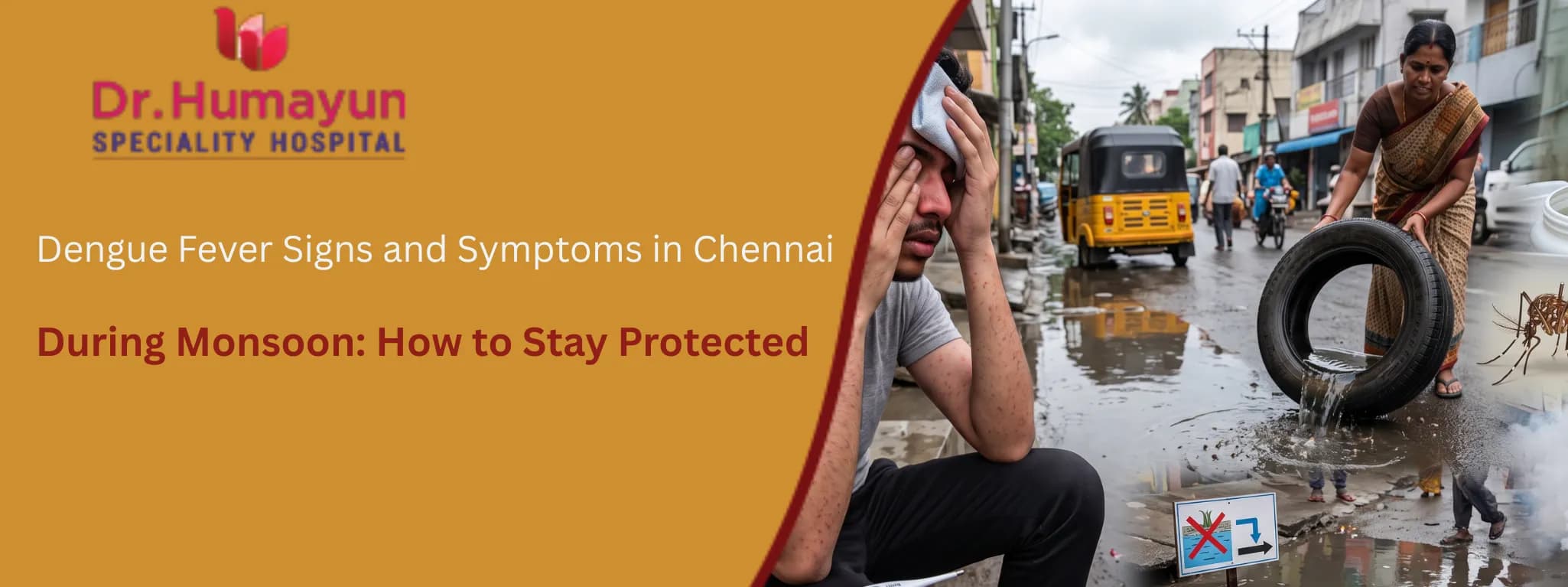

Every monsoon season, as the first rains fall and temperatures drop, Chennai breathes a collective sigh of relief. And every monsoon season, alongside the welcome cool, comes the predictable rise in dengue cases. Stagnant water collects in flower pots, cooler trays, old tyres, blocked drains, and water storage containers across T Nagar and every neighbourhood in the city. The Aedes aegypti mosquito, which transmits dengue, needs no more than a bottle cap of clean standing water to breed. Within days, a single water container becomes a source of dozens of mosquitoes capable of spreading infection across an entire household. Recognising dengue fever signs and symptoms early, understanding what makes dengue dangerous, and knowing exactly what protection looks like in Chennai's specific environment these are not just health tips. During monsoon season in this city, they are genuinely life-saving knowledge.
Why Chennai Is a High-Risk City for Dengue During Monsoon
Chennai's risk profile for dengue during the monsoon is shaped by a specific combination of environmental and urban factors that make it one of the highest-burden cities in Tamil Nadu.
-
Warm temperatures: Dengue mosquitoes thrive between 25 and 35 degrees Celsius. Chennai's monsoon temperatures sit firmly in this range.
-
High humidity: Humidity between 60% and 78% accelerates the Aedes breeding cycle.
-
Urban water storage: Chennai households frequently store water in tanks, buckets, and drums, often without tight covers, providing ideal breeding habitat within the home.
-
Dense urban population: T Nagar is one of the most commercially dense areas in the city. High foot traffic, inadequate drainage in older parts of the neighbourhood, and construction activity create numerous water accumulation points.
-
Northeast monsoon (October to December): Unlike most of India, Chennai's peak rainfall comes with the northeast monsoon, meaning the dengue season here extends later into the year than in other Indian cities.
All four dengue virus serotypes (DENV-1, DENV-2, DENV-3, DENV-4) circulate in India. This means a person who has had dengue once can be infected again with a different serotype, and a second dengue infection carries a higher risk of severe disease than a first.
Dengue Fever Sign and Symptoms What to Watch For
Dengue fever signs and symptoms typically appear four to ten days after an infected mosquito bite. The onset is sudden, and the early symptoms are often indistinguishable from an ordinary viral fever for the first one to two days.
Early Phase Symptoms (Days 1 to 3)
Sudden high fever: Temperature rising abruptly to 39 to 40 degrees Celsius (102 to 104 degrees Fahrenheit). The fever is continuous, not cyclic it does not come and go in the regular pattern seen in malaria.
-
Severe headache: Typically felt behind the eyes (retro-orbital pain). Pressing gently on the eyes intensifies the pain.
-
Muscle, joint, and bone pain: The pain is intense enough to have earned dengue the nickname "breakbone fever." It affects the muscles, joints, and bones and can make even lying still uncomfortable.
-
Nausea and vomiting: Common in the first two to three days, and responsible for fluid losses that contribute to dehydration.
-
Loss of appetite: Most dengue patients lose interest in food from the first day of symptoms.
-
Fatigue and weakness: Profound and disproportionate tiredness compared to other viral fevers.
-
Facial flushing: The face may appear reddened or flushed without a rash in early dengue. At this stage, dengue can genuinely look like a bad viral fever. The severity of the joint and eye pain, combined with the sudden onset and absence of cold or cough symptoms, is often the first distinguishing feature that should prompt early dengue testing.
The Dengue Rash
A characteristic rash appears in many dengue patients, typically two to five days after the fever begins. It is described as a widespread, red, maculopapular rash covering the trunk, limbs, and sometimes the face, and may be accompanied by itching.
The rash is a useful distinguishing feature but is not present in every case. Do not wait for the rash to appear before testing. If other dengue symptoms are present, test immediately — platelet counts can begin falling before the rash develops.
The Critical Phase Day 4 to 6 (When Fever Drops)
This is the section of this guide that most families do not know, and it is the most important dengue knowledge a parent or caregiver can have. When the dengue fever begins to drop typically around day four to six most families assume the illness is improving. This is precisely when the disease becomes most dangerous.
As the fever normalises, the dengue virus triggers a phase of plasma leakage, where fluid escapes from blood vessels into surrounding tissues and body cavities. Simultaneously, platelet counts fall sharply. This is when:
-
Internal bleeding can begin
-
Blood pressure can drop suddenly
-
The patient can deteriorate rapidly
This phase is called severe dengue, and it is responsible for most dengue-related deaths.
Warning signs that appear as the fever drops seek emergency care immediately if any of these occur:
-
Severe abdominal pain or tenderness
-
Persistent vomiting (three or more times in 24 hours)
-
Bleeding from the gums, nose, or under the skin (petechiae small red spots that do not fade under glass pressure)
-
Blood in vomit, urine, or stools
-
Rapid breathing or difficulty breathing
-
Cold, clammy, or pale skin
-
Extreme restlessness or sudden unusual drowsiness
-
A patient who was alert becoming confused or difficult to rouse
A patient showing any of these signs as the fever drops is not getting better. They are entering the critical phase of dengue and need hospital care without delay.
Dengue vs Ordinary Viral Fever — Key Differences
Because dengue overlaps with many common viral fevers in the first two days, knowing what distinguishes them helps families act earlier. Dengue is more likely if:
-
Fever came on very suddenly, not gradually
-
Pain behind the eyes is present, worsening with eye movement
-
Joint and muscle pain is severe and disproportionate to the temperature
-
There is no runny nose, cough, or sore throat
-
The patient is in Chennai during July to December
-
The fever has lasted more than two to three days without signs of improvement
Ordinary viral fever or flu is more likely if:
-
Respiratory symptoms (cough, cold, sore throat) are prominent
-
Joint pain is mild compared to the overall illness
-
The fever is fluctuating rather than continuous
When in doubt during monsoon season in Chennai, test for dengue from the first day of symptoms. The NS1 antigen test is positive from day one to day five. The IgM antibody test becomes positive from around day five onward. A combination of both covers the full diagnostic window.
Who Is at Higher Risk of Severe Dengue?
Most dengue patients recover fully with supportive care. However, certain individuals are at higher risk of progressing to severe dengue:
-
Infants and young children under five years
-
Older adults over 65
-
Pregnant women (dengue in pregnancy carries risks for both mother and baby)
-
Individuals with diabetes, hypertension, or chronic kidney disease
-
Those who have had dengue before a second dengue infection with a different serotype carries significantly higher severe disease risk
-
Severely malnourished individuals
-
Patients on anticoagulant medications
For patients in any of these groups, early medical assessment at the first appearance of dengue fever signs and symptoms is more urgent than for a healthy young adult.


Monitoring at Home During Dengue A Practical Guide
For dengue patients who are assessed and deemed suitable for home management, the following daily monitoring routine is essential.
What to Watch, Measure, and Track Daily
Hydration:
-
Aim for at least two to three litres of fluid per day
-
ORS, coconut water, clear soups, and water are all appropriate
-
If the patient cannot keep fluids down due to vomiting, they need hospital-level intravenous fluid management home monitoring is no longer adequate
Temperature:
-
Check temperature morning, afternoon, and evening
-
Record the readings
-
A suddenly dropping fever after day three is not a reason to stop monitoring it is a reason to watch more carefully for critical phase warning signs
Urine output:
-
Adequate hydration should produce urine at least every four to six hours
-
Darker urine or reduced frequency indicates dehydration
-
No urine output for eight or more hours seek medical assessment
Warning signs check:
At every temperature check, specifically assess for abdominal pain, vomiting frequency, any visible bleeding, skin colour, and level of alertness
If any warning signs appear, go to hospital immediately do not wait until the next morning
Platelet count:
- If the dengue NS1 antigen test is positive, a daily platelet count from day three onward is standard clinical practice during the critical window
- Do not attempt to interpret platelet trends at home without clinical guidance
Protection How to Reduce Dengue Risk in Chennai This Monsoon
The Aedes mosquito's habits make dengue prevention a daily, active effort during monsoon season not a one-time action.
Inside the Home
-
Eliminate all standing water in and around the house. Check flower pots, cooler water trays, water storage drums, buckets, and any container that holds water. Even a small amount is sufficient for breeding.
-
Change water in flower pots and bird baths at least twice a week to disrupt the breeding cycle before mosquitoes mature.
-
Cover all water storage containers with tight-fitting lids.
-
Use mosquito nets and repellents on exposed skin during the hours of highest mosquito activity: early morning (around dawn) and before dusk. - Aedes aegypti is a daytime biter, making daytime protection critical.
-
Wear full-sleeved clothing when staying at home if dengue is circulating in the neighbourhood.
-
Use mosquito coils, electric repellents, or screens on windows and doors.
Outside the Home
-
Use mosquito repellent on all exposed skin when outdoors during peak hours
-
Avoid areas with heavy mosquito activity parks, construction zones, areas with poor drainage
-
Do not allow unused containers, tyres, or plastic waste to accumulate on terraces or in gardens
-
Participate in community mosquito control drives dengue is a neighbourhood-level problem
What About the Dengue Vaccine?
Dengqia, the dengue vaccine, is licensed in India for individuals aged six to 45 who have had a confirmed prior dengue infection. It is not recommended for dengue-naive individuals because administration to those without prior infection can increase the risk of severe dengue upon subsequent natural infection.
Discuss vaccine eligibility with your doctor, particularly if you or your child has had a confirmed dengue episode in the past.
When to Go to the Hospital The Clear Decision Framework
Go to the hospital the same day if:
-
Fever has lasted more than two days with no improvement
-
Severe pain behind the eyes, joint pain, or headache alongside fever
-
Dengue test result is positive, even without current symptoms
-
Any warning signs appear (abdominal pain, vomiting, bleeding, drowsiness)
Go to the emergency department immediately if:
-
The patient cannot keep any fluids down
-
Visible bleeding from any site gums, nose, skin spots, blood in stools or urine
-
Sudden deterioration as the fever drops
-
The patient becomes confused, extremely drowsy, or difficult to rouse
-
Cold, clammy skin with rapid weak pulse
Do not wait to see if things improve overnight when any of the above are present.
Dengue Care at Humayun Hospital, T Nagar
At Humayun Hospital, T Nagar, Chennai, we manage dengue cases every monsoon season — from early-stage positive tests in patients who are still feeling reasonably well, to critical-phase dengue requiring intensive monitoring, IV fluid management, and close haematological support. Our team provides:
-
Same-day NS1 antigen and IgM antibody testing
-
Daily platelet count and haematocrit monitoring during the critical phase
-
Intravenous fluid therapy for patients who cannot maintain oral hydration
-
Management of severe dengue complications including haemorrhagic features
-
Clear discharge advice and follow-up planning for home-monitored patients
Located in the heart of T Nagar, we are accessible from across central Chennai without a long journey during a period when rapid assessment genuinely matters.
Chat with our care medical assistant for quick guidance and support.