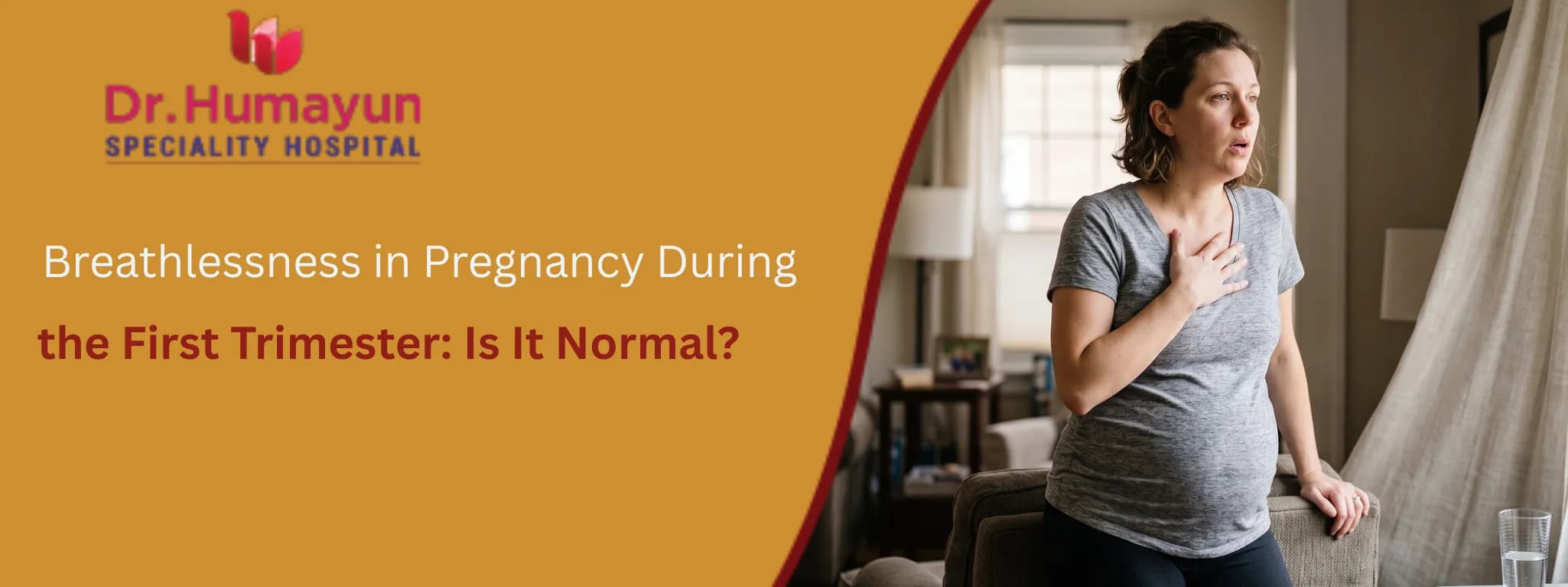

Breathlessness in pregnancy is one of those symptoms that surprises most women in the first trimester because it happens so early, long before the growing uterus could physically be pressing on the lungs. This early breathlessness has nothing to do with the baby's size. It is driven almost entirely by hormonal changes that begin within the first few weeks of conception.
Shortness of breath during pregnancy is a commonly reported symptom early in the first trimester and toward the end of the pregnancy. It is usually harmless but may occasionally signal a more serious condition.
Understanding why breathlessness happens, what makes it worse, and which specific patterns require urgent attention helps pregnant women distinguish between the normal and the concerning. At Dr. Humayun Speciality Hospital, T. Nagar, Chennai, the obstetrics team routinely evaluates breathlessness in pregnancy as part of antenatal care, providing clarity and reassurance alongside thorough clinical assessment when red flag features are present.
Why Breathlessness Starts So Early: The Progesterone Effect
The most common question women ask about first trimester breathlessness is a logical one: if the baby is barely a few centimetres, why is breathing already difficult? The answer lies not in the size of the uterus but in the hormonal environment of early pregnancy.
Early pregnancy breathlessness is primarily driven by progesterone, a pregnancy hormone that acts on the brain's respiratory centre and increases the drive to breathe more deeply. This happens before the uterus is large enough to mechanically affect breathing and can begin as early as 6 to 8 weeks.
Progesterone acts directly on the respiratory centres in the brainstem, increasing the sensitivity of the breathing drive. The result is that pregnant women breathe more deeply and more frequently than before pregnancy, even at rest. As confirmed by Norton Healthcare, progesterone is a respiratory stimulant, meaning it causes a person's breathing to speed up.
This increase in breathing depth and rate is biologically purposeful. Pregnancy increases the body's total oxygen demand significantly, and the respiratory system adapts from the earliest weeks to meet this demand. The sensation of breathlessness is essentially the conscious experience of a breathing pattern that has shifted to meet a new physiological requirement.
A second early change compounds this effect. In the sixth week of pregnancy, plasma volume in your blood increases by about 45%, and the red blood cell mass increases by 20% to 30%. This expansion of blood volume increases the work of the heart and circulatory system, contributing to an overall sense of increased effort with physical activity.
Most women notice this as:
-
A need to take a deeper breath than usual, particularly when climbing stairs
-
Awareness of breathing that was previously automatic and unnoticed
-
Mild breathlessness with moderate exertion that resolves quickly with rest
-
A sensation of not quite getting a full breath despite breathing normally
These are normal features of the progesterone-driven respiratory adjustment of early pregnancy.
How Breathlessness Changes Across Trimester
Understanding the full trajectory of breathlessness in pregnancy helps women recognise where their experience fits within the expected pattern.
-
First Trimester (Weeks 1 to 14): Breathlessness is driven almost entirely by progesterone and the expanding blood volume. The uterus is still within the pelvic cavity and plays no mechanical role in breathing. Breathlessness is mild to moderate, gradual in onset, and improves with rest.
-
Second Trimester (Weeks 15 to 27): Hormonal effects continue, and the uterus begins to rise into the abdominal cavity. For many women, breathlessness actually improves slightly in the mid-trimester as the body adapts. Anaemia, which becomes more prevalent as blood volume expands faster than red blood cell production, can intensify breathlessness in this period.
-
Third Trimester (Weeks 28 to 40): An estimated 60% to 70% of pregnant women report experiencing shortness of breath during their third trimester of pregnancy. The uterus displaces the diaphragm upward, physically reducing lung expansion. Breathlessness is most intense in this period and typically improves in the final 2 to 4 weeks when the baby descends into the pelvis (engagement or "lightening").
When Breathlessness Is Not Just Hormonal
While most breathlessness in pregnancy is a normal physiological phenomenon, certain underlying conditions can cause or significantly worsen it. These must be assessed and excluded, particularly when breathlessness is:
-
Sudden in onset rather than gradual
-
Severe or significantly worsening despite rest
-
Accompanied by additional symptoms
The most clinically important conditions causing pathological breathlessness in pregnancy include:
-
Anaemia: Iron deficiency anaemia is extremely common in Indian pregnant women due to the combination of increased demand and often inadequate dietary iron. Reduced haemoglobin impairs oxygen delivery, causing fatigue and breathlessness disproportionate to exertion. A full blood count at every antenatal visit detects this early.
-
Pulmonary embolism: A blood clot in the pulmonary arteries is a rare but life-threatening cause of sudden breathlessness in pregnancy. Pregnancy significantly increases the risk of deep vein thrombosis and pulmonary embolism. "It's a life-threatening emergency," and can also present after you have the baby, up to eight to 12 weeks. Sudden breathlessness with chest pain, a rapid heart rate, or coughing blood in a pregnant woman requires immediate emergency evaluation.
-
Asthma: Pre-existing asthma can worsen during pregnancy, causing wheeze, chest tightness, and breathlessness that requires adjusted management. Asthma treatment is safe in pregnancy and should be continued.
-
Gestational hypertension and preeclampsia: Pulmonary oedema (fluid in the lungs) can occur with severe preeclampsia, causing breathlessness that is a warning sign requiring urgent assessment.
-
Peripartum cardiomyopathy: A rare form of heart failure that can develop in the last month of pregnancy or shortly after birth, causing progressive breathlessness, leg swelling, and fatigue.
Normal vs Warning Signs: A Quick Reference
| Feature | Normal Breathlessness | Seek Urgent Care |
|---|---|---|
| Onset | Gradual, from early pregnancy | Sudden onset at any stage |
| Severity | Mild to moderate | Severe, getting rapidly worse |
| Associated symptoms | None | Chest pain, palpitations, cough, coughing blood |
| Effect of rest | Improves with sitting still | Does not improve with rest |
| Position | No positional change | Worse lying flat, needs to sit up to breathe |
| Leg swelling | Absent | Present, particularly if sudden |
| Timing | Throughout pregnancy | New in third trimester or sudden change |
As confirmed by Tommy's (reviewed November 2024), contact your doctor or midwife straight away if you feel out of breath and also have chest pain, feel faint or dizzy, cough up blood, or cannot lie flat comfortably.


What Helps With Normal Breathlessness in Pregnancy
Because physiological breathlessness in the first trimester is hormonally driven, it cannot be eliminated. However, certain practical adjustments make it more manageable:
-
Posture: Sitting upright rather than slumping allows the lungs more room to expand. When lying down, using an extra pillow to prop the upper body slightly improves comfort.
-
Pace physical activity: Slow down during exertion rather than pushing through breathlessness. Short, frequent walks are better tolerated than sustained vigorous activity in early pregnancy.
-
Treat iron deficiency promptly: If anaemia is identified on blood testing, iron supplementation as prescribed by the obstetrician improves breathlessness significantly within 4 to 6 weeks.
-
Avoid extreme heat: Chennai's climate can compound breathlessness through heat-related cardiovascular strain. Staying in cool environments during the hottest parts of the day reduces the effort of breathing.
-
Avoid lying flat for long periods: In the second and third trimester, lying flat on the back compresses the inferior vena cava and reduces venous return to the heart. Left lateral or semi-reclined positions are more comfortable.
-
Practise slow, deliberate breathing: Taking slow, controlled breaths rather than rapid shallow ones reduces the sensation of breathlessness during acute episodes.
When to Mention It and When to Act Immediately
Mention at your next antenatal visit:
-
Mild breathlessness with exertion that started gradually in the first trimester
-
Breathlessness that is manageable but noticeable during daily activities
-
Breathlessness that worsens progressively but without additional symptoms
Seek assessment within 24 hours:
-
Breathlessness worsening over days without an obvious trigger
-
New breathlessness in the second trimester after a period of relative comfort
-
Breathlessness accompanied by fatigue significantly affecting daily function
Go to the emergency department immediately:
-
Sudden onset severe breathlessness at any stage of pregnancy
-
Chest pain, palpitations, or a racing heart alongside breathlessness
-
Coughing blood or frothy sputum
-
Dizziness or fainting
-
Breathlessness that is significantly worse lying flat
-
Sudden swelling of both legs alongside breathlessness
Expert Obstetric Care: Dr. Asma Humayun
Navigating early pregnancy symptoms requires high-quality, compassionate care from an experienced specialist.
At Dr. Humayun Speciality Hospital, Dr. Asma Humayun leads the Department of Obstetrics and Gynaecology. Bringing over 15 years of clinical expertise, Dr. Asma holds advanced international and national qualifications, including an MBBS, DGO (Sri Ramachandra University), MRCOG (UK), Diploma in Reproductive Medicine (Germany), and fellowships in minimal access surgery and assisted reproductive techniques (F.MAS, F.ART).
Dr. Asma Humayun specializes in comprehensive high-risk pregnancy management, antenatal screening, and maternal-fetal wellness. Her patient-centered approach ensures that early pregnancy symptoms—like progesterone-induced breathlessness—are carefully evaluated, providing mothers with clear diagnostic reassurance while ruling out underlying complications such as gestational hypertension or severe anaemia
Obstetric Care at Dr. Humayun Speciality Hospital, T. Nagar, Chennai
At Dr. Humayun Speciality Hospital, breathlessness in pregnancy is assessed as part of routine and urgent antenatal care, with investigations tailored to the clinical picture. Services for pregnant women include:
-
Full blood count and iron studies to detect and manage anaemia
-
Blood pressure monitoring and urinalysis for preeclampsia screening
-
Echocardiography when cardiac causes of breathlessness are suspected
-
Chest assessment and pulse oximetry for acute presentations
-
Asthma review and safe medication adjustment during pregnancy
-
Regular antenatal monitoring with obstetrician-led consultations
The team understands that breathlessness is one of many pregnancy symptoms that can be simultaneously normal and anxiety-provoking. The goal is always to provide clear clinical answers, appropriate investigation when indicated, and reassurance grounded in a thorough assessment.
Experiencing breathlessness in your first trimester and unsure whether to be concerned? Chat with our medical care assistant for quick guidance and support and book an antenatal consultation at Dr. Humayun Speciality Hospital, T. Nagar, Chennai.