
One of the most common questions patients ask after being diagnosed with an abdominal aortic aneurysm is this: "Is there anything I can do to stop it from growing?"
It is a genuinely important question, and the honest clinical answer is nuanced. Yes, lifestyle changes matter. Yes, specific medical therapies reduce the rate of aneurysm growth in a meaningful, evidence-supported way. And yes, these lifestyle and medical measures are the foundation of managing a small AAA before surgical thresholds are reached.
But lifestyle changes alone cannot reverse an existing aneurysm, and they cannot substitute for the structured monitoring that is the cornerstone of safe AAA management. Understanding exactly what lifestyle can and cannot do, and knowing when monitoring becomes surgery, is the most valuable knowledge a newly diagnosed AAA patient can have.
What Is an Abdominal Aortic Aneurysm?
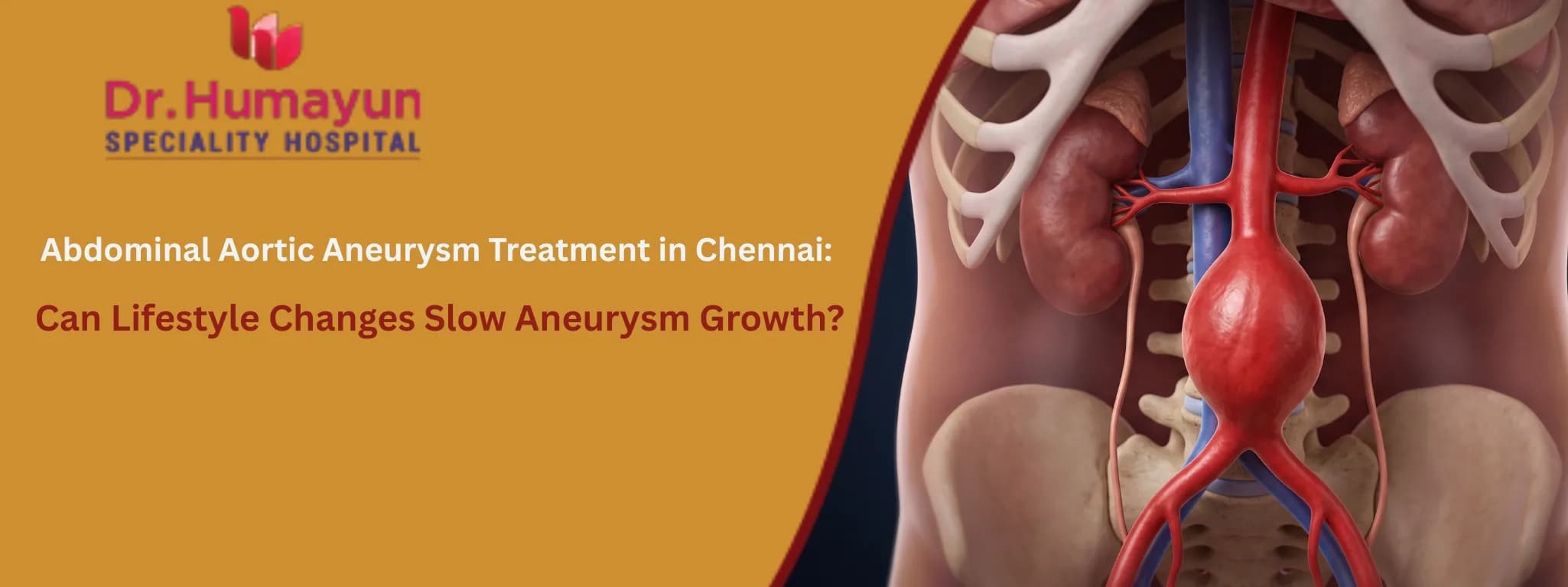
The aorta is the largest blood vessel in the body. It carries oxygenated blood from the heart downward through the chest and abdomen to the rest of the body. An abdominal aortic aneurysm is a localised widening or bulging of the aorta in the abdominal section, occurring when the vessel wall weakens and the blood pressure within expands it beyond its normal diameter.
An aortic aneurysm is a bulging, weakened area in the wall of the aorta. Over time, the blood vessel balloons and is at risk for bursting (rupture) or separating (dissection). This can cause life-threatening bleeding and potentially death.
AAA is defined as an aortic diameter of 1.5 times the normal value, generally considered to be 3.0 cm or above. The greater the diameter, the higher the risk of rupture. The mortality rate associated with AAA rupture is approximately 80%, making it a vascular emergency.
What makes AAA particularly dangerous is that most patients have no symptoms until the aneurysm ruptures. It develops silently over years, and in many cases is discovered incidentally during an ultrasound or CT scan performed for another reason.
Who Is at Risk in Chennai?
Understanding the risk factor profile helps identify patients who should be screened for AAA, and those who have been diagnosed should understand which of their risk factors are still actively driving growth.
Risk factors for AAA development and growth:
-
Tobacco smoking: the strongest and most consistently identified modifiable risk factor
-
Male sex and age over 65: AAA is significantly more common in men over 65, though the gap narrows with age
-
Hypertension (high blood pressure): sustained elevated pressure weakens the vessel wall
-
Atherosclerosis: the same process that causes coronary artery disease damages aortic wall integrity
-
Family history of AAA in a first-degree relative
-
High LDL cholesterol and low HDL cholesterol
-
Obesity, particularly central abdominal obesity
-
Chronic obstructive pulmonary disease (COPD)
-
Previous peripheral vascular disease
For men in Chennai who smoke, have hypertension, are over 60, and have never had an aortic ultrasound, a screening assessment is clinically justified even in the absence of symptoms.
Can Lifestyle Changes Slow AAA Growth? What the Evidence Shows
This is the central question of this guide, and the answer is one of qualified optimism. While no lifestyle measure fully stops aneurysm growth and no medication has yet been proven to halt AAA progression definitively in clinical trials, specific interventions reduce the rate of growth meaningfully and reduce the overall cardiovascular risk that determines a patient's long-term outcome.
Smoking Cessation: The Most Important Single Step
Eliminating tobacco and nicotine intake is the most important thing a patient can do to minimise the chance of aortic rupture. Smoking damages the structural proteins of the aortic wall, promotes inflammation, and accelerates the enzymatic degradation of connective tissue that causes the vessel wall to weaken. Smokers with AAA have measurably faster aneurysm growth rates than non-smokers with equivalent baseline diameters. Stopping smoking does not reverse an existing aneurysm. But it reduces the rate at which it grows, reduces overall cardiovascular risk, improves outcomes if surgery is eventually needed, and meaningfully reduces the risk of rupture. There is no threshold below which smoking is safe for an AAA patient. Complete cessation is the goal. For patients in Chennai who currently smoke, cessation support including nicotine replacement therapy (NRT), varenicline, and behavioural support are all evidence-backed options. A structured cessation programme should be the first clinical conversation after AAA diagnosis.
Blood Pressure Control
Hypertension is a direct mechanical contributor to aneurysm growth. Elevated blood pressure applies sustained force to an already weakened aortic wall, accelerating the ballooning process. Strict blood pressure control is a cornerstone recommendation in the 2024 ESVS clinical guidelines for small AAA management.
Target blood pressure in AAA patients is below 130/80 mmHg. This typically requires both lifestyle modification and medication. First-line antihypertensive agents used in AAA patients include ACE inhibitors, angiotensin receptor blockers (ARBs), and beta-blockers. Beta-blockers have an additional theoretical benefit of reducing the force and rate of cardiac contraction (dP/dt), which directly reduces mechanical stress on the aneurysm wall.
Practical steps for blood pressure reduction:
-
Reducing dietary sodium (processed foods, pickled and preserved foods, and restaurant meals in Chennai are often high in sodium)
-
Regular aerobic exercise, adapted to the patient's capacity and aneurysm size
-
Limiting alcohol
-
Achieving and maintaining a healthy body weight
-
Medication adherence
Statin Therapy
Statins are lipid-lowering medications that also have anti-inflammatory and pleiotropic vascular effects beyond cholesterol reduction. Statins showed small but statistically significant reductions in AAA growth rate in a human meta-analysis, though effects were heterogeneous across studies. Despite this limitation, statins are recommended for all patients diagnosed with AAA according to the 2024 ESVS clinical guidelines, regardless of baseline cholesterol levels.
The benefit of statins in AAA extends beyond the direct growth rate effect. Statins reduce the overall cardiovascular risk that determines long-term outcomes in a patient population that frequently has concurrent coronary artery disease, peripheral arterial disease, and cerebrovascular disease.


Diet and Weight Management
A heart-healthy diet reduces the atherosclerotic burden on aortic wall integrity and helps manage blood pressure and cholesterol. Practical dietary modifications for AAA patients:
-
Increase vegetables, legumes, whole grains, and unsaturated fat sources (fish, nuts, olive oil)
-
Reduce saturated fat, trans fat, and processed food
-
Reduce sodium intake
-
Maintain caloric balance to achieve or maintain a healthy body weight
Weight loss in overweight or obese patients reduces intra-abdominal pressure and systemic cardiovascular risk. Quitting smoking, controlling blood pressure, losing weight if overweight, and eating a healthy diet are all listed as steps that may help control aneurysm progression.
What Lifestyle Cannot Do
Lifestyle changes alone cannot:
-
Reduce the diameter of an existing aneurysm
-
Replace structured imaging surveillance as the monitoring strategy
-
Substitute for surgery when size or growth thresholds are met
-
Fully stop a large or fast-growing aneurysm from progressing to surgical indication
Patients who focus on lifestyle modification while missing surveillance scans are not managing their AAA safely. The monitoring schedule is not negotiable.
The Monitoring Schedule: What to Expect
The frequency of surveillance imaging is determined by the current diameter of the AAA. The 2024 ESVS guidelines provide the following framework for small and medium AAA surveillance:
AAA diameter and recommended surveillance:
-
Less than 30 mm: typically no formal surveillance needed unless risk factors change
-
30 to 39 mm: ultrasound every three years
-
40 to 44 mm: ultrasound every two years
-
45 to 49 mm: ultrasound every year
-
50 to 54 mm: ultrasound every six months; vascular surgical consultation
-
55 mm in men / 50 mm in women: surgical evaluation and consideration of intervention
Small, low-risk aneurysms are usually monitored by ultrasound every 6 to 12 months to check the size and assess for growth of the artery. Growth of more than 10 mm in a 12-month period is a separate indication for surgical review regardless of absolute diameter.
Ultrasound surveillance is the standard monitoring tool for most patients because it is safe, accurate, reproducible, and does not involve radiation. CT angiography is used for more detailed anatomical assessment before surgery.
When Surgery Is Recommended
The decision to operate on an AAA is based on the balance between rupture risk, which increases with diameter and growth rate, and operative risk, which depends on the patient's comorbidities and the surgical approach available.
Current surgical thresholds (ESVS 2024):
-
Diameter of 55 mm or greater in men
-
Diameter of 50 mm or greater in women (smaller threshold reflects higher female rupture risk at equivalent diameters)
-
Growth rate exceeding 10 mm in 12 months
-
Symptomatic AAA (back pain, abdominal pain, or tenderness over the aneurysm) regardless of diameter
-
Ruptured AAA: emergency surgical management
Two surgical approaches are available:
Open surgical repair (OSR): The traditional approach, in which the abdomen is opened, the aneurysm is clamped, and a synthetic tube graft replaces the damaged aortic segment. It is durable and well-evidenced over decades of follow-up. It carries a higher short-term procedural risk but does not require ongoing imaging surveillance for graft complications.
Endovascular aneurysm repair (EVAR): A minimally invasive procedure in which a stent graft is delivered through catheters inserted in the groin arteries and deployed inside the aneurysm to exclude it from blood flow, preventing rupture without open surgery. EVAR has a lower short-term mortality and faster recovery than open repair. It is now the preferred approach for anatomically suitable patients. It requires ongoing CT surveillance at regular intervals to monitor the graft for complications including endoleaks.
The choice between EVAR and open repair depends on the patient's anatomy, age, overall health, and the specific characteristics of the aneurysm. This decision is made in consultation with a vascular surgeon with access to CT angiography planning.
Living With AAA: A Practical Framework for Patients in Chennai
For patients currently under surveillance with a small or medium AAA in T Nagar and across Chennai, the practical management framework is:
Daily priorities:
-
Do not smoke. Complete cessation, not reduction
-
Take prescribed medications consistently: statin and antihypertensive agents as directed
-
Maintain blood pressure below 130/80 mmHg
-
Follow a low-sodium, heart-healthy diet
-
Exercise regularly at a moderate intensity. Avoid heavy lifting and activities that significantly raise intra-abdominal pressure, such as straining, until discussed with your vascular team
At every surveillance appointment:
-
Bring a log of home blood pressure readings if available
-
Report any new back pain, abdominal pain, or a feeling of pulsation in the abdomen
-
Confirm the next surveillance date before leaving
Warning signs that require immediate emergency assessment:
-
Sudden, severe abdominal or back pain, particularly if tearing or ripping in quality
-
Sudden collapse or loss of consciousness
-
Pulsating mass in the abdomen that appears suddenly
-
Symptoms of shock: cold sweaty skin, rapid weak pulse, dizziness
These symptoms may indicate a rupturing or ruptured AAA and require immediate emergency hospital attendance. Every minute matters in this scenario.
Abdominal Aortic Aneurysm Treatment in T Nagar at Humayun Hospital
At Humayun Hospital, T Nagar, Chennai, our internal medicine and vascular team provides structured assessment and monitoring for patients with diagnosed or suspected abdominal aortic aneurysm, alongside personalised guidance on the lifestyle and medical measures that are the foundation of conservative management. We offer:
-
Aortic ultrasound for diagnosis and surveillance in asymptomatic patients
-
CT angiography planning for patients approaching or meeting surgical thresholds
-
Hypertension and dyslipidaemia management with evidence-based medical therapy
-
Structured smoking cessation support
-
Personalised dietary and activity guidance calibrated to aneurysm size and growth rate
-
Vascular surgical referral and coordination for patients requiring EVAR or open repair
-
Clear communication about surveillance schedules and the specific symptoms that require emergency attendance
For patients in T Nagar and across Chennai who have been told they have an aortic aneurysm and are uncertain what to do next, or who have been under surveillance and have questions about their options, we provide the clinical framework to manage this condition safely and with the best possible long-term outcome.
Chat with our medical care assistant for quick guidance and support.