
Children get sick. It is one of the most universal facts of parenthood. From the first nursery cold to the seasonal flu that sweeps through classrooms, viral infections in children are a constant presence in the lives of families everywhere. Most are manageable. Some require medical attention. A few are genuinely serious.
The challenge for parents is knowing which category any given illness falls into and knowing it early enough to make a difference. This complete guide walks through the most important viral infections in children, their symptoms, how they are treated, when to seek help, and how to prevent them from taking hold in the first place.
What Are Viral Infections in Children?
Understanding what viruses are and how they work helps parents respond to illness more calmly and accurately. Viruses are microscopic infectious agents that cannot replicate on their own. They invade the body's living cells, hijack the cell's machinery to reproduce, and then spread causing the symptoms parents recognise as illness.
Most viral infections in children are not serious and include diverse illnesses such as colds, sore throat, vomiting, diarrhoea, and fever with a rash. However, certain viral infections can escalate and require close medical management.
How Children's Immune Systems Respond to Viruses
Children, particularly under the age of five, have immune systems that are still developing. They lack the immune memory that builds up over years of viral exposure, which is why young children tend to contract infections far more frequently than older children or adults. The average child under five years old experiences six to eight viral infections per year.
Each infection, even a simple cold trains the immune system. This is why children tend to become ill less frequently as they get older. However, the same immature immune response that makes young children more susceptible also means they can deteriorate more quickly when viral infections become severe. Early recognition and timely medical review remain essential across all age groups.
Viral vs. Bacterial Infections in Children: Understanding the Difference
One of the most common points of confusion for parents and a clinically important one is whether their child has a viral or bacterial infection.
The distinction matters because it determines treatment. Antibiotics are effective only against bacterial infections. Using antibiotics for a viral illness provides no benefit and contributes to antibiotic resistance, which is already a major public health concern in India.
Key Differences Parents Should Know
Viral infections in children typically last seven to fourteen days, improve gradually without prescription medication, and do not respond to antibiotics. The fever in viral illness tends to be moderate, and the child may have a runny nose, cough, or a rash alongside the fever.
Bacterial infections may last longer than ten to fourteen days without antibiotic treatment, often present with a higher fever, and may follow a viral illness as a secondary infection for example, a bacterial ear infection developing after a cold. Signs like very high fever above 39.5°C lasting more than three days, localised pain such as ear or throat pain, or a child who is visibly worsening rather than improving suggest bacterial involvement.
A doctor's assessment is the only reliable way to distinguish between the two. A clinical examination, and where necessary a throat swab, blood test, or urine culture, will guide the right treatment pathway.
Most Common Viral Infections in Children
Viral infections in children span a wide range of conditions, from mild and self-limiting to those requiring careful clinical management. The following are the infections parents in India and particularly those in Chennai, are most likely to encounter.
The Common Cold (Rhinovirus and Others)
The common cold is the most frequent of all viral infections in children. Caused primarily by rhinoviruses, along with over 200 other viral types, colds spread through respiratory droplets and direct contact with contaminated surfaces. Symptoms include runny or blocked nose, mild sore throat, sneezing, low-grade fever, and mild fatigue. Most colds resolve within seven to ten days without any specific treatment. Symptomatic management adequate fluids, rest, paracetamol for fever and discomfort, and saline nasal drops for congestion is appropriate and sufficient in the large majority of cases.
Influenza (Flu)
Influenza is a significantly more aggressive viral infection in children than the common cold, and the two should not be confused. Flu comes on suddenly with high fever, severe body aches, intense fatigue, deep cough, and headache. The rapid onset is one of its distinguishing features.
The 2024 to 2025 influenza season recorded a high number of paediatric deaths, with 90% occurring in unvaccinated children. Influenza can progress to pneumonia, febrile seizures, and secondary bacterial infections. Children with underlying conditions lung, heart, kidney, or immune disorders are at higher risk of severe complications.
Annual influenza vaccination from six months of age is the most effective preventive measure and is strongly recommended by the Indian Academy of Pediatrics.
Respiratory Syncytial Virus (RSV)
RSV is the leading cause of bronchiolitis in infants and one of the most common causes of hospitalisation in children under two years. In older children, RSV causes a mild cold. In infants, it can cause serious respiratory distress with fast breathing, wheezing, chest recession, and reduced feeding.
Research from India confirms that RSV was the most common identified virus causing influenza-like illness in children aged zero to two years, with RSV significantly increasing the risk of hospitalisation. Premature infants and children with underlying conditions are at the greatest risk of severe disease.
There is no specific antiviral treatment for most RSV cases. Management is supportive, focused on maintaining oxygen levels, hydration, and respiratory support where needed.
Rotavirus and Viral Gastroenteritis
Rotavirus is the leading viral cause of severe diarrhoea in children globally, particularly affecting those under five. It spreads through the faecal-oral route contaminated hands, surfaces, food, and water. The illness presents with sudden vomiting, watery diarrhoea, fever, and abdominal cramping, typically lasting three to eight days.
The primary danger in viral gastroenteritis is dehydration, which can escalate to a medical emergency in young children within hours. Oral rehydration solution (ORS) is the cornerstone of home management. Rotavirus vaccination has significantly reduced the burden of severe disease and is included in India's Universal Immunisation Programme.
Chickenpox (Varicella)
Chickenpox remains one of the most recognisable viral infections in children, characterised by an itchy blister-like rash that begins on the torso and spreads across the body, scalp, and face. It is preceded by one to two days of mild fever, fatigue, and reduced appetite. The rash progresses from red spots to fluid-filled blisters, then crusts over a period of five to seven days.
Chickenpox is highly contagious until all blisters have crusted over. It is generally mild in healthy children, though scratching can cause secondary bacterial skin infections. In immunocompromised children, adolescents, and adults, it can be more severe and antiviral treatment with acyclovir may be recommended.
Varicella vaccination has substantially reduced incidence where widely administered, and is now included in the Indian immunisation schedule as a recommended vaccine.
Hand, Foot, and Mouth Disease (HFMD)
Hand, foot, and mouth disease is a common viral infection in children caused by coxsackievirus, most frequently affecting children under five. It begins with fever and irritability, followed by painful sores inside the mouth and a rash of blisters on the palms, soles, and sometimes buttocks.
HFMD spreads easily in nurseries, playgroups, and schools through direct contact and respiratory droplets. It is a viral illness and does not respond to antibiotics. Most cases are mild and self-limiting. The main management priority is pain relief for mouth sores and ensuring adequate fluid intake to prevent dehydration.
Measles
Despite widespread vaccination, measles outbreaks continue to occur in under-vaccinated populations across India. Measles begins with high fever, runny nose, cough, and red eyes, followed by the characteristic widespread red rash that starts at the hairline and spreads downward.
Measles can cause serious complications including pneumonia, encephalitis, and secondary bacterial infections. In malnourished children or those with vitamin A deficiency, it can be fatal. It remains one of the most contagious of all known viral infections in children, with each infected person capable of infecting nine to ten unvaccinated individuals.
MMR vaccination at nine months and fifteen months provides reliable protection. There is no antiviral treatment for measles. Management is supportive, with vitamin A supplementation recommended by the WHO for all children with measles.
Dengue Fever in Children
Dengue deserves special attention for families in Chennai and across Tamil Nadu. Transmitted by the Aedes aegypti mosquito, dengue is the most common infectious cause of acute undifferentiated fever in South India. All four dengue serotypes circulate in India, and children can be infected more than once.
Early dengue in children presents with sudden high fever, headache, pain behind the eyes, joint and muscle aches, and a faint rash. The illness follows a three-phase course. The critical phase, which begins as the fever drops around day four to six, is when serious complications including plasma leakage, bleeding, and platelet decline occur.
Warning signs of severe dengue that require immediate emergency medical attention include persistent vomiting, abdominal pain, bleeding from the gums or skin (petechiae), and a child who appears to worsen despite the fever lowering. Among paediatric patients studied in South India, 54% showed warning signs of dengue and fever, vomiting, and abdominal pain were the most frequently reported symptoms.
Symptoms of Viral Infections in Children: What to Watch For
Recognising the symptoms of viral infections in children early gives parents the ability to respond appropriately and to know when home care is no longer enough.
The most frequent symptoms shared across viral infections in children include fever, fatigue and reduced appetite, runny nose and cough, sore throat, rash (in some infections), vomiting and/or diarrhoea, and irritability particularly in infants and toddlers. Since many of these symptoms overlap across different infections, it is the combination of symptoms, their timeline, and their severity together that guides clinical assessment.
Age-Specific Symptom Patterns to Know
In infants under three months, any fever is an emergency. Infants at this age cannot mount a typical immune response and may have serious viral or bacterial infections with minimal signs. Poor feeding, unusual quietness, difficulty waking, and rapid breathing are all red flags in this age group.
In toddlers aged one to three years, viral infections often present with high fevers that can trigger febrile seizures in susceptible children. A febrile seizure is frightening to witness but usually resolves within one to two minutes without long-term consequences. It still requires same-day medical review.
In school-age children, viral infections may present more like adult illness recognisable symptoms with better tolerance. However, rapid deterioration is still possible, particularly with influenza, dengue, and viral respiratory infections.


Treatment of Viral Infections in Children
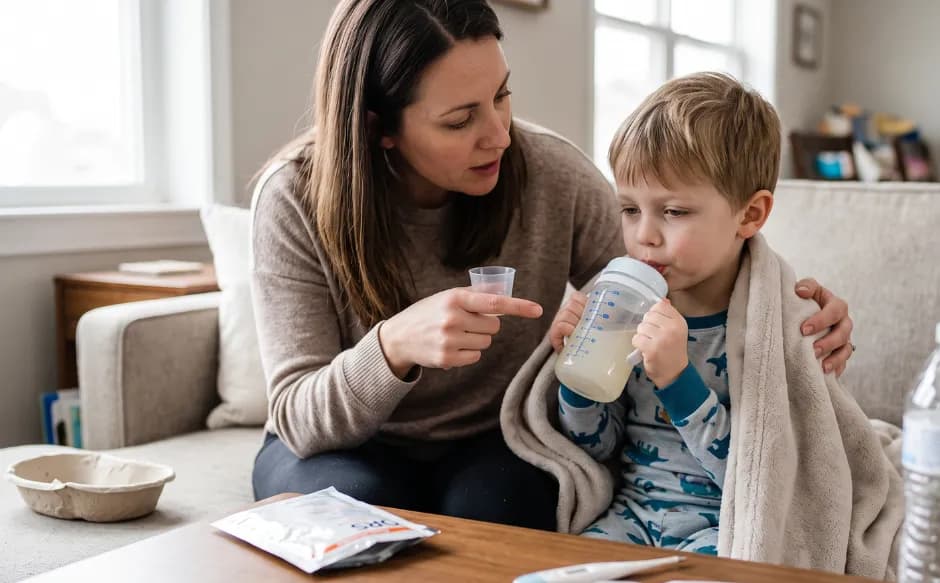
Most viral infections in children are managed with supportive care. Antibiotics are not effective against viruses and should not be prescribed or self-administered for a viral illness. Understanding the principles of supportive care helps parents manage viral infections at home more confidently and safely.
Supportive Care at Home What Actually Works
-
Fever management: Paracetamol (acetaminophen) or ibuprofen given at the correct weight-based dose is appropriate for fever above 38.5°C or when the child is clearly uncomfortable. Do not give aspirin to children it is associated with a serious condition called Reye's syndrome. Tepid sponging may provide temporary comfort but does not treat the underlying fever.
-
Hydration: Adequate fluid intake is the single most important supportive measure across almost all viral infections in children. Offer water, diluted fruit juice, coconut water, or oral rehydration solution frequently. In gastroenteritis, ORS is specifically formulated to replace lost electrolytes plain water alone is not sufficient.
-
Rest: Children's bodies recover more efficiently with adequate rest. Reduce physical activity during illness and ensure good sleep.
-
Nutrition: Children with viral infections often have reduced appetite. Do not force feeding, but continue to offer small, easily digestible meals. Breastfeeding should continue for infants regardless of the illness.
-
Nasal congestion relief: Saline nasal drops are safe and effective for relieving nasal congestion in infants and young children. Avoid over-the-counter cough and cold medications in children under six years they are not recommended and carry risk of side effects.
When Antivirals Are Used
Most viral infections in children do not require antiviral medications. However, antivirals are used in specific, clinically indicated situations.
Oseltamivir (Tamiflu) may be prescribed for influenza in children at high risk of complications those with underlying lung, heart, or immune conditions particularly when started within the first 48 hours of symptom onset.
Acyclovir is used for chickenpox in older children, adolescents, immunocompromised patients, and for serious herpes infections including neonatal herpes and herpes encephalitis.
These medications should only be prescribed by a doctor following proper clinical assessment. Self-prescribing antiviral medications is not safe or appropriate.
Red Flag Symptoms When to Seek Immediate Medical Attention
Home management of viral infections in children is appropriate in most cases. But certain signs indicate a need for immediate medical review, and parents should know them clearly. Seek prompt medical attention for viral infections in children when any of the following are present.
Signs That Cannot Wait
Any fever in an infant under three months, regardless of how mild it appears High fever above 39.5°C that does not respond to appropriate doses of paracetamol or ibuprofen Difficulty breathing, rapid breathing, nostril flaring, or visible chest recession with each breath
-
Severe dehydration signs: no urine output for eight or more hours, dry mouth, no tears when crying, unusual drowsiness or limpness
-
Altered consciousness: unusual difficulty waking, confusion, unresponsiveness, or behaviour significantly different from normal
-
A rash that does not fade when pressed firmly with a glass — a non-blanching rash can indicate meningococcal disease or dengue haemorrhagic fever, both of which are medical emergencies
-
Persistent vomiting that prevents any fluid intake for more than four to six hours
-
A febrile seizure in a child with no prior history, or a seizure lasting more than five minutes
-
Symptoms worsening beyond day five rather than showing any sign of improvement
-
Dengue warning signs: abdominal pain, persistent vomiting, bleeding gums or skin spots, or a child who is visibly deteriorating as the fever drops
Prevention of Viral Infections in Children
Preventing viral infections in children is not entirely possible children will be exposed to viruses throughout their development. But the frequency, severity, and complications of viral infections can be meaningfully reduced through a combination of vaccination, hygiene practices, and environmental measures.
Vaccination, The Most Effective Preventive Tool
India's Universal Immunisation Programme and the Indian Academy of Pediatrics recommended schedule cover vaccines for measles, mumps, rubella, rotavirus, chickenpox, hepatitis A and B, and influenza. Ensuring your child is fully up to date on their vaccination schedule is the most evidence-based step a parent can take to reduce the burden of viral infections in children.
Annual influenza vaccination from six months of age is recommended for all children, and is particularly important for those with chronic health conditions. The RSV maternal vaccine and preventive therapy for infants with nirsevimab have demonstrated significant reductions in RSV hospitalisation rates in the 2024 to 2025 season.
Hygiene Practices That Break the Transmission Chain
Viral infections in children spread primarily through respiratory droplets, direct contact, and faecal-oral transmission. Regular and thorough handwashing with soap and water for at least 20 seconds is one of the most effective interventions for reducing transmission particularly before eating, after using the toilet, and after being in public spaces.
Teaching children age-appropriate hygiene habits covering coughs and sneezes, avoiding touching the face, and not sharing drinks or eating utensils reduces their exposure to viral pathogens significantly.
Keeping sick children home from school or nursery until they are no longer infectious is also an important community hygiene measure. Sending a feverish child to school accelerates viral spread through classrooms.
Environmental Prevention Specific to Chennai
In Chennai's tropical climate, mosquito-borne viral infections particularly dengue require active environmental prevention. Eliminate all standing water sources in and around the home: flower pots, coolers, tyres, water tanks, and any containers where the Aedes aegypti mosquito can breed. Use mosquito nets, repellents on exposed skin, and full-sleeved clothing for children during dawn and evening hours.
During peak dengue season from October to December following the northeast monsoon, heightened vigilance is appropriate. Any sustained fever in a child during this period warrants early assessment rather than a wait-and-watch approach.
Humayun Hospital, T Nagar: Expert Care for Viral Infections in Children
At Humayun Hospital, T Nagar, Chennai, we see the full picture of viral infections in children the mild and the complex, the straightforward and the cases that need careful investigation before the right management path becomes clear.
Our paediatric team brings clinical depth, diagnostic infrastructure, and a genuine understanding of Chennai's disease environment to every case. We know that dengue can look like a routine fever in the first two days. We know that a toddler's deterioration can be rapid. And we know that parents bring their children to us at their most worried and most vulnerable.
Our approach combines evidence-based clinical assessment with clear, honest communication to every parent because understanding what your child has, why it matters, and what to do next is not a luxury. It is part of the care.
Chat with our care assistant for quick guidance and support.